How are geodes formed?

Simon Edward • May 5, 2025
BOOK TICKETS

Geodes are one of the geological wonders of the world. Learn how these beautiful crystal-filled rocks form.


Geodes are one of the geological wonders of the world. Learn how these beautiful crystal-filled rocks form.

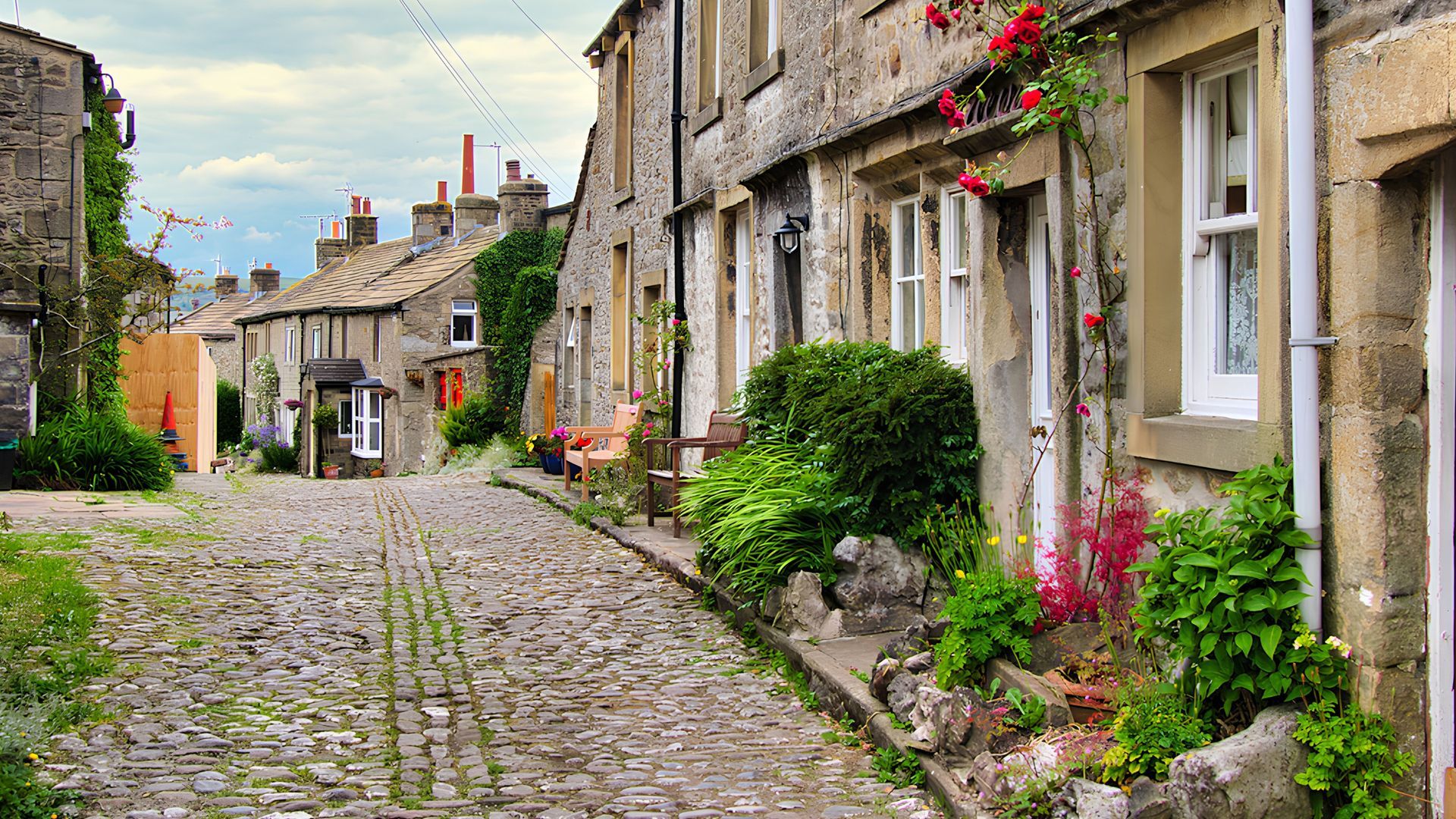
Drive along the B6265 in North Yorkshire, England, on the road between Pateley Bridge and Grassington, and you would never think you're a matter of feet above some glorious geological formations.


The caves, bursting as they are with stalagmites, stalactites and other rock formations, are a real treasure trove. But when they were discovered back in 1860, the site was just an unassuming patch of grass concealing the treasures below.


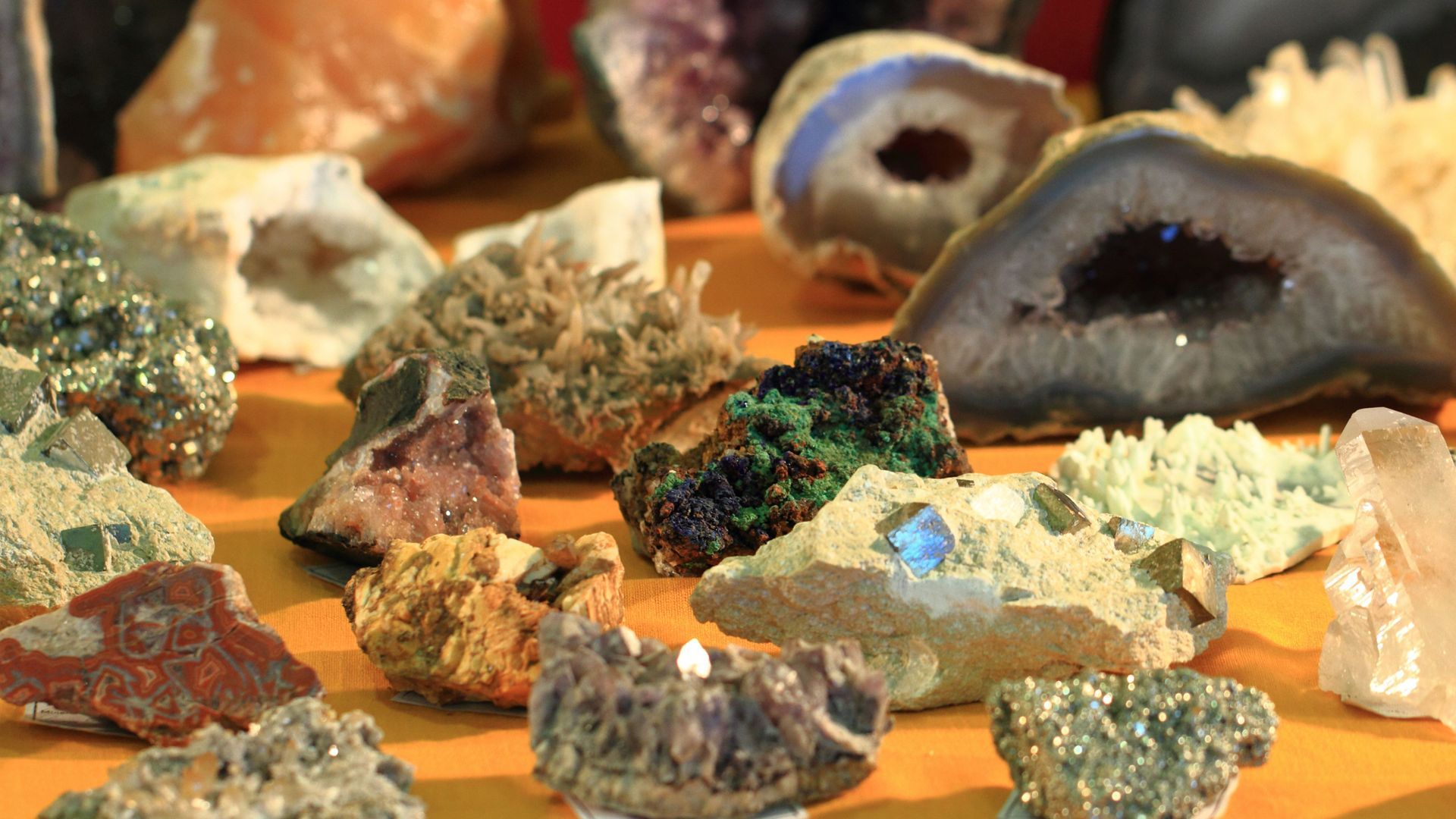
In this respect, Stump Cross Caverns is a lot like a geode. Perhaps you've seen these crystalline gems in gift shops or even out in the wild. But did you know that they were once the inside of a plain grey rock?


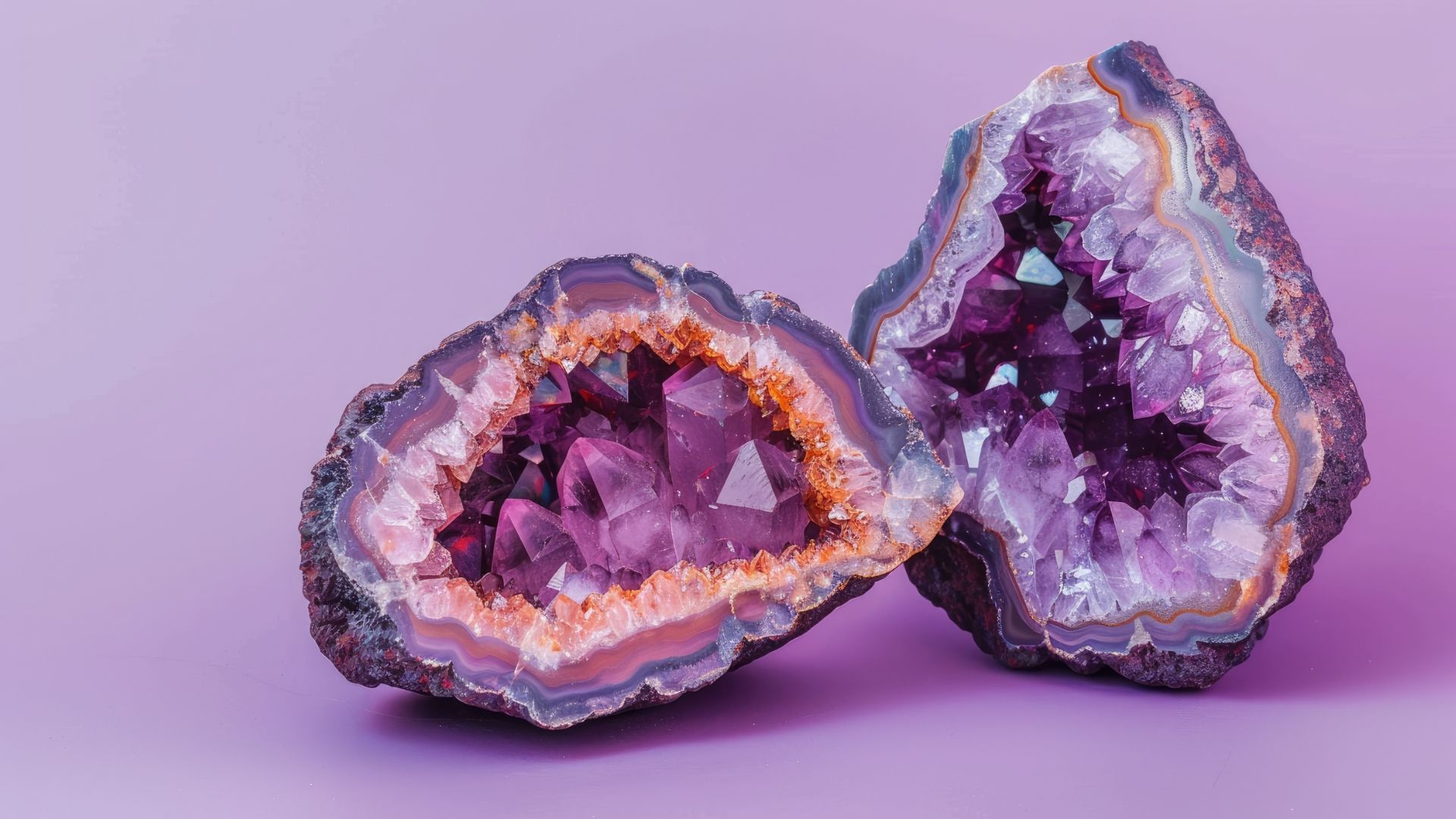
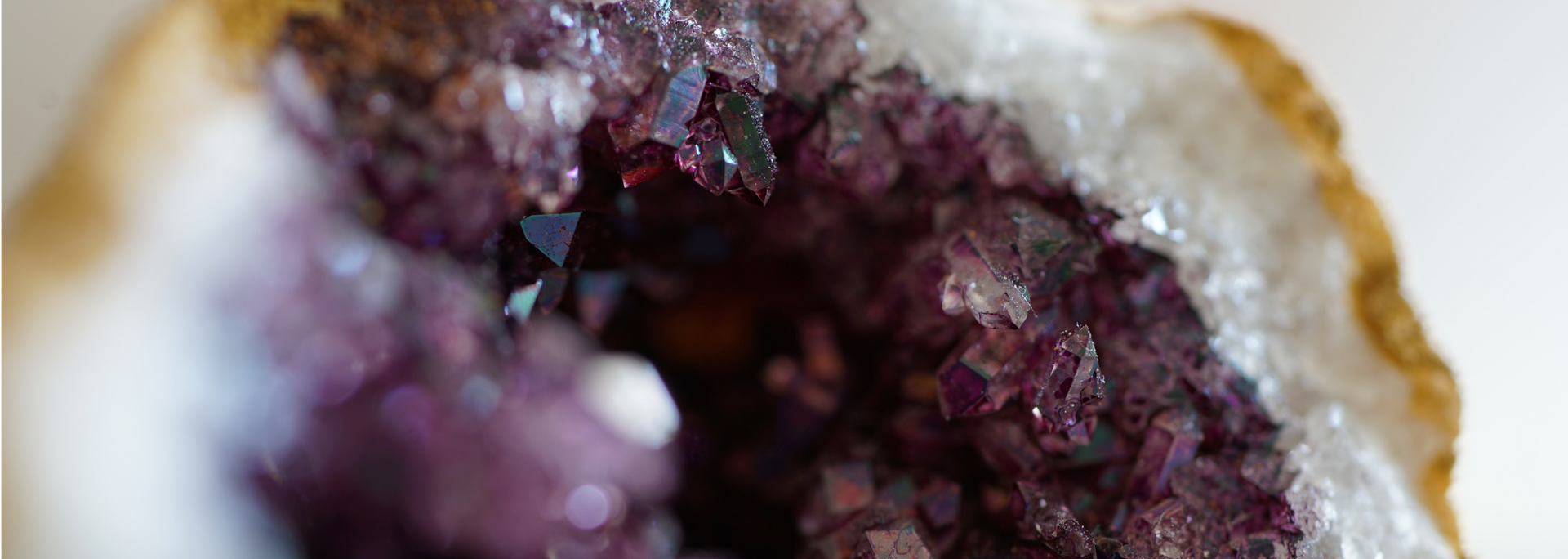
Yes, a geode doesn't look like much from the outside. But crack it open and you can find beautiful crystals in breathtaking colours.


So, where do geodes come from? As with our caves, we have to go back thousands of years for an answer…


How do geodes form?


Most people think of volcanic eruptions as disasters. But from a geological perspective, they bring forth all sorts of beauties.


Geodes are one such happy accident. They begin life as bubbles in lava. Mineral-rich groundwater seeps into these air pockets – and when the water evaporates, the minerals remain.


These minerals crystallise, lining the rock with silicates such as quartz, amethyst, calcite or celestite.


To say this crystallisation is a slow process is the understatement of the millennium. It can take thousands or millions of years for crystals to form – and the longer the process, the bigger the crystals.


Not all geodes come from volcanic lava, however. Some come from animal burrows, the spaces left by rotted tree roots, or nodules (lumps of matter) in sedimentary rocks.


That's how geodes form. But where do they get their glorious colours from?


Where do geodes get their colours from?


The minerals that form the crystals give them their basic colours. But other elements add their own unique shades.


Picture of a colourful geode.

Iron, for instance, can lend geodes a red or purple tinge. Manganese adds a touch of pink. Nickel and chromium lean to the green, while titanium turns them blue.


Sometimes, retailers will artificially dye geodes to make the colour more vibrant.


How can you spot an unopened geode?


To the untrained eye, an unopened geode is just another rock. It will be a spherical rock with a rough exterior, often embedded in a sedimentary rock.


Figuring out if a rock is a geode is a bit like guessing the contents of a Christmas present. You want to pay attention to the weight and the sound it makes when tapped.


A geode will be lighter than it looks, thanks to its hollow cavity. Meanwhile, a hollow sound when tapped can clue you in to the cavity inside.


How do you crack open a geode?


If you think you've found a geode, there are a few ways to get cracking.


The first is to use a rock saw. It goes without saying that you need to be careful when using this tool.


The second method involves placing the geode inside a sock and tapping it gently with a hammer until it cracks open.


Geode crackers are available on the market. Here at Stump Cross Caverns, we have one of our own – so why not join us for a geode session? You never know what you might find…


Inside the world's biggest geode


Geodes are like caves in more ways than one. Just as a cave is defined by its absence of matter, so a geode is effectively a crystal-lined cavity – not the rock which surrounds it.


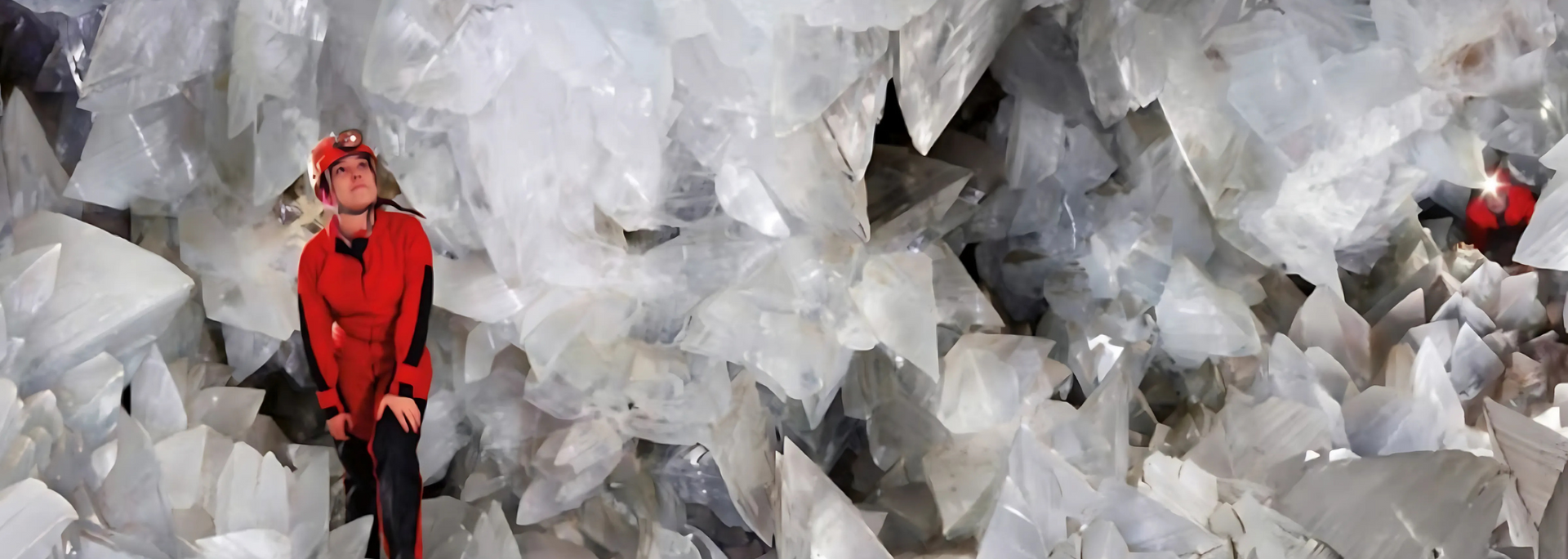
This means a geode can be big enough to stand in – a crystal-lined cave, if you will. Just ask the geologists who have studied the Pulpí Geode – an eight-metre-wide, two-metre-high geode in an abandoned silver mine in south-eastern Spain.


"When it comes to a geode, by definition, this is the biggest ever discovery," geologist and cave coordinator Mila Carretero
told the BBC.


Picture of the Pulpi geode.

In fact, the story of the Pulpí geode has a lot in common with the discovery of Stump Cross Caverns. In both cases, the miners who discovered the underground wonders weren't best pleased with their discoveries.


The miners who discovered Stump Cross were looking for lead, and the miners who discovered the Pulpí geode were after silver. Who can blame them for being less than chuffed when they found a load of heavy old rocks and crystals?


And like Stump Cross, Pulpí is open to the public. Every year, thousands of visitors get to share the sentiment expressed by Carretero: "It's indescribable because it gives us a sense of how small we are. Look at what nature has given us."


As remarkable as it is, the Pulpí Geode isn't the biggest in the world.
Guinness World Records gives that gong to the "Crystal Cave" in Ohio, USA.


This celestite-lined cave is 35 feet wide and 10 feet high. It was discovered by the owners of Heineman Winery at Put-In-Bay, Ohio when they dug a well on their premises. It's big enough to fit more than six people at a time!


What's the difference between a geode and an agate?


The term "geode" doesn't refer to a specific type of crystal – just a crystal-lined cavity. Agate, by contrast, is a type of mineral: banded microcrystalline quartz, to be exact. This means that you could get a geode filled with agate.


What crystals are found in geodes?


Britannica
tells us that geode crystals are usually quartz. Less often, they're "of calcite or dolomite, and sometimes of aragonite, ankerite, hematite, magnetite, pyrite, chalcopyrite, and sphalerite".


This sentence brings home something about crystals. They're not just beautiful to look at. They also have the most beautiful names!


Do you love rocks and crystals as much as we do? Join us in the Yorkshire Dales for
Crystal Wonders at Stump Cross Caverns. This magical, family-friendly workshop is all about the fascinating world of crystals. You'll grow your own crystal, learn to identify real crystals and even get the chance to take home some sparkly souvenirs. It's easy to book your tickets online.


Are you looking for evocative poetry about caves? Discover 5 classic examples in our Burns Night
By Simon Edward January 30, 2026
Are you looking for evocative poetry about caves? Discover 5 classic examples in our Burns Night guide.
From cliff-edge climbs to guided underground adventures… Discover exhilarating experiences
By Simon Edward January 26, 2026
From cliff-edge climbs to guided underground adventures… Discover exhilarating experiences across the Yorkshire Dales for all abilities.
Travel back 300 million years to discover coral seas, shifting continents
By Oliver Bowerman January 24, 2026
Travel back 300 million years to discover coral seas, shifting continents and the ancient origins of caves.
Discover unforgettable Yorkshire activities for your 2026 bucket list –
By Simon Edward January 19, 2026
Discover unforgettable Yorkshire activities for your 2026 bucket list – from underground adventures to wild landscapes and ancient wonders.
Explore the underground chambers and passageways at Stump Cross Caverns for less this January.
By Simon Edward January 16, 2026
Explore the underground chambers and passageways at Stump Cross Caverns for less this January.
Make a day of well-loved routes and big views, with five rewarding long-distance walks
By Simon Edward January 12, 2026
Make a day of well-loved routes and big views, with five rewarding long-distance walks across the Yorkshire Dales landscape.
From ancient royal tombs to dinosaur highways… Let's look back at the discoveries of 2025
By Simon Edward January 9, 2026
From ancient royal tombs to dinosaur highways… Let's look back at the discoveries of 2025 that reshaped our understanding of Earth's past.
From storytelling to survival… Join us as we explore how Stone Age people mastered fire
By Simon Edward January 5, 2026
From storytelling to survival… Join us as we explore how Stone Age people mastered fire and changed human history forever.
People have been making art for millennia. Explore the history of cave art from Europe, Asia
By Oliver Bowerman December 29, 2025
People have been making art for millennia. Explore the history of cave art from Europe, Asia and Africa.
Geodes are natural treasure chests filled with crystals. Discover 4 of the most amazing examples
By Simon Edward December 27, 2025
Geodes are natural treasure chests filled with crystals. Discover 4 of the most amazing examples ever found.
More Posts