Did hermits really live in caves?

11 November 2024

Throughout history, hermits have lived in caves. Uncover the fascinating stories of 6 cave-dwelling recluses.


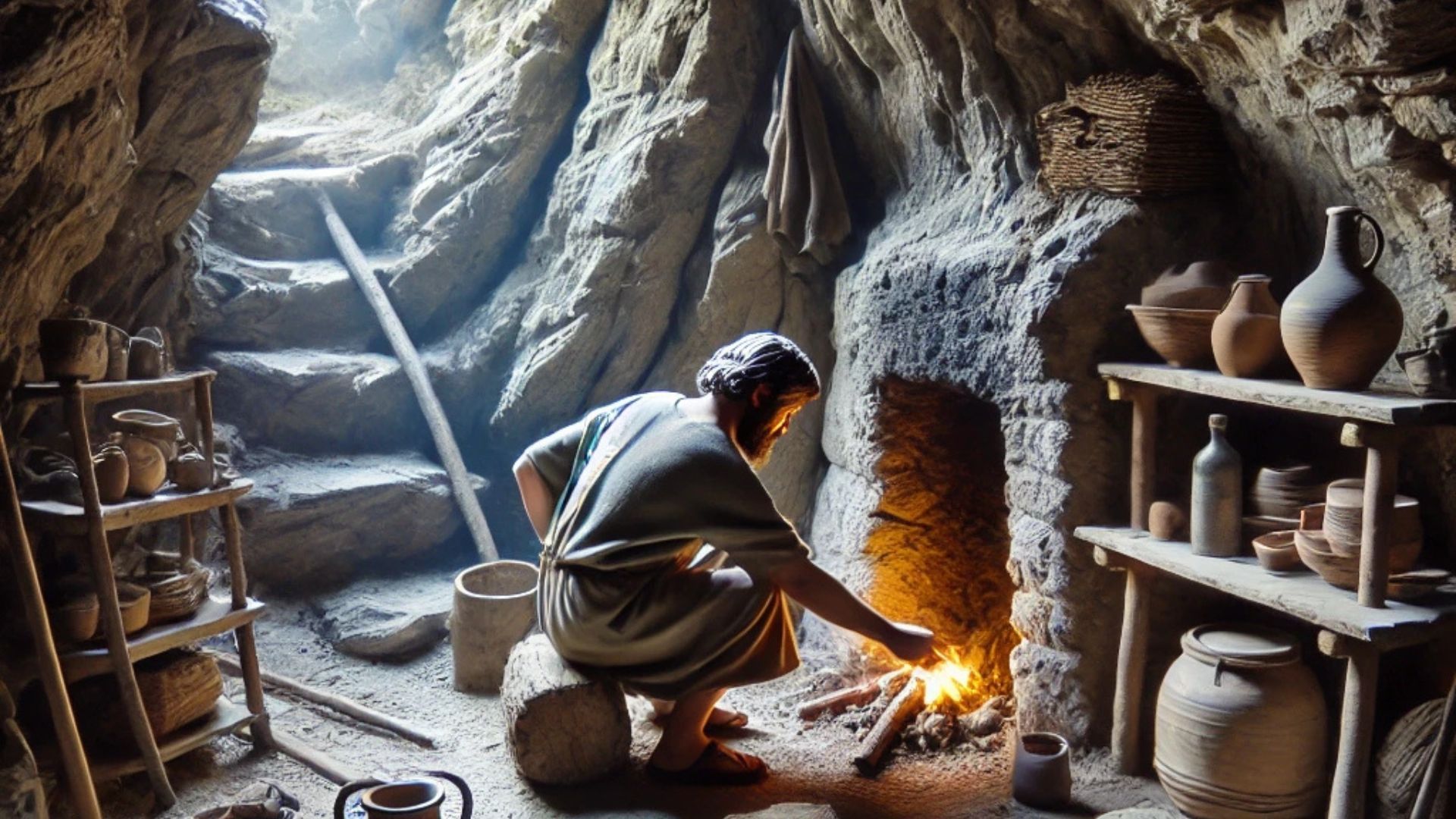
Man lighting a fire in a cave, surrounded by pottery and shelves, warm glow.

Hermits are people who retire from the world and live alone, often for religious reasons. Many live in purpose-built dwellings called hermitages, often (but not always) connected to a nearby monastery.
But did you know that throughout history, hermits have also lived in caves?

Your first thought might be why anyone would choose to live in a damp, narrow, rocky environment like a cave. The simple answer is that most of them were living there as a form of penance – simplifying their lives as much as possible and denying themselves earthly pleasures as a way of serving God.

Others sought out caves as a way of retreating from the world. Others still lived in caves temporarily for speleological purposes – that's "cave science" to the rest of us.

Want to learn more about the fascinating characters who went off-grid and underground? Here are six of our favourites.

1. Cornelius the Baker

Dale Abbey is a small village in Derbyshire, not far from Ilkeston. To the south is Hermit's Wood, a peaceful spot of ancient beeches and oaks.

Hermit's Wood holds a secret: the Hermit's Cave, once the abode of a local baker turned mystic.

The story goes that a Derby baker called Cornelius was visited in a vision by the Virgin Mary, who told him to go to Dale Abbey, "where thou shalt serve my Son and me in solitude".

Cornelius swapped his floury apron for a rocky retreat, digging himself a small dwelling where he lived and prayed.

One day, Cornelius was found by local landowner Ralph Fitz Geremund. He was so moved by the hermit's story that he bestowed money on him – money that let Cornelius move into more salubrious digs in a small chapel.

2. Giovanni Maria de Agostini

Giovanni Maria de Agostini was one of history's best-travelled hermits. But for three years in the 1860s, he lived in a cave in the mountains of Sangre de Cristo, New Mexico.

There, he carried out his daily devotions, walking to Mass in Las Vegas, New Mexico, every Sunday. He foraged for food and collected water from a spring.

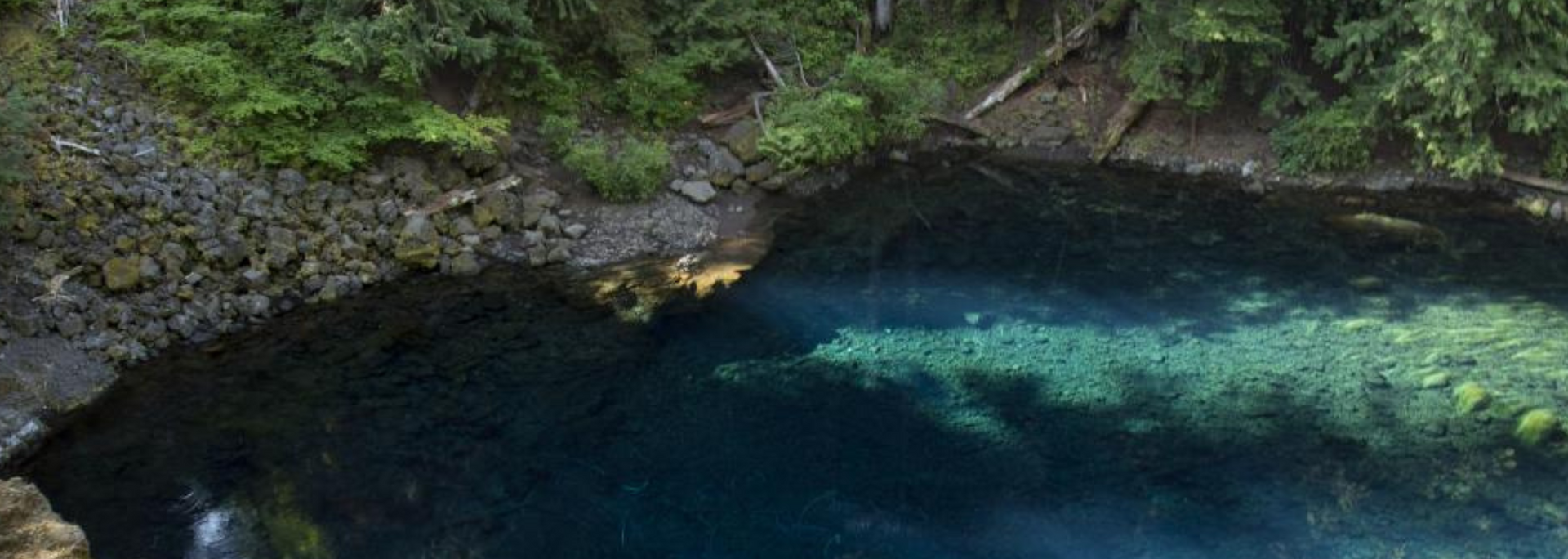
A clear, turquoise pool surrounded by rocks and lush green trees. Sunlight reflects in the water.

Agostini's life was driven by faith and solitude. He claims to have begun "to incline toward a solitary life" at the tender age of five. He never joined a parish or monastery, always beating his own path.
His story ends in 1869 when he was killed. We don't know why he was attacked, or by whom, but records show that he died with his crucifix in his hand.

3. Saint Simeon Stylites the Elder

If you've heard of Saint Simeon Stylites the Elder, it's probably as the Christian ascetic who lived on top of a pillar. But he also spent part of his worshipful life in a cave.

Simeon was born around 390 AD. He entered a monastery as a teenager. However, his pursuit of abstinence was so fanatical that he was expelled by his fellow monks.

He moved from the monastery to a cave. But his deeply-held wish for solitude was frustrated by visitors asking him for counsel or healing.

Sick of the spotlight, Simeon took his devotions up a pillar near Aleppo in modern-day Syria. His years atop the pillar gave the name "stylite" to any subsequent pillar-saint. 

4. John Sparkes (or Sparke)

Unlike our hermits so far, we know almost nothing about John Sparkes. Nevertheless, his story is a curious slice of mediaeval history.

In Bristol, there's a Quaker burial ground opposite St Mary Redcliffe Church. Nearby, there's a small cave dug into the sandstone of Redliffe Hill.

Eagle-eyed visitors will see a plaque that tells a fascinating tale. In 1346, Thomas Lord Berkeley installed John Sparkes there. His job? To pray for Berkeley and his family.

Berkeley was in search of redemption, having been tried as an accessory to the murder of King Edward II.

The cave was used as a hermitage after Sparkes's death, all the way up to the 17th century.

His story is not unlike that of garden hermits or ornamental hermits. These were people encouraged to live alone on the estates of wealthy landowners. Francis of Paola, for instance, lived in a cave on his father's estate back in the 15th century.

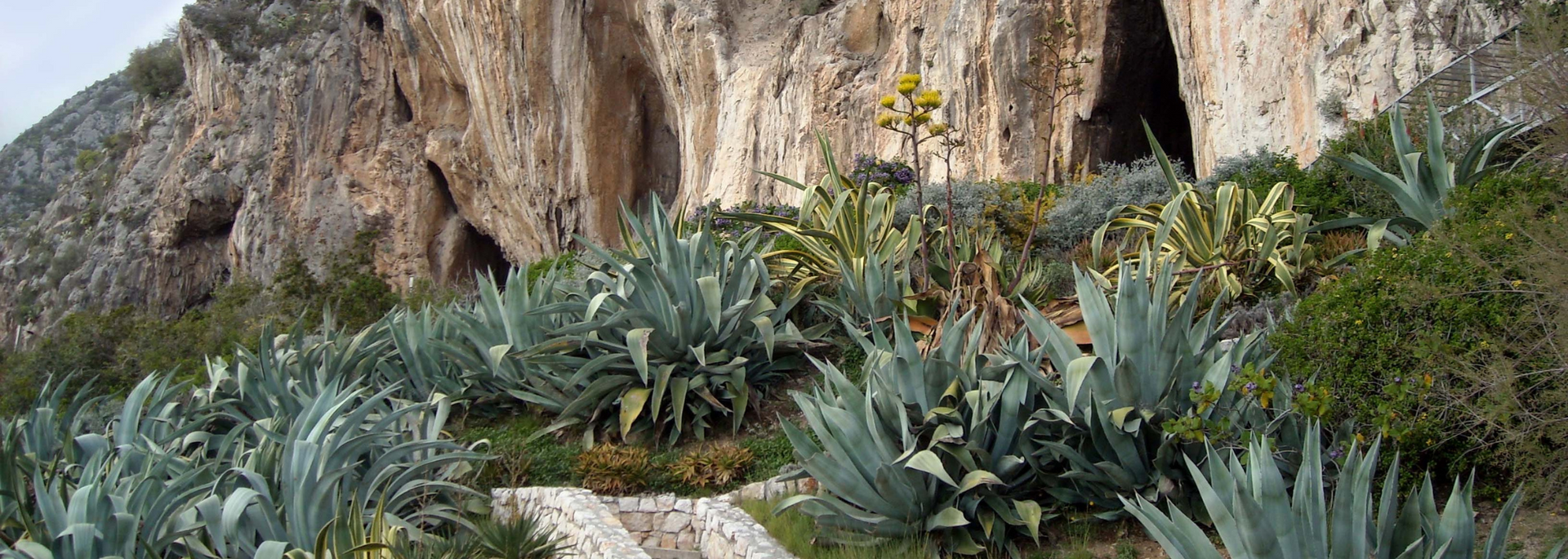
A rocky hillside with agave plants and a cave entrance.

4. Timon of Athens
Timon of Athens was the Victor Meldrew of his day. He was a citizen of Athens in the fourth century BC with a legendary contempt for humanity.

In Shakespeare's play
Timon of Athens , he starts off as a wealthy and generous gentleman – perhaps a little too generous. He's surrounded by yes-men who sponge off him until he's broke.
Filled with rage, he denounces not only his so-called friends but also mankind in general, retreating to a cave in the wilderness. "Be abhorr'd," he rails, "all feasts, societies, and throngs of men!"

There, he lives off roots, discovers a treasure trove, subsidises a rebel army and dies in the wilderness – not quite the life of quiet isolation he was hoping for.

5. Geoff Workman

In 1963, Yorkshireman Geoff Workman broke the world record for time spent in total isolation underground – and he did it right here at Stump Cross Caverns.

First question: why?

According to Geoff, his subterranean sojourn was scientific research. He wanted to learn more about the caves, as well as the effects of isolation on the human mind and body.

A
newsreel from the time , however, suggests that his stint as a hermit was connected to the Cold War. At that time, the possibility of nuclear war was on everyone's minds. Could it be, as the newsreel says, that Geoff "wanted to prove that if we had to go into caves in a nuclear war, all we need to do is wrap up warm and take down a lot of food"?
Whatever his reasons, Geoff's record stayed unbroken until
the Spanish athlete Beatriz Flamini spent 500 days in a cave near Granada, Spain .
When her team came to collect her, Flamini is reported to have said, "Already? Surely not."

Are you looking for family
cave adventures in the UK ? Stump Cross Caverns is an ancient cave network buried deep underneath the Yorkshire Dales. You won't find any hermits here – but you will find prehistoric secrets, amazing rock formations and lots of things to see and do. Book your tickets online to unlock exclusive discounts.

Share this article

Recent Posts

Want to encourage your little ones to explore outdoors? Discover six of the best family-friendly
by Simon Edward 15 June 2026
Want to encourage your little ones to explore outdoors? Discover six of the best family-friendly walks in North Yorkshire.
Discover our favourite family-friendly nature days out in Yorkshire
by Simon Edward 12 June 2026
Discover our favourite family-friendly nature days out in Yorkshire, from waterfalls and caves to forests, wildlife and countryside adventures.
Dive into fascinating facts about limestone, from glowing minerals and fossils to caves, crystals
by Simon Edward 8 June 2026
Dive into fascinating facts about limestone, from glowing minerals and fossils to caves, crystals and ancient geological history.
Looking for a family-friendly event in Yorkshire this summer? Explore 10 varied events in our guide.
by Simon Edward 5 June 2026
Looking for a family-friendly event in Yorkshire this summer? Explore 10 varied events in our guide.
Start learning the basics of identifying geodes and their crystal formations with our beginner's gui
by Simon Edward 29 May 2026
Start learning the basics of identifying geodes and their crystal formations with our beginner's guide to geode identification.
Discover some of the largest cave systems in Europe, from vast underground chambers
by Simon Edward 25 May 2026
Discover some of the largest cave systems in Europe, from vast underground chambers to ancient limestone labyrinths and palaces of ice.
Could you be the one to make the next HUGE fossil discovery at Stump Cross Caverns? Join us
by Simon Edward 22 May 2026
Could you be the one to make the next HUGE fossil discovery at Stump Cross Caverns? Join our Ice Age Dig for a once-in-a-lifetime opportunity.
What happened before the Stone Age? Find out about Earth's earliest history, prehistoric life
by Oliver Pyper 22 May 2026
What happened before the Stone Age? Find out about Earth's earliest history, prehistoric life and the world before humans.
Discover the best glamping experiences in the Yorkshire Dales, plus local attractions,
by Simon Edward 18 May 2026
Explore the stunning Stump Cross Caverns with family-friendly tours & activities. Enjoy a unique underground adventure today!
Show More