What is a cave? OK, this might sound like a daft question – or the start of a cracker joke.
But the fact is that a cave – like a ravine or a vacuum – is something that isn't there . It's an absence carved out of rock over a long, long time.
If you feel like you've stumbled into a philosophy seminar – or a conversation at a party as dawn light creeps through the windows – then we should explain. The absent-ness of a cave matters because it affects how we date them.
Here at Stump Cross Caverns, we can take you on a tour of underground chambers that are around 500,000 years old. But how do we know? How does anybody know how old a cave is?
To answer that question, we first need to think about how they're formed.
How are caves formed?
As we said, a cave is something that isn't there. It's the remnants of a long process of wearing away. Usually, it's formed by carbonic acid working at limestone.
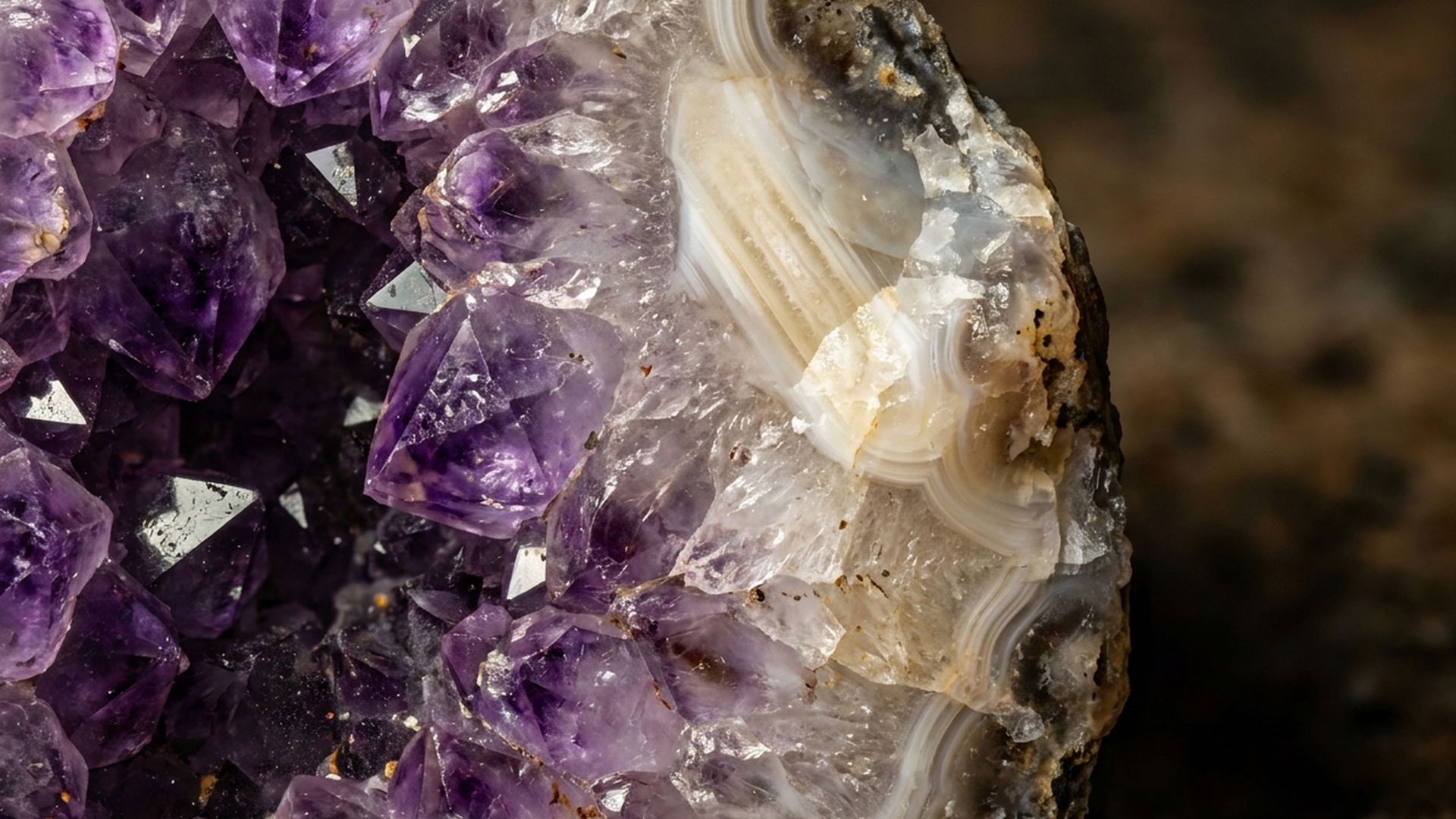
Once the hole is formed, sediment gets washed into it. Over time, stalagmites and stalactites form – those shining spears of rock that make show caves so magical.
Stalagmites and stalactites can be dated with ion-counting multi-collector inductively coupled plasma-mass spectrometry (ICP-MS). No, us neither.
The main thing to note is that scientists have a tried-and-tested method for knowing how old these formations are.
Other methods include measuring the age of calcite – those gleaming white rock formations that you can see at Stump Cross.
But as with dating stalagmites and stalactites, it doesn't tell us much about the cave itself – only that the cave is older than its contents.
New methods
A breakthrough happened in 1998 on the border of Texas and New Mexico.
Caves in the Capitan Reef area of New Mexico were successfully dated by looking at something called "alunite".
This is a chemical by-product of the acid wearing away the limestone. As the rock dissolves, it forms and crystallises on cave walls.
Geologists thought the caves were somewhere between 750,000 and 1.2 million years old – but the alunite was four million years old.
This is a breakthrough that could have major consequences for the dating of other caves around the world.
What are the oldest caves in the world?
If you think Stump Cross Caverns is old, wait til you hear about Sudwala Caves in Mpumalanga, South Africa.
The caves are 240 million years old – and they're set in dolomite rock that's a staggering 2,800 million years old. They were formed when acid seeped through the dolomite, in the same way that the caves at Stump Cross were formed by rain wearing away the limestone.
Sudwala Caves are home to some incredible rock formations including the Lowveld Rocket, Samson's Pillar and the Screaming Monster. Some of these are up to 200 million years old.
Back then, South Africa was part of a supercontinent called Gondwanaland. This was a land mass formed from present-day Antarctica, South America, Africa, India and Australia.
The climate was cool, so trees and megafauna flourished. Only coal beds and fossils remain to show that Antarctica was once this temperate.
The Sudwala Caves were probably used by early humans for shelter – possibly from as early as 2.5 million years ago and as late as a few thousand years BC. These estimates are based on primitive stone tools found in the caves.
In the 19th century, the Sudwala Caves were the scene of political struggle. The Swazi People lived there during a battle for the Swazi throne.
Today, they're a popular tourist attraction in Mpumalanga and the site of a bat hospital.
How about cave paintings?
Our Stone Age ancestors weren't just hunters and fishermen. They were also keen artists.
We've found complex abstract patterns in South Africa, drawings of fish, wallabies and crocodiles in Australia, a painting of horses in France, and a "babirusa" – or deer-pig – in Indonesia.
Closer to home, there's cave art on show in Creswell Crags, Nottingham.
But how do you date them?
Well, the first cave art researchers had
two methods – neither of which was especially reliable.
The first was to compare the art they found to art in sites that they knew the age of. This was largely stylistic or art-historical – did the painting look like one from another cave?
The second method had the grand title of "parietal stratigraphy". If two paintings of different styles overlapped, you could assume that the one underneath was older than the one on top.
These were rudimentary rules of thumb – but they were the only methods in use until around 30 years ago.
In the early nineties, things started to change with the advent of radiocarbon dating. This measures a radioactive isotope in charcoal drawings – an isotope that's found in trees. Because the charcoal was made from burnt branches, scientists could date it fairly accurately.
Not all cave paintings were done in charcoal, though – perhaps only around 30%. But in the 2010s, geologists started dating calcite, which helped with other pieces of art.
These methods are still far from totally reliable. We still date cave paintings with a mixture of science and art history.
In fact, the age of some caves has been radically revised. For instance, art in Chauvet in France was thought to be 15,000 years old, but a closer look revealed that we needed to double that figure.
Our dating of ancient rock formations is always subject to change. As with all scientific enquiry, we need to be prepared to change our minds when new evidence is uncovered.
Right now, we think that the limestone at Stump Cross was formed around 300 million years ago, and the caves themselves 500,000 years ago. But if we learn anything new, we'll let you know…
Book today to take a tour of Stump Cross Caverns – or check out our calendar of fun
indoor activities in Yorkshire .