Mines in the Yorkshire Dales you can still visit today
Are you interested in exploring Yorkshire's lead mining history? Here are 8 places you can visit today.

The Yorkshire Dales is famous for many things. But did you know that it has a rich seam of history in the form of rich seams of lead?
The area began to be mined for lead some 2,000 years ago when the Romans occupied Britain. Over time, the area became one of the UK's most important lead-mining areas. By the 19th century, it was a global capital before declining in the 20th century.
The remnants of Yorkshire's lead mining past are still scattered here and there across the Dales and Moors. Hikers walk past spoil heaps, flues and disused miners' huts while interested parties can visit museums and disused mines.
For those interested in this aspect of Yorkshire's past, there's a selection of places you can visit to this day. These range from outdoor moorland ruins to underground tours.
All offer a unique insight into a vanished way of life. And here at Stump Cross Caverns, we're just a couple of miles from Greenhow Hill, once a hotbed of lead-mining.
In fact, it was two lead miners from Greenhow Hill who accidentally stumbled on our caverns one bitter January day in 1860.
Out looking for lead, they thought they found a seam. But instead of finding lead, their spades went through the earth to the prehistoric limestone caves that are now open to visitors all year round.
In this article, we explore eight mines in the Yorkshire Dales you can still visit today.
1. Old Gang Smelt Mills, Swaledale
Old Gang Smelt Mill is one of the largest and best-preserved lead-mining complexes in the Yorkshire Dales.
Found between Swaledale and Arkengarthdale, it features extensive ruins from the 18th and 19th centuries. These include towering chimneys, a ruined smelt mill, a massive peat store and a network of flues and mine workings.
Old Gang Smelt Mills is open to visitors free of charge all year. It can be explored as part of a circular walk starting in Gunnerside or Muker.
It's important to note that the mine workings themselves are sealed. But for a glimpse of lead-mining life above ground, it's one of the best.
2. Force Gill Mine, Greenhow
Greenhow was once intimately tied to the lead-mining industry. Today, you can visit Gillfield Mine – the only accessible underground working in the area.
The tunnels are maintained by Greenhow Local History Club, which leads guided group trips underground.
These tours are limited and must be booked as part of a club trip or special group tour. Visitors need to be kitted out with hard hats and lights.
If you don't manage to join an underground tour, the surface ruins and chimneys can be explored at your own pace whenever the mood takes you.
3. Grassington Moor Lead Mining Trail
There are many preserved mining remains near Grassington – from engine house ruins to mine shafts, from spoil heaps to tramways.
The underground workings are closed off for safety reasons. But as the destination for a self-guided walk, the Grassington Moor Lead Mining Trail brings Yorkshire's lead-mining history to life like few other places.
4. Nenthead Mines
Nenthead Mines are technically in the North Pennines, but they're less than an hour from the west of the Yorkshire Dales National Park. They're also widely considered to be among the UK's best mining experiences.
Visitors get to go on guided, volunteer-led underground trips into Carrs Mine. These last 90 minutes and let you explore the fantastically well-preserved historic lead and zinc workings.
5. Dales Countryside Museum, Hawes
Run by the Yorkshire Dales National Park Authority, the Dales Countryside Museum is a local history museum in Hawes.
Its centrepiece is probably its railway carriages, which visitors can climb aboard. However, it also features fascinating exhibits on wool and knitting crafts, agriculture, cheesemaking – and lead mining.
Children get in free of charge and admission tickets are valid for seven days. You can check opening times and plan your route on the Dales Countryside Museum website.
6. Grinton Smelt Mill (also known as Grinton How Mill)
Grinton Smelt Mill is a ruined lead-smelting site from the 18th century. It was rebuilt in 1820 and is now one of the best-preserved lead-mining sites in the Yorkshire Dales.
The mill can be accessed from the Grinton to Leyburn Road as a standalone trip or part of a longer hike. You can also learn more about its history at the nearby Swaledale Museum.
7. Stump Cross Caverns
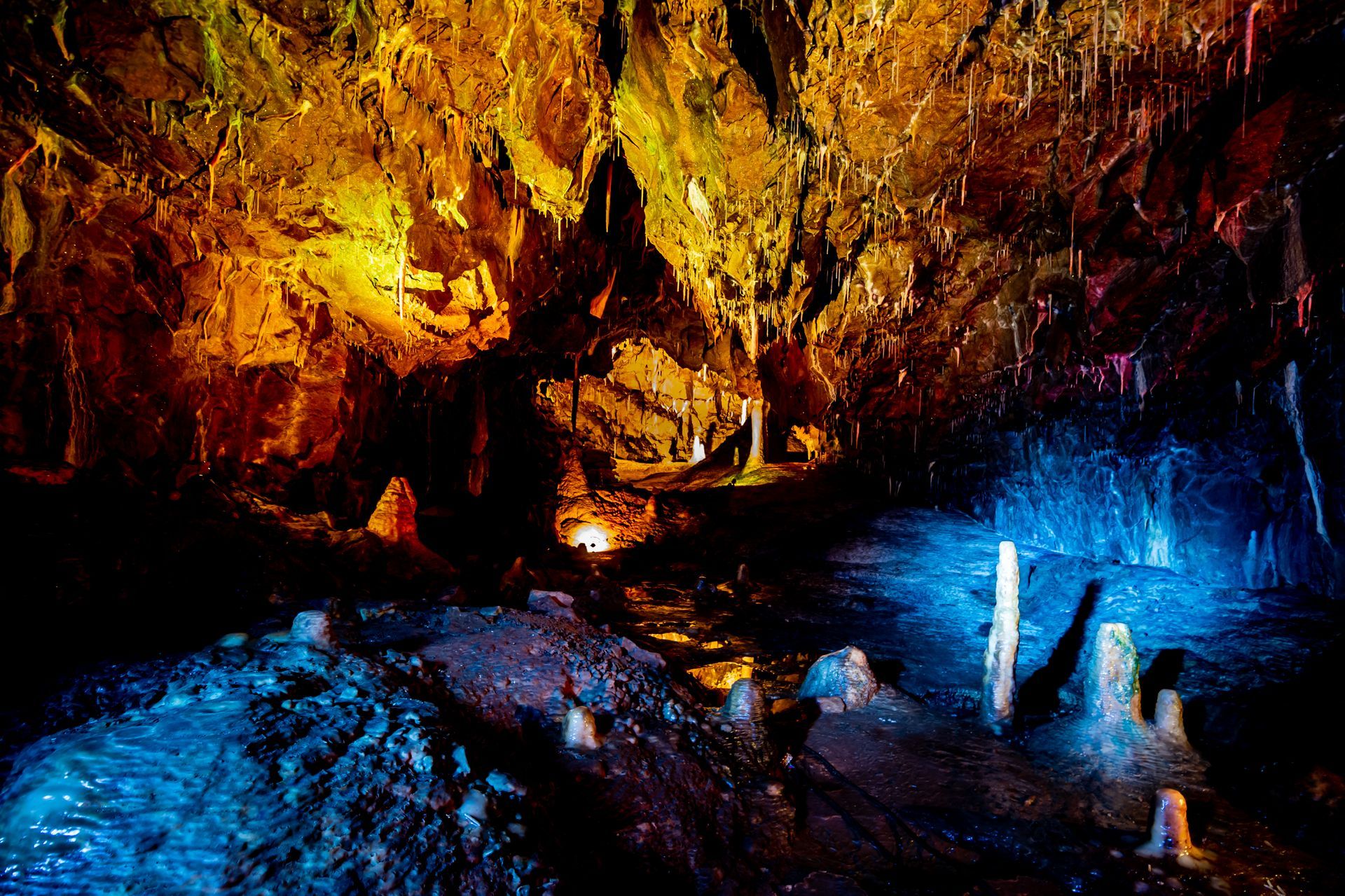
Between Pateley Bridge and Grassington, Stump Cross Caverns provides a remarkable underground adventure – a network of chambers and passageways filled with remarkable rock formations.
It's a naturally occurring network of limestone caves rather than a manmade mine. However, its history can't be told without reference to lead-mining.
This is thanks to the Newbould brothers – a couple of lead miners who accidentally discovered the caverns more than 130 years ago.
As well as offering self-guided tours, we host a range of events all year round. Alongside White Scar Cave and Ingleborough Cave, it's one of the best and most beautiful show caves in the Yorkshire Dales.
Other mines in the area
Other mine-based destinations in the area include Gills Heads Mine and the Prosperous Mine Trail.
Gills Heads Mine is a disused lead and fluorspar mine between Skyreholme and Appletreewick. Its derelict buildings and cable incline system are often visited by hikers walking near the limestone ravine at Troller's Gill.
The Prosperous Mine Trail, meanwhile, is a 5.9-mile circular hiking route in Nidderdale. It takes hikers through the remnants of the area's lead-mining history, past the ruins of 18th- and 19th-century mine shafts, spoil heaps and smelt mills.
Are you looking for a day out in Yorkshire that brings ancient history to life? Visit Stump Cross Caverns and discover a prehistoric world hidden deep underground. It's easy to book your tickets online.