What were Stone Age houses like?

Simon Edward • November 22, 2024
BOOK TICKETS

Not all Stone Age people lived in caves. Discover how their homes changed over millions of years.


Not all Stone Age people lived in caves. Discover how their homes changed over millions of years.

Picture a Stone Age house. What do you see?


A barren cave? A wattle and daub home? A rudimentary shelter made out of animal skins?


The truth is that Stone Age shelters came in different forms and changed over time. This is no surprise when you consider that the Stone Age lasted more than three million years.


A lot changed in the three broad periods that make up the Stone Age. Tools became more advanced, meaning more effective and complex structures. But the whole period was characterised by a focus on the basics: hunting for food, preparing food and sheltering from the elements.


This isn't to say that Stone Age humans were all survival and no leisure. Archaeologists have uncovered evidence of
primitive art and even musical instruments.


Nevertheless, housing was a huge priority. Humans needed to be protected from the weather, unfriendly animals and even each other.


So, how did these houses change over time? To answer that question, we need to take a quick look at the Stone Age itself.


What was the Stone Age?


The Stone Age was a period of human development. It gets its name from a game-changing advance in human history. People started using stone stools for hunting, cooking and building.


This epoch is typically divided into three periods: the Palaeolithic, the Mesolithic and the Neolithic. These ages are characterised by their tools. As you move from one to the next, the tools become more sophisticated – and so do the houses.


As we journey across this three-million-year period, we see humans move from caves and huts to something resembling modern homes.


The Palaeolithic period: around 3,000,000 BC


The Palaeolithic period was a time of simple tools and simple shelters.


Some people lived in caves. These provided shelter but were far from comfortable. Crucially, they were ready-made, meaning you could find a place to sleep rather than build one.


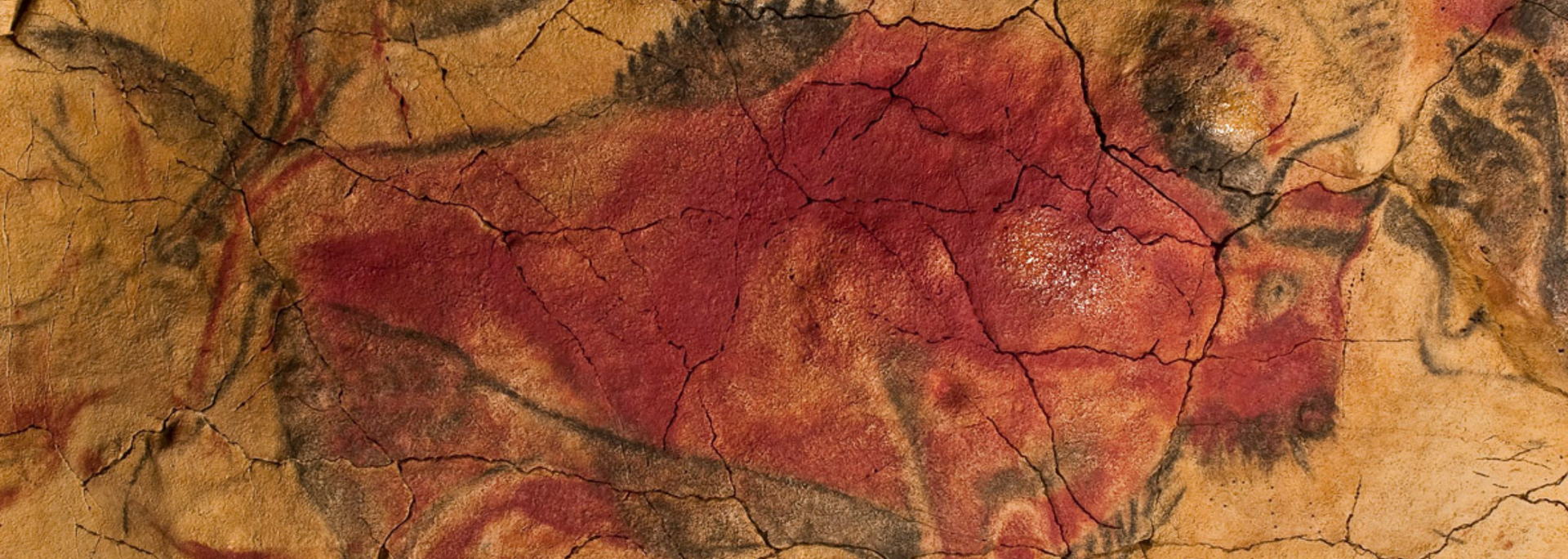
Caves across the world have given archaeologists a huge amount of information about Palaeolithic life – from the daily diet to early clothes, from primitive flutes to mysterious cave paintings.


Picture of a Cave painting.

Despite all this, the Palaeolithic period was far from the Age of the Cave. Most people lived in tents made out of animal skins held up with wood or animal bones.


Evidence suggests that the floors of these huts were covered with moss, reeds and other soft plants – certainly a step up from the craggy floor of a cave.


The Mesolithic period: around 10,000 BC


In the Mesolithic period, humans were primarily hunter-gatherers. This meant they were constantly on the move in order to survive.


Their huts became more advanced. They now boasted thatched roofs made out of reeds, mud or turf.


It's worth remembering that there's no written record of this period of human history and that all these huts have rotted away. Archaeologists speculate about the appearance and structure of these homes based on the remains of tools, animals and humans themselves.


The Neolithic period: around 4,500 BC to 2,400 BC


The Neolithic period was truly transitional. This was when farming began, villages were built and humans began making pottery. It bridges the Stone Age and the Bronze Age, when humans started making tools from metal.


Palaeolithic and Mesolithic huts were rudimentary affairs for people on the move. In the Neolithic period, families and tribes began to farm, meaning they wanted more permanent structures.


They achieved this by building rectangular houses out of timber. The gaps were filled with wattle and daub – a mixture of soil, clay and animal dung. The roofs were thatched with straw.


You can visit reconstructions of Neolithic huts near Stonehenge in Wiltshire. They're made out of thin hazel rods woven around wooden posts. The whole structure is covered with chalk daub (chalk, straw and water) and the roofs are thatched.


Stone houses


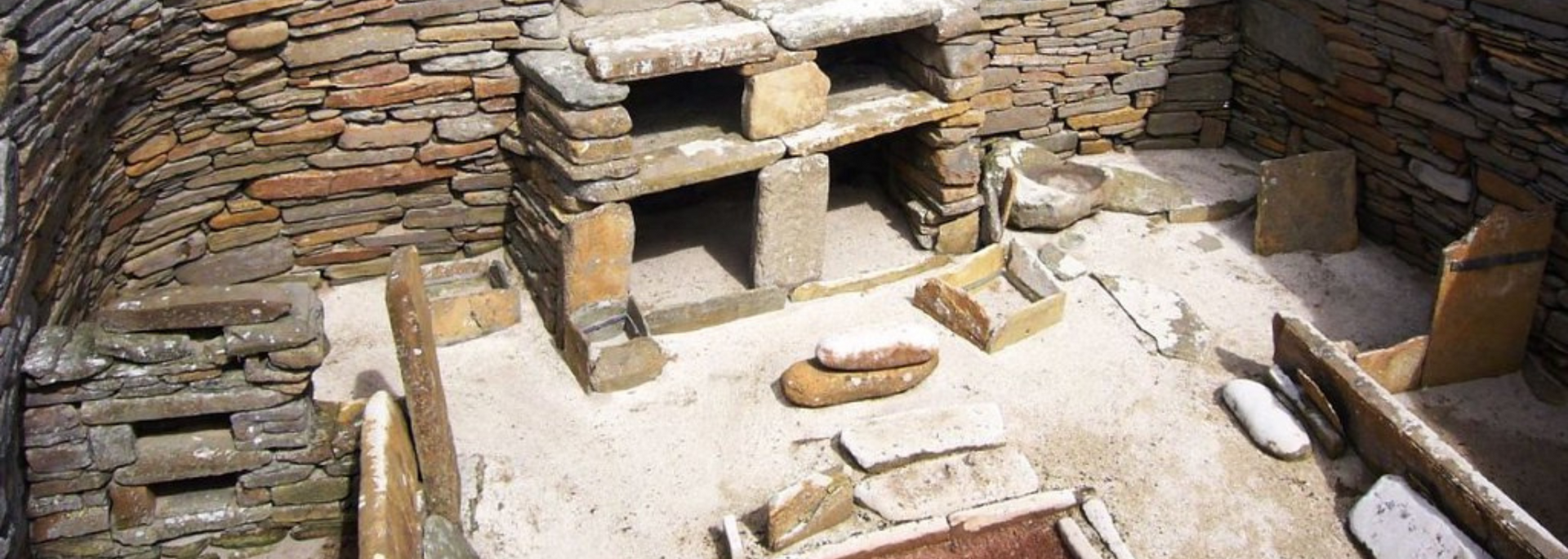
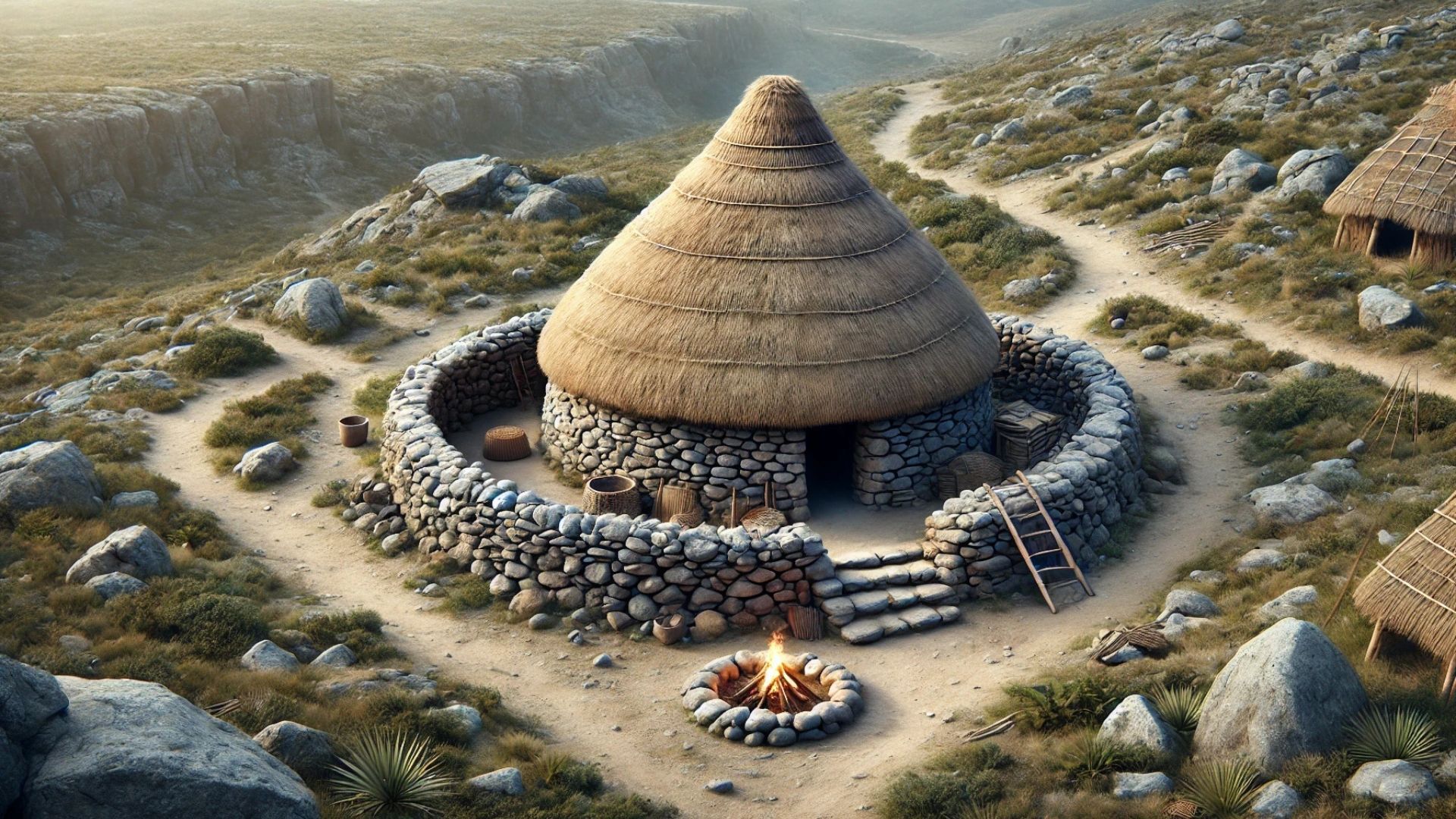
There's also evidence that Stone Age humans made houses of stone. This can be seen nowhere more clearly than in the Neolithic settlement of Skara Brae in the Orkney Islands off Scotland.


This village is a miracle of the prehistoric world. Older than Stonehenge and the Great Pyramids of Giza, it's astonishingly well-preserved. Walking around its stone homes with their shelves, hearth, beds and chairs, it's easy to imagine the daily life of a Stone Age farming community.
Picture of Skara Brae.

It's also incredible to think that we might never know about Skara Brae if it wasn't for a fierce storm off the coast of Scotland in 1850. The storm stripped the earth from a coastal knoll, revealing the outline of the Stone Age homes for the first time in around 4,000 years.


Mud-brick houses


In Turkey, examples have been found of mud-brick Stone Age homes. These feature hearths, ovens and platforms for sleeping. One thing they lack, however, is elbow room. These were tightly packed homes, grouped together in settlements.


This lack of space meant the residents had to be creative with space. Historians believe that most of their social life took place on the rooftops.


What changed in the Bronze Age?


The creation and use of stone tools in the Paleolithic era changed human history as we know it. The same goes for the Bronze Age, when humans started making tools from bronze – and urban environments became more complex.


Wattle and daub roundhouses became the norm. In regions where the climate was especially wet, these were built on stilts.


Typically, a roundhouse would consist of a wooden frame covered with turf or thatch. Each home would have a fireplace in the middle – crucial both for cooking and for keeping the residents warm.


One of the biggest changes at this time was that people no longer lived in just one building. A farming household might live in a main house and then use an outhouse for cooking, weaving, tool-making and other essential activities.


Settlements became more complicated, trading stretched over longer distances and humans developed writing systems. It's fascinating to think that advances in housing made this possible.


Stump Cross Caverns is an ancient underground cave system in Yorkshire, UK. We love all things prehistoric – that's why we have our own resident
Cavewoman! Looking for a fun family day out in Yorkshire? You can unlock exclusive deals by booking your tickets online.


Caves have been around for millennia. Yet humans still haven't uncovered them all.
By Simon Edward December 12, 2025
Caves have been around for millennia. Yet humans still haven't uncovered them all. Could there be more near Stump Cross Caverns here in Yorkshire?
Sites of Special Scientific Interest are natural areas with special legal protection. Learn more
By Simon Edward December 8, 2025
Sites of Special Scientific Interest are natural areas with special legal protection. Learn more about them – and how our caves became an SSSI.
A miracle in a cave and the origin of tinsel… Discover the magical folk tale of the Christmas Spider
By Oliver Bowerman December 5, 2025
A miracle in a cave and the origin of tinsel… Discover the magical folk tale of the Christmas Spider.
Meet Santa in the most magical grottos, discover the best festive days out
By Oliver Bowerman December 1, 2025
Meet Santa in the most magical grottos, discover the best festive days out and make some Christmas memories across Yorkshire.
Discover the first reviews of Stump Cross Caverns back in the Victorian era
By Simon Edward November 28, 2025
Discover the first reviews of Stump Cross Caverns back in the Victorian era, featuring glowing endorsements and some dramatic adventures.
Go back in time and discover what Stone Age people drank, from river water to wild brews
By Simon Edward November 28, 2025
Go back in time and discover what Stone Age people drank, from river water to wild brews and herbal teas.
Learn about Yorkshire's most memorable Christmas traditions, ranging from sword dances to sea dips.
By Oliver Bowerman November 21, 2025
Learn about Yorkshire's most memorable Christmas traditions, ranging from sword dances to sea dips.
Discover the best team-building activities across Yorkshire – from treetop adventures to underground
By Simon Edward November 17, 2025
Discover the best team-building activities across Yorkshire – from treetop adventures to underground discoveries.
Discover 5 of our favourite Yorkshire reservoir walks, rambles and hikes – all within easy reach
By Simon Edward November 14, 2025
Discover 5 of our favourite Yorkshire reservoir walks, rambles and hikes – all within easy reach of Stump Cross Caverns.
Discover how to spot a geode, what makes them sparkle inside and how to experience geode cracking
By Simon Edward November 10, 2025
Discover how to spot a geode, what makes them sparkle inside and how to experience geode cracking at Stump Cross Caverns.
More Posts