5 of the coolest sharks that ever swam

Simon Edward • August 9, 2024
BOOK TICKETS

The Golden Age of Sharks was a prehistoric epoch that boasted some crazy creatures. Meet 5 of the wildest.

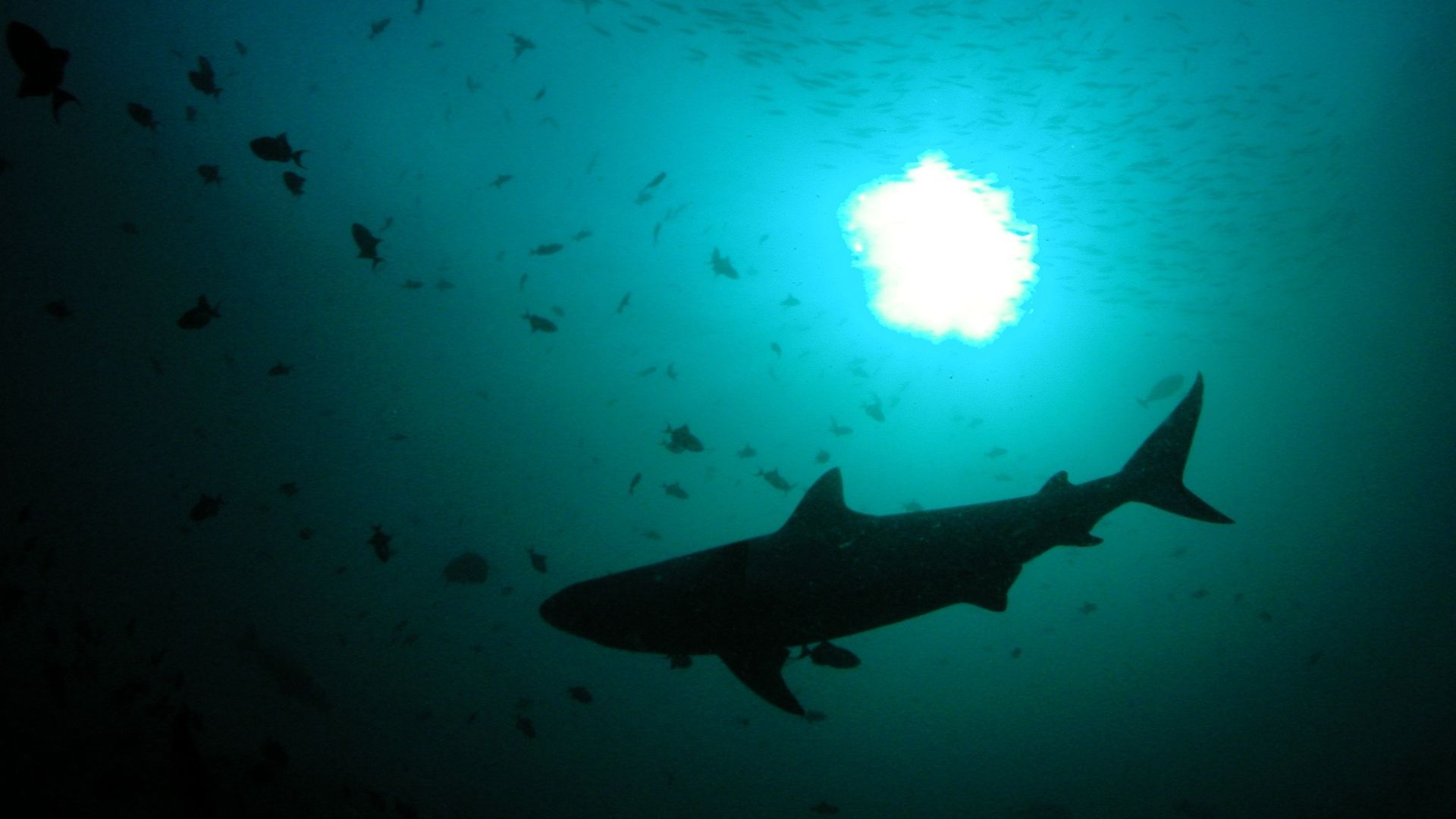
A shark is swimming in the ocean with the sun shining through the water.

This summer, Stump Cross Caverns isn't just the ideal place for you to stop and stare at glorious rock formations – and it's not just the ideal place to go if you want to escape the heat. It's also the destination of choice for shark lovers of all ages.


Yes. This summer we have a theme: the Golden Age of Sharks. This is a period of prehistory when the oceans were teeming with sharks. And what sharks they were – bizarre, striking, sometimes terrifying animals that scoured the seas looking for prey.


What's the link, you ask? Well, Stump Cross Caverns is made out of limestone – and limestone formed during the same period as the Golden Age of Sharks.


To celebrate our selachian summer, we've decided to give you a tour of those prehistoric oceans, looking at some of the weirdest, most wonderful sharks that ever swam.


But first up: when was the Golden Age of Sharks – and why was it such a shark-filled era?


When was the Golden Age of Sharks?


The Golden Age of Sharks occurred during the Carboniferous Period. This epoch began 359 million years ago and lasted for 60 million years.


Sharks thrived in this period thanks to an extinction event at the end of the preceding Devonian period. At least 75% of life on Earth was killed off, giving sharks room to muscle in and dominate.


Let's meet a few of these not-so-little nippers…


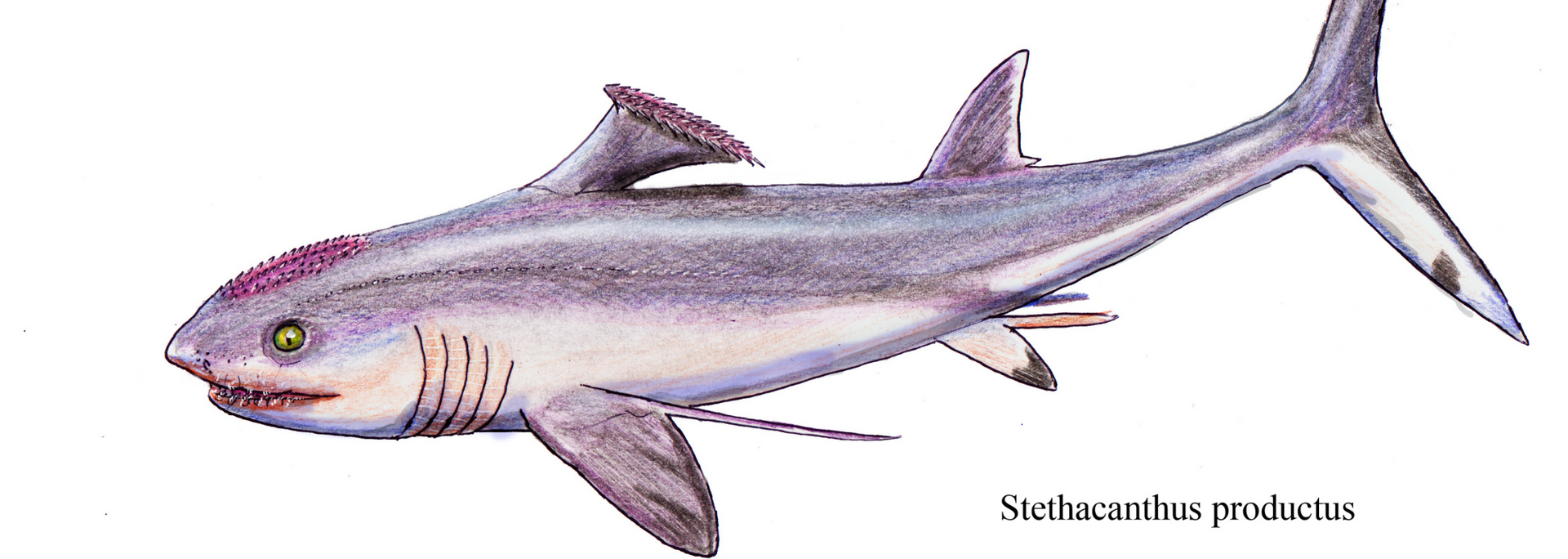
1. Stethacanthus


A drawing of a shark on a white background

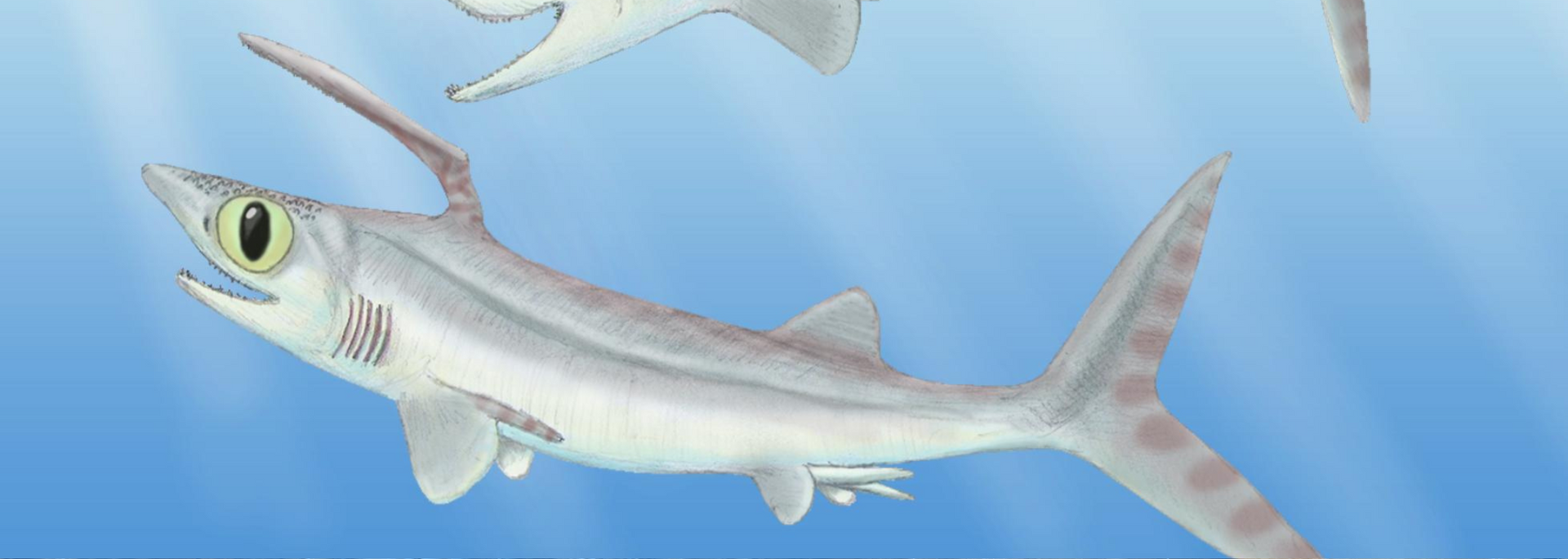
Even in the bizarro world of the Golden Age of Sharks, Stethacanthus stood out.


Measuring between 0.7 and 2 metres, this carnivorous shark had a dorsal fin the shape of an ironing board. Like the peacock's tail, this is thought to have been part of the male courtship display.


But it may have done double duty as a means of warding off predators. The top of the fin was rough and scaly – some believe in an evolutionary imitation of a huge mouth. In the inky blackness,
Stethacanthus may have looked like a terrifying two-mouthed beast.


Its actual mouth was used to eat small fish, cephalopods and crustaceans. Fossil records suggest that it may have roamed the seas, returning "home" to reproduce.


2. Falcatus

A drawing of two sharks swimming in the ocean.

At just a foot long, Falcatus falcatus was one of the smaller sharks. In fact, it's not technically a shark at all, but rather a Holocephalus. But for our money, it's an honorary shark worthy of inclusion in this list.


It was once a common sight in the Bear Gulch area of today's Montana, USA. The males have a curious sword-like appendage protruding from their heads. It's unclear exactly what function this had, but some speculate that the female would grab it in the act of mating.


3. Cladoselache


A fossil of a fish is sitting on top of a rock.

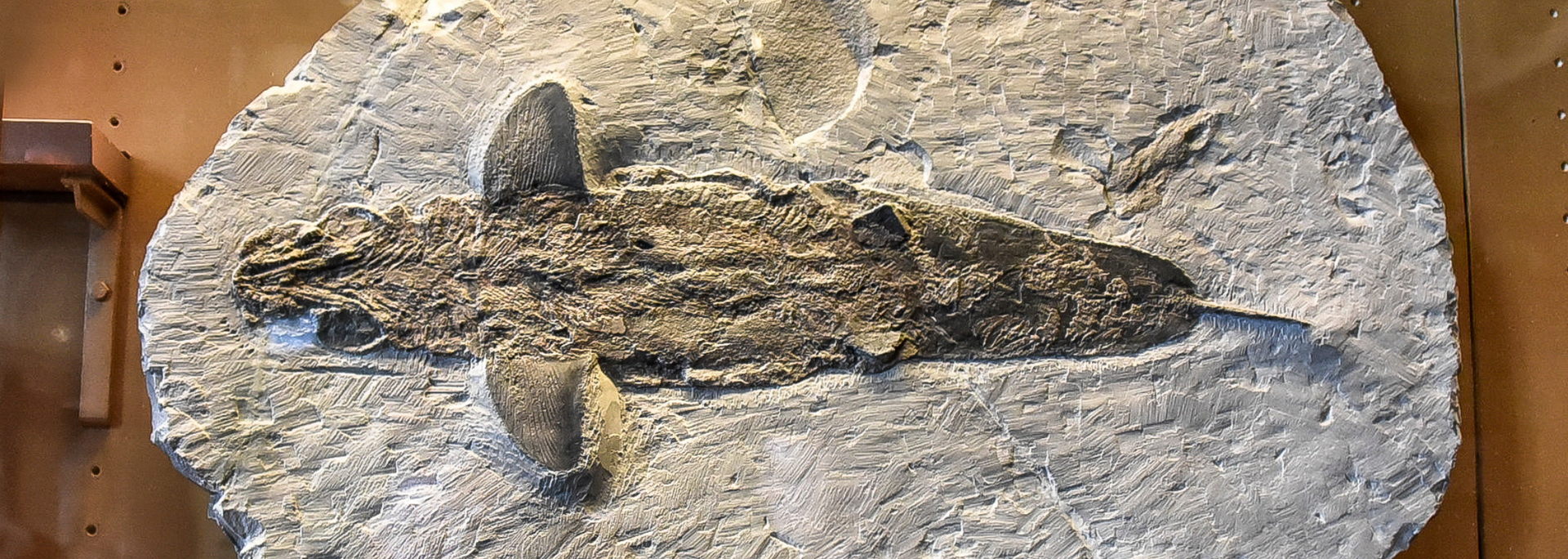
The Cladoselache (don't worry, we're not sure how to pronounce it either) looked something like today's mackerel sharks.


About three feet long, they had weaker jaws than their modern-day counterparts and a mouth that opened at the front, rather than beneath, the skull. Scientists believe that their big forked tails allowed them to move at high speed.


A curious fact about the
Cladoselache is that it lacked "claspers" – the anatomical feature that allowed male sharks to reproduce. We're still not sure how they managed without them!


4. Megalodon


A large shark is shown next to a smaller shark

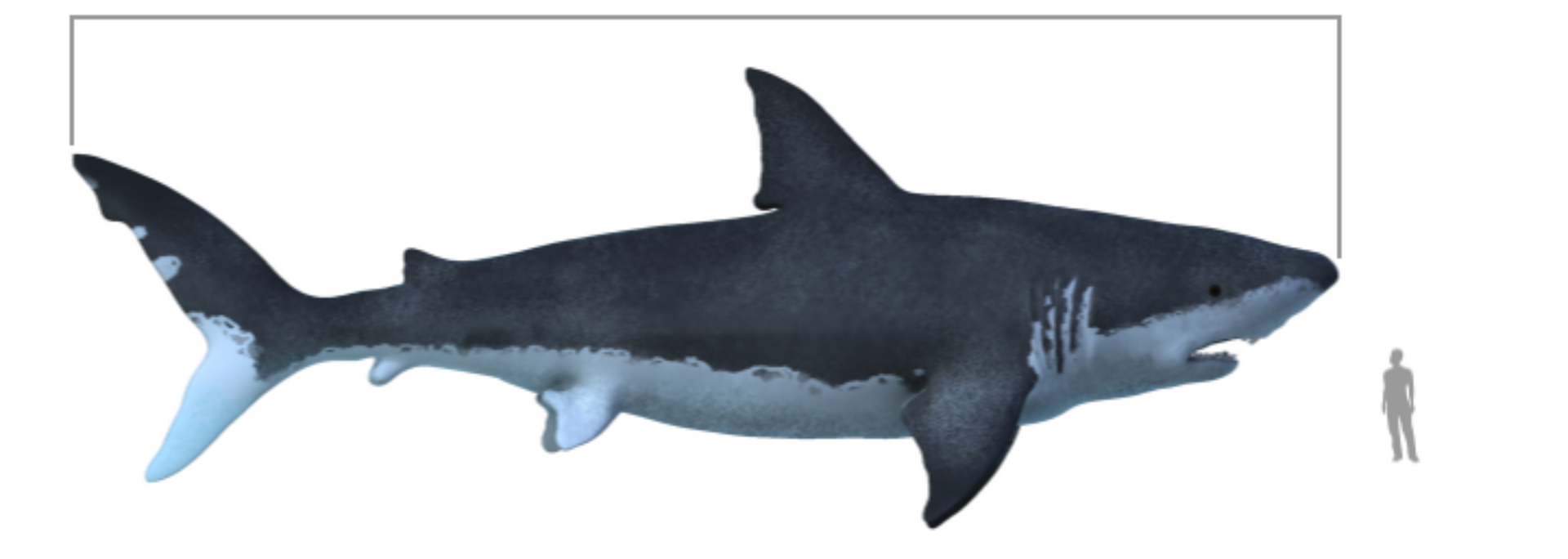
Megalodon is an extinct species of giant mackerel shark that terrorised the oceans between 23 and 3.6 million years ago.


It's famous for being one of the biggest, deadliest predators ever. But scientists still aren't sure what it looks like thanks to incomplete fossil records.


The modern consensus, however, is that it could weigh as much as 30 great white sharks and be as long as 60 feet – that's the length of a lane in a bowling alley!


The word "megalodon" literally means "big tooth" – and the name isn't joking around. Megalodon had a mouth that could gulp down two human adults, with teeth the size of bananas. It's believed to have eaten whales, seals, dolphins and even other sharks.


When you visit us here at Stump Cross Caverns, ask to see our megalodon tooth. It's quite the gnasher!


5. Helicoprion


A shark is swimming in the ocean with a spiral in its mouth.

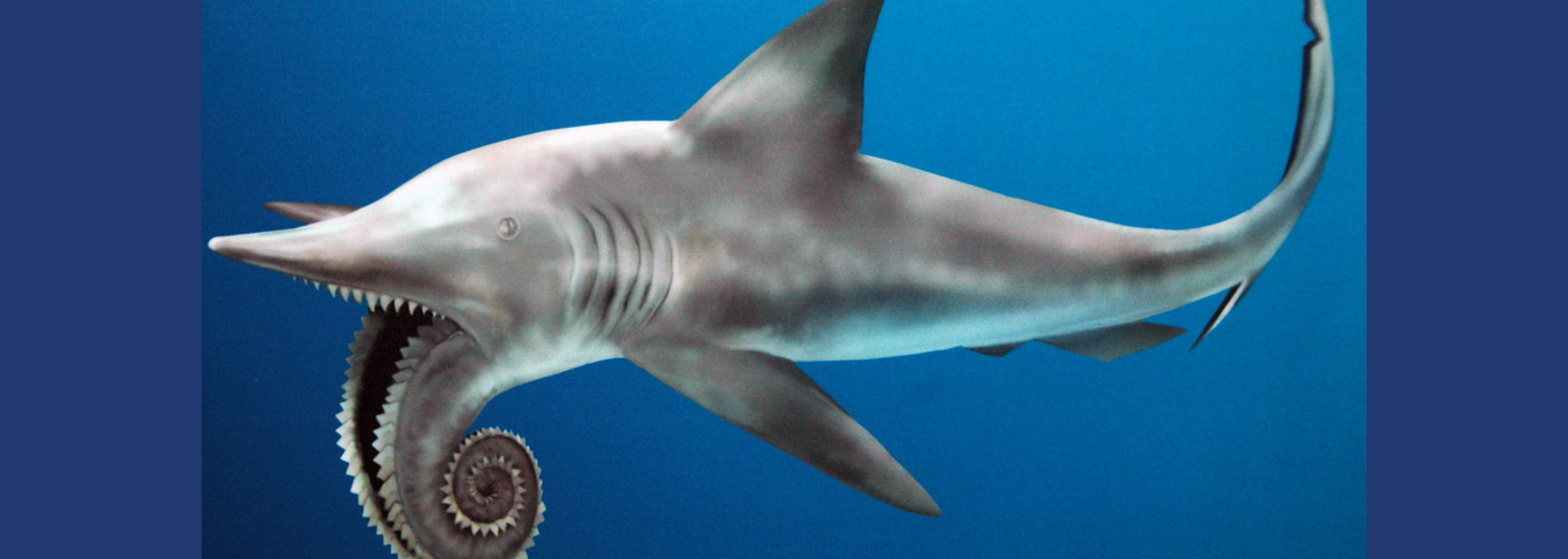
Helicoprion is – or was – a fascinating monster of the deep. We don't much about its skeleton – made out of cartilage, it didn't fossilise easily. But we do have a fossil record of its frankly freaky teeth.


These fossils show spirals of teeth. Known as "teeth whorls", these were long a mystery to scientists, who debated whether they had sat on the upper jaw, lower jaw or dorsal fin of
Helicoprion.


Further research suggests that this terrifying spiral of teeth sat in the lower jaw – and that each tooth in the spiral had a different function. The teeth whorl, in fact, was a veritable killing machine.


The front teeth would hook and drag prey into
Helicoprion's mouth. The teeth in the middle would pierce and cut the prey. Finally, the back teeth would push prey down the pipe.


This intricate system of teeth meant that
Helicoprion could eat both hard-bodied prey like ammonoids and soft-bodied prey such as squids.


And they were big. The largest teeth whorl specimen is 56 centimetres in diameter and 14 centimetres tall. It's thought to have belonged to a
Helicoprion that was nearly eight metres long.


Fun fact: although
Helicoprion belongs to the family of cartilaginous fish that includes sharks, it wasn't technically a shark. It was more closely related to the ratfish. However, ratfish are shark-like enough that they're sometimes nicknamed "ghost sharks".


Final thoughts


Today's shark population contains some cool specimens – from the megamouth shark to the basking shark. And new species are still being discovered: in 2021, for instance, scientists discovered three new species of glow-in-the-dark shark.


But despite the riches of today's oceans, these can't hold a candle to the Golden Age of Sharks – a period that saw dramatic evolutions and freakish specimens. Want to find out more? Check out our calendar of fun and educational
Yorkshire activities today.

Discover great restaurants and eateries near Stump Cross Caverns, from pubs to cafes – all perfect
By Simon Edward April 27, 2026
Discover great restaurants and eateries near Stump Cross Caverns, from pubs to cafes – all perfect for refuelling after exploring the Dales.
Discover Stone Age dietary and dental habits, early methods of cleaning teeth, and what cavemen used
By Simon Edward April 24, 2026
Discover Stone Age dietary and dental habits, early methods of cleaning teeth, and what cavemen used instead of toothpaste.
Discover the best apps for navigating the Yorkshire Dales, with maps, weather and safety tools
By Simon Edward April 20, 2026
Discover the best apps for navigating the Yorkshire Dales, with maps, weather and safety tools to help you explore with confidence.
Discover scenic wild swimming spots in the Yorkshire Dales, with essential safety tips
By Simon Edward April 17, 2026
Discover scenic wild swimming spots in the Yorkshire Dales, with essential safety tips to help you enjoy the water responsibly.
Discover the best rainy day activities in North Yorkshire, from museums to cosy cafes and caves
By Simon Edward April 13, 2026
Discover the best rainy day activities in North Yorkshire, from museums to cosy cafes and caves that are perfect for April weather.
Planning a birthday party for an inquisitive mind? Discover creative ideas
By Oliver Bowerman April 10, 2026
Planning a birthday party for an inquisitive mind? Discover creative ideas to make your child's special day educational and fun.
Get ahead with your weird and wonderful cave knowledge. Learn the amazing answers
By Oliver Bowerman April 6, 2026
Get ahead with your weird and wonderful cave knowledge. Learn the amazing answers to some of the most common questions kids ask about caves.
Discover beautiful wildflower meadows in the Yorkshire Dales this spring
By Simon Edward March 31, 2026
Discover beautiful wildflower meadows in the Yorkshire Dales this spring – from limestone valleys to hay fields near Stump Cross Caverns.
Discover how Yorkshire does Easter differently, from folk theatre and unique baking customs
By Oliver Bowerman March 30, 2026
Discover how Yorkshire does Easter differently, from folk theatre and unique baking customs to springtime sparkle beneath the ground.
Discover where you might find fossils in Yorkshire, and how to explore responsibly while protecting
By Simon Edward March 27, 2026
Discover where you might find fossils in Yorkshire, and how to explore responsibly while protecting the prehistoric heritage of the region.
More Posts