
How did Stump Cross Caverns get its name?

Simon Edward • May 10, 2024
BOOK TICKETS

Stump Cross Caverns is a Yorkshire landmark. But what is a "stump cross"? Let's follow the toponymic trail…


Stump Cross Caverns is a Yorkshire landmark. But what is a

Here at Stump Cross Caverns, we're soaked in history – from the prehistoric caves themselves to the 19th-century lead miners who discovered them.


But did you know that the name itself is also a slice of history?


What's in a name?


The simple answer to the question "Where does Stump Cross get its name?" is that it was taken from Stump Cross, which long before the caverns were opened marked the limit of Knaresborough Forest.


But what is a "stump cross"? Well, there's an easy answer for that too. A stump cross is a cross with a broken shaft.


Outside North Walsham Water Works in North Norfolk, for instance, there's an unprepossessing stump cross. If you weren't looking for it, you'd probably pass it by. But this broken cross is, a nearby inscription explains, serves as a monument to a battle in the peasants' revolt of 1381.


So far, so simple. But here in Yorkshire, there are no less than
nine Stump Crosses "as far apart as Wadworth which lies south of Doncaster, Bolton by Bowland in the western dales, and Aldborough near Boroughbridge".


What is the explanation for this cluster of broken crosses – and why are places named after them?


Stone crosses in the UK


In the UK, stone crosses are everywhere. Some are intact and some are broken – but all tell us something about the nation's history.


The earliest known crosses were erected by Christian missionaries who had come to the British Isles to convert the Saxons.


The Saxons were known to worship stone pillars – so these crosses were put up as new places for them to worship.


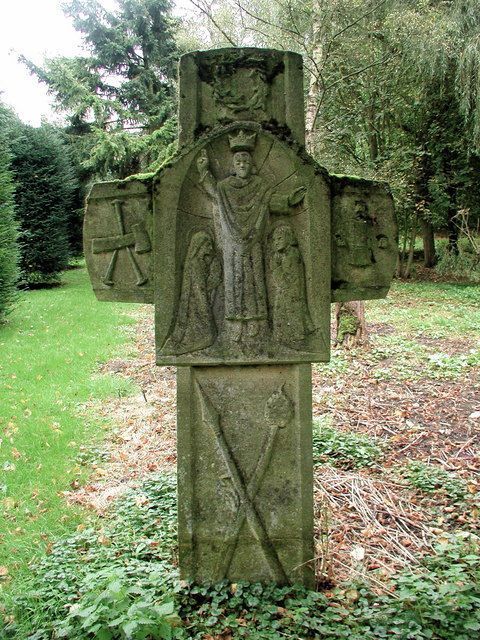
A stone cross in a cemetery with trees in the background.

Then there were crosses in marketplaces and at road junctions. The significance of these is more complicated. They functioned as place markers and acted as symbols of the official religion of the day.


This religion was Catholicism. But then came the English Reformations, turning many of those crosses into stumps.


The English Reformation


In the 16th century, the Church of England was forced by Henry VIII and his advisers to break away from the Catholic Church.


This was part of a broader European Reformation – but in England's case, it was kickstarted by Henry's desire for a divorce, which Rome wouldn't allow.


After England split from the Church, monasteries were dissolved and crosses were destroyed. The country was being made Protestant by physical force as well as through words.


The destruction of Catholic monuments didn't end there but continued into the Civil War of 1642 to 1649.


The Parliamentarians, led by Oliver Cromwell, were Puritans. They saw Catholicism as mere superstition.


In 1643, one year into the Civil War, Parliament issued "an
Ordinance for the utter demolishing, removing and taking away of all Monuments of Superstition or Idolatry", including crosses.


What all this means is that from the 16th century on, stump crosses were an everyday part of life – as everyday as phone boxes and roundabouts are today.


Why did "stump cross" become a place name?


Place names come from all sorts of sources. Generally speaking, they're often some combination of a local landowner, hill, river or other physical feature with a suffix meaning "farm", "settlement" or "camp". In the UK, they usually come from Anglo-Saxon, Norse or a local Celtic language.


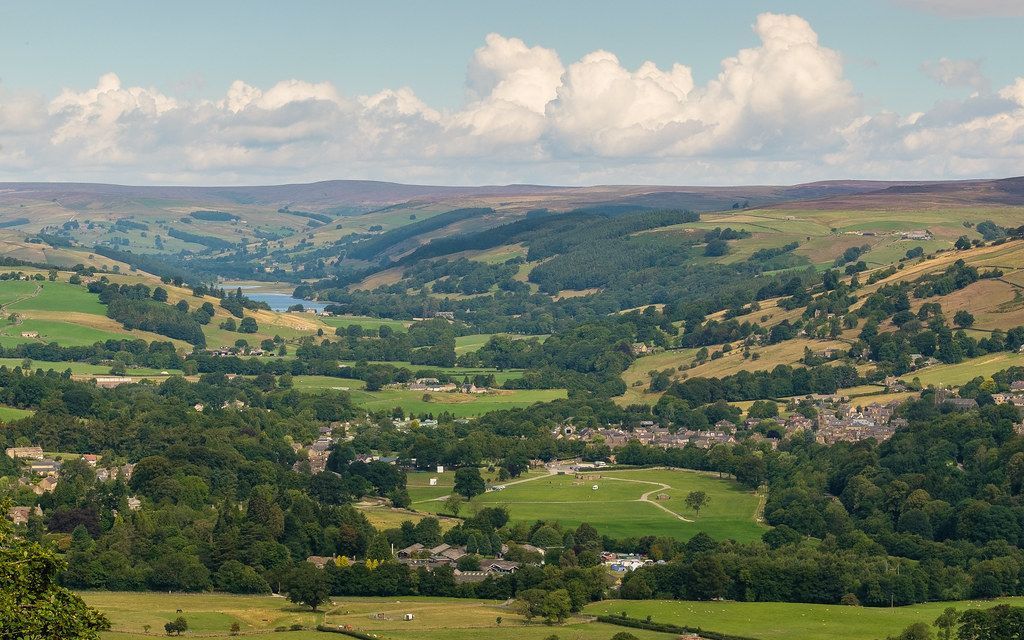
Picture Nidderdale and Pateley Bridge.

It's unclear exactly why our Stump Cross between Pateley and Grassington got its name. Perhaps there was a cross destroyed in the post-Reformation fervour. Perhaps it simply fell into disrepair.


Either way, the name is a fascinating glimpse into British history.


Neighbouring names


Of course, it's not just Stump Cross whose name has an interesting backstory. The towns, villages and cities of the UK are a treasure trove for etymologists (people who study the history of words).


Take Pateley Bridge, the small market town about a 10-minute drive from Stump Cross Caverns. Its name comes from Old English and means "woodland clearing of the paths".


This is a classic example of a settlement taking its name from the landscape. Pateley was a crossroads – the intersection of paths leading to Nidderdale and Craven.


Other place names follow linguistic patterns that can be seen all around the country. Take Nidderdale itself. The name of this Area of Outstanding Natural Beauty comes from the river Nidd and the word "dale", meaning "valley".


This pattern of "river name + dale" can be seen all over the north of England and Scotland. Famous examples include Wensleydale and Rochdale.


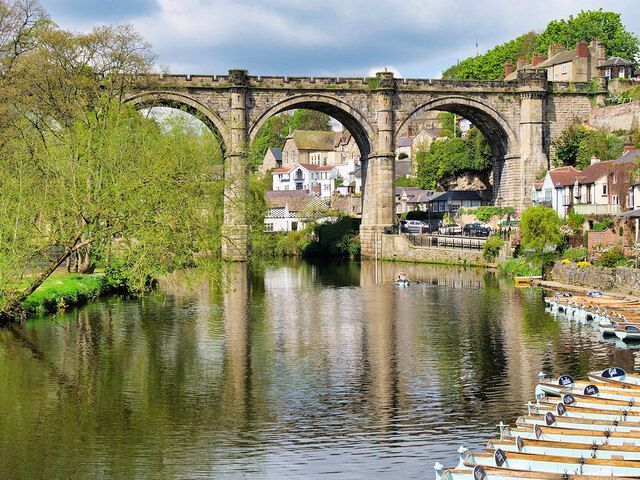
Picture of the river Nidd at Knaresborough.

As for the Nidd itself, the etymology has been lost in the mists of time. It's probably Celtic or Pre-Celtic, which has led some to speculate that it derives from a similar-sounding Celtic word that means "brilliant" or "sparkling".


Others think it comes from an even older Indo-European word that simply means "river". If these scholars are right, a visit to the River Nidd is a visit to the River River!


There's a wealth of examples to choose from, but we'll leave you with just one more.


Greenhow, or Greenhow Hill, is a 30-minute walk from Stump Cross Caverns. It used to be an industrious lead-mining village and a key supplier of lead. But its name goes further back than that.


"How" comes from the Old Norse word
haugr, meaning a hill or a mound. Just as Nidderdale means the valley of the Nidd, so Greenhow means "Green's hill" or "Green's mound".


And, yes, "Greenhow Hill" means "Green's Hill Hill".


Conclusion


In the Yorkshire Dales, history is everywhere – from the mines, castles and caverns that pockmark the landscape to the scenes of historical battles.


But history can be found, too, in simple place names. Rivers, settlements and natural features all tell us stories about the past – and a simple stone cross can teach us about the Reformation, the Civil War and a way of life that now seems as distant as a fading star.


Are you looking for a unique
family day out near Harrogate? Why not visit our ancient cave system? Book your tickets for Stump Cross Caverns today.

Caves have been around for millennia. Yet humans still haven't uncovered them all.
By Simon Edward December 12, 2025
Caves have been around for millennia. Yet humans still haven't uncovered them all. Could there be more near Stump Cross Caverns here in Yorkshire?
Sites of Special Scientific Interest are natural areas with special legal protection. Learn more
By Simon Edward December 8, 2025
Sites of Special Scientific Interest are natural areas with special legal protection. Learn more about them – and how our caves became an SSSI.
A miracle in a cave and the origin of tinsel… Discover the magical folk tale of the Christmas Spider
By Oliver Bowerman December 5, 2025
A miracle in a cave and the origin of tinsel… Discover the magical folk tale of the Christmas Spider.
Meet Santa in the most magical grottos, discover the best festive days out
By Oliver Bowerman December 1, 2025
Meet Santa in the most magical grottos, discover the best festive days out and make some Christmas memories across Yorkshire.
Discover the first reviews of Stump Cross Caverns back in the Victorian era
By Simon Edward November 28, 2025
Discover the first reviews of Stump Cross Caverns back in the Victorian era, featuring glowing endorsements and some dramatic adventures.
Go back in time and discover what Stone Age people drank, from river water to wild brews
By Simon Edward November 28, 2025
Go back in time and discover what Stone Age people drank, from river water to wild brews and herbal teas.
Learn about Yorkshire's most memorable Christmas traditions, ranging from sword dances to sea dips.
By Oliver Bowerman November 21, 2025
Learn about Yorkshire's most memorable Christmas traditions, ranging from sword dances to sea dips.
Discover the best team-building activities across Yorkshire – from treetop adventures to underground
By Simon Edward November 17, 2025
Discover the best team-building activities across Yorkshire – from treetop adventures to underground discoveries.
Discover 5 of our favourite Yorkshire reservoir walks, rambles and hikes – all within easy reach
By Simon Edward November 14, 2025
Discover 5 of our favourite Yorkshire reservoir walks, rambles and hikes – all within easy reach of Stump Cross Caverns.
Discover how to spot a geode, what makes them sparkle inside and how to experience geode cracking
By Simon Edward November 10, 2025
Discover how to spot a geode, what makes them sparkle inside and how to experience geode cracking at Stump Cross Caverns.
More Posts