Cave photography isn't easy, but it's very rewarding. Learn why capturing underground worlds requires patience, planning and creativity.
For amateur enthusiasts and professional landscape photographers alike, there are few environments more challenging than a cave. But that challenge only makes caves more compelling.
Out in the open, photographers work with the familiar tools provided by nature – open spaces, reasonably predictable landscapes, sunlight and shadow.
But underground, beyond the reach of natural light, all of that disappears. Some surfaces soak up colour and light, while others reflect it. Even shadows behave very differently.
And yet, despite the difficulty, cave photography remains one of the most rewarding forms of photography in the natural world.
For those drawn to exploration and geology, photographing caves offers a chance to capture hidden worlds few people get to see for themselves.
Why is cave photography so difficult?
The biggest challenge is the most obvious one: caves are dark.
Unlike with twilight or night photography outdoors, there is often no ambient light at all underground. Every detail visible in a cave photograph exists only because a photographer has deliberately introduced light.
This in itself creates challenges. It usually necessitates long exposure times, so any movement could blur images. And if lighting is not curated carefully, colours can appear dull and flat, with no dynamic light or shadow.
Furthermore, moisture and condensation in caves can affect, or even damage, equipment. And uneven surfaces can make tripod placement difficult.
Even the most experienced photographers quickly discover that cave photography is less about quick snapshots and more about patience and planning. A single image can take a long time to create.
Light – the most important tool
In cave photography, light replaces composition as the primary creative decision.
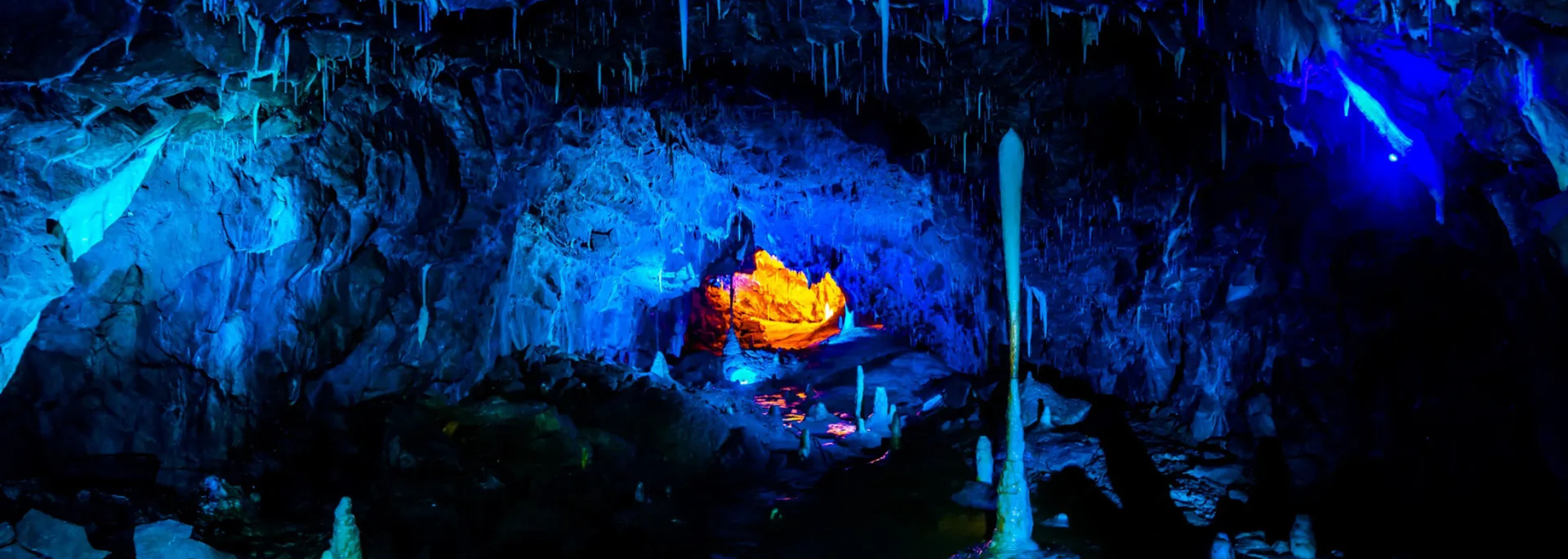
Photographers often use multiple light sources positioned around a chamber to reveal texture and depth. Headtorches, LED panels and handheld lights can all help illuminate formations gradually during a long exposure.
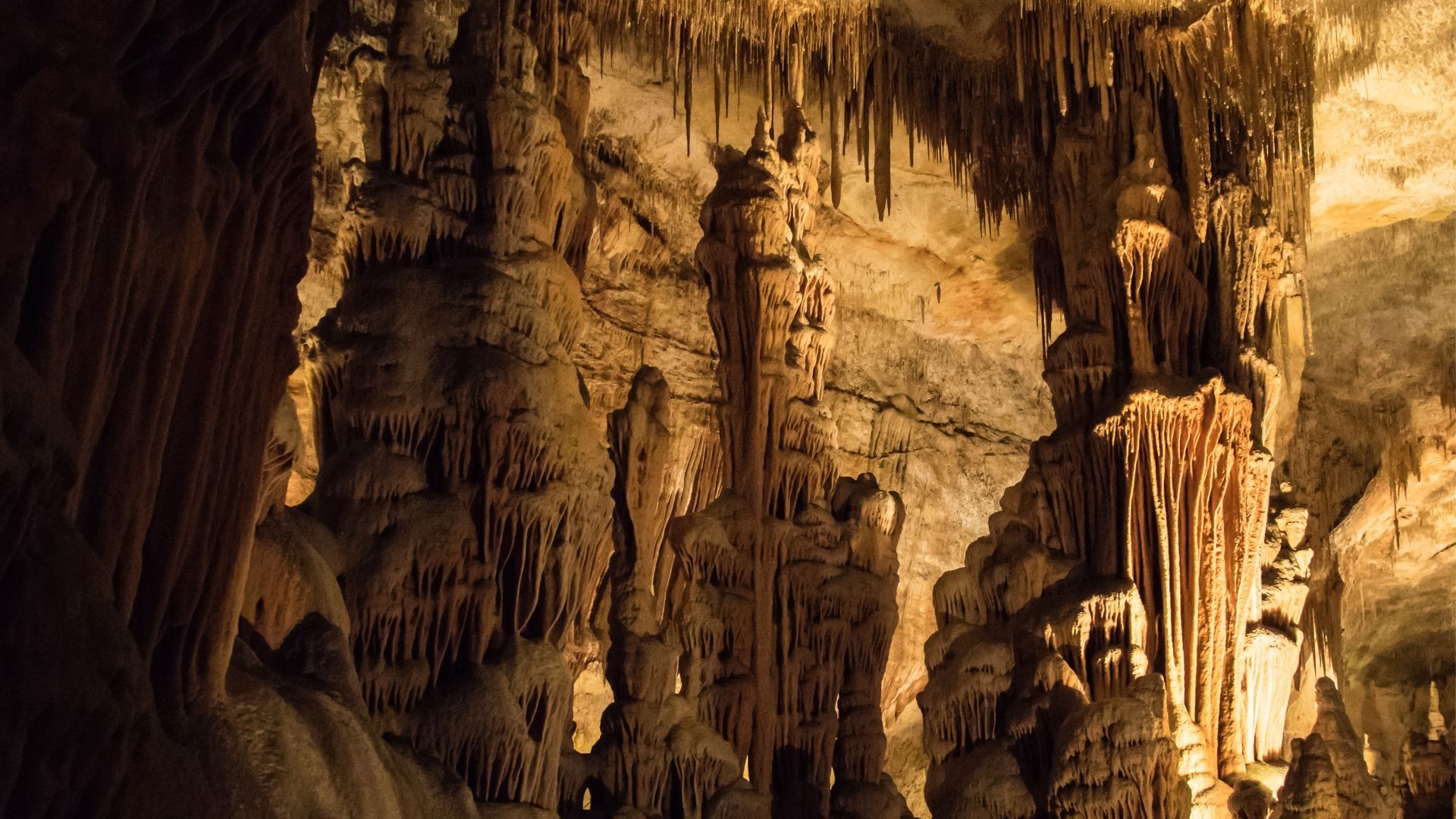
The goal is usually to create subtle, dramatic lighting rather than flooding a space with bright light. This allows stalactites, mineral flows and rock textures to emerge naturally from the darkness and stand out against shadow.
Too much light flattens the composition, but too little leaves the most important and most beautiful details hidden.
Stability matters underground
Because exposures usually need to be long, stability becomes essential.
Tripods are almost always required, but caves rarely offer convenient flat ground on which to set them up. Photographers often work carefully around rocks, water or narrow passages to find secure footing for both themselves and their equipment.
Safety always comes first. Slippery surfaces, uneven terrain and confined spaces mean photographers must move slowly and deliberately.
A simple and sensible rule: if setting up a photograph compromises your safety and risks injury or worse, the photograph is not worth taking.
Protecting precious environments
Caves are incredibly delicate natural spaces that must be respected.
Many formations take thousands, sometimes millions, of years to form. Oils from human skin can permanently halt mineral growth, while careless movement may damage features that cannot be replaced.
Responsible cave photography therefore follows some strict principles:
- Stick to established paths
- Avoid touching formations
- Never move rocks or natural features for composition
- Leave no equipment or waste behind
A good cave photographer sees themselves not just as an artist, but as a guest in an ancient space.
Working with colour and texture
One of the surprises of cave photography is how colourful underground environments can be.
Minerals create subtle variations in tone, from cool greys to iron reds and crystalline whites. However, these colours often need careful lighting to appear in photographs.
Moisture adds another layer of complexity. Water reflects light unpredictably, creating beautiful sparkle in some conditions and unwanted glare in others.
Capturing texture becomes just as important as capturing colour. Shadows help reveal the curves of stone, the sharp edges of crystal formations and the scale of vast underground chambers.
Often, the most successful images embrace and utilise the impact of darkness rather than try to eliminate it completely.
The human element
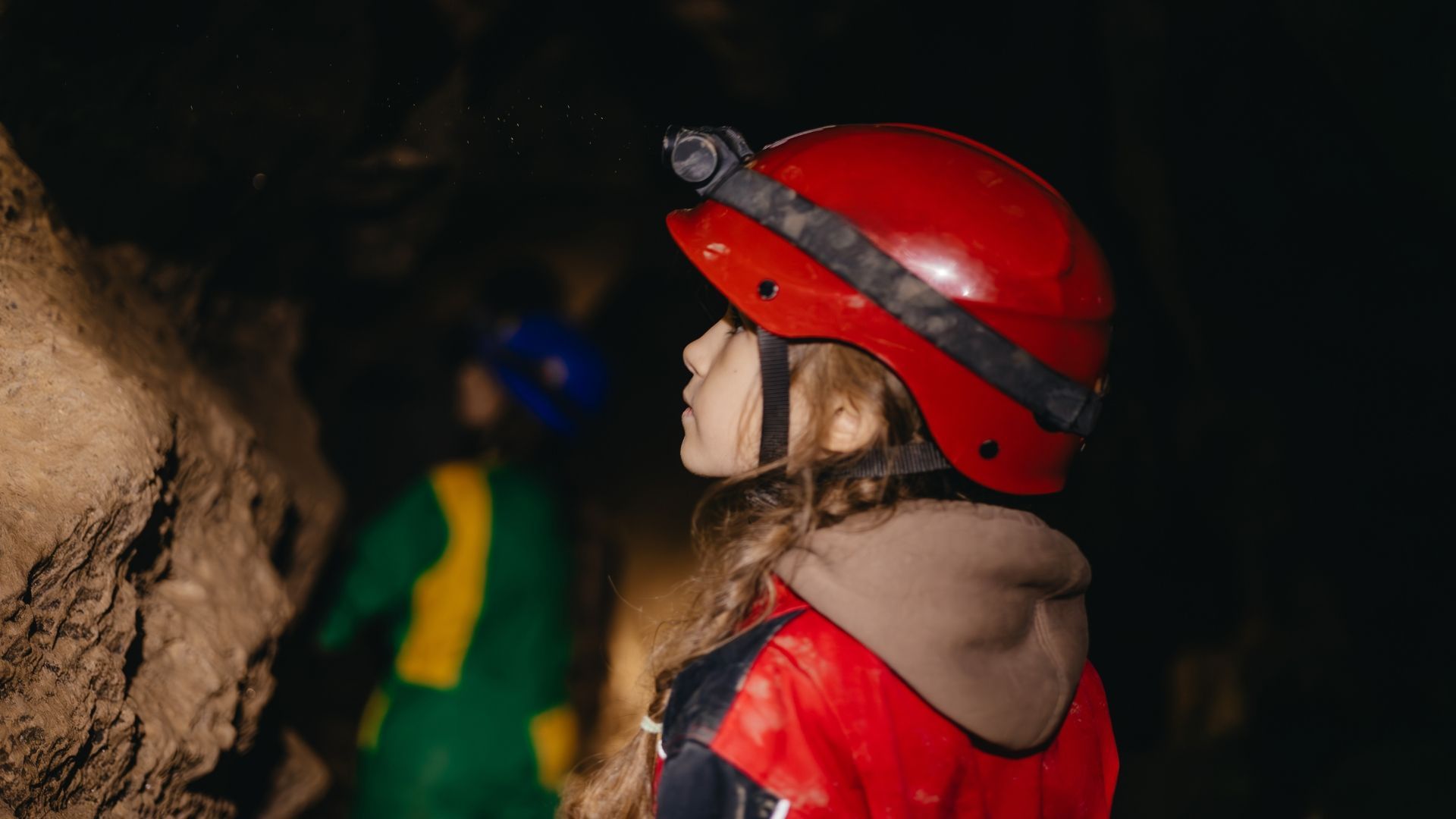
Including a person within a cave photograph can dramatically change how an image feels.
A small figure illuminated by torchlight instantly communicates scale, helping viewers understand the size of underground spaces that might otherwise seem unreal. It also helps to tell a story of human exploration and discovery.
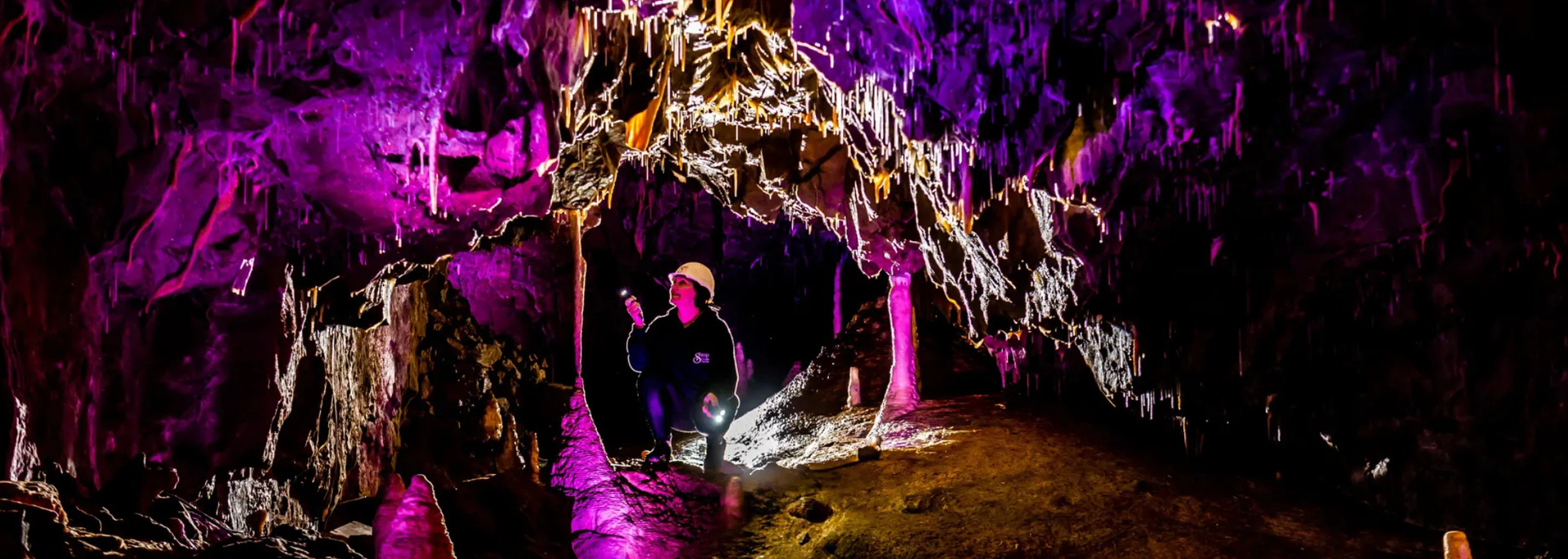
However, photographers must take great care to ensure people remain safe and comfortable throughout the process of taking a cave portrait.
Going underground
Unlike a lot of outdoor photography, preparation for cave photography begins long before arrival.
Considerations include access permissions and weather conditions that affect cave safety. It's also vital to ensure photographers have appropriate clothing and safety gear, and are well-stocked with backup lighting, batteries and protective equipment for cameras.
Humidity, mud and temperature changes can all affect equipment performance, so waterproof protection and spare power sources are essential.
Good planning maximises the chances of an enjoyable experience, rather than a stressful one.
The art of cave photography demands more skill than almost any other environment. It requires patience, creativity, technical ability and, above all, great care.
And sometimes, the true reward isn't just the resulting photographs, but the deeper appreciation gained for the hidden worlds beneath our feet. Here, the darkness gives way to ancient stone, and light reveals landscapes formed long before human history began.
Beyond the lens
While cave photography can produce extraordinary results, it's worth remembering that you don't always need a camera to experience the wonder of the world below.
Sometimes, the beauty of caves is best experienced in the moment, surrounded by the sense of deep time.
Here at Stump Cross Caverns, we encourage our visitors to enjoy the caves for themselves. You'll notice the textures of limestone shaped over hundreds of thousands of years. You'll spot the sparkle of mineral formations. And you'll experience the spellbinding atmosphere that photographs can only partially convey.
And you don't need any specialist equipment or technical knowledge to take part. Guided pathways and thoughtful lighting allow visitors of all ages to safely experience this incredible underground world.
Stump Cross Caverns is one of the most magical tourist attractions in the Yorkshire Dales. Visiting us means exploring an ancient underground cave that began life long before dinosaurs roamed the Earth. Ready for an adventure like no other? It's easy to book your tickets online.