
There's a monster in a cave near you – and it hates the dark

simon • 13 January 2025

Electric lighting in show caves attracts the dreaded lampenflora. Learn more about this light-loving beast.


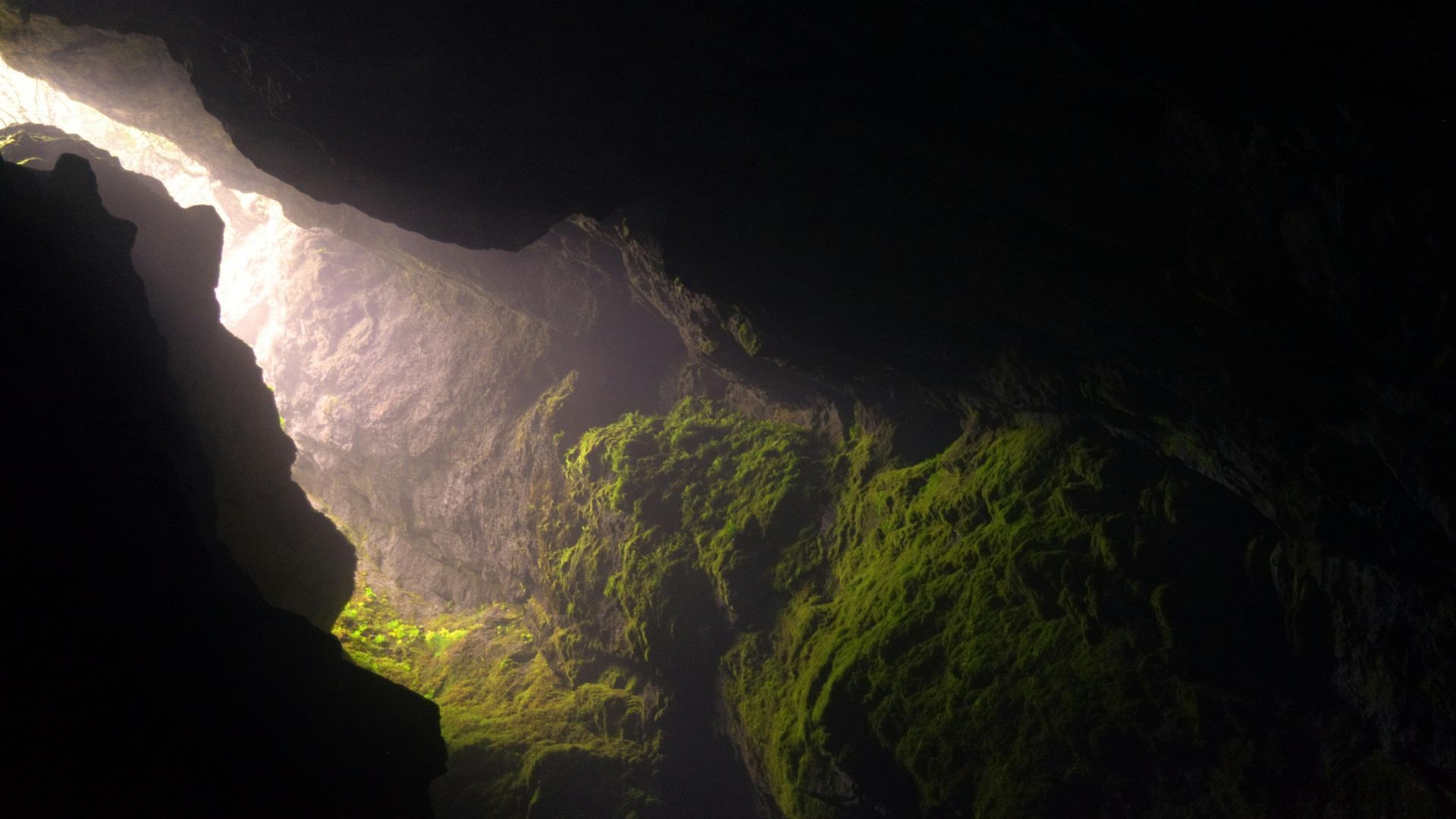
Sunlight streams into a dark cave, illuminating green moss on the rock walls.

Humans have changed the Earth's ecosystems in a multitude of ways. But not all of them are intentional. Sometimes, human presence alone is enough to make a difference.
One example of this can be found in the world of show caves. Show caves, by definition, are caves that have been opened for the public to explore. And like it or lump it, cave owners and the public have changed the ecosystems of caves.

Sometimes, this is for the better. Take safety measures. When the first show caves were opened, safety was not a strong suit. Heck, it was barely an afterthought. But today, you can soak up the wonders of prehistoric caves without putting yourself in danger. Good job, humans!

Then there's lampenflora. This is a problem in show caves the world over – and it's the direct result of human visitors.

Here's what happens. Humans open a cave for public use. They install lighting to show off the beautiful rock formations.

They also bring in germs, seeds and spores. These grow under the electric lights. Before you know it, the cave walls are a breeding ground for algae, mosses and even ferns.

These are known collectively as lampenflora and they're a problem for cave ecosystems. That's why show caves the world over are committed to using different kinds of lighting to minimise their impact – and that includes us right here at Stump Cross Caverns.

How do lampenflora grow?

Lampenflora grow under electric lighting. They typically grow around 50 centimetres from the light source and develop around it in a circle.

In the days before LED lighting, the light bulbs would dry out the moisture and the plants would form lichen-like rings.

Modern lighting transmits less heat, meaning less lampenflora. You can even get special LED lights that don't transmit the frequencies needed for photosynthesis.

Why is lampenflora a problem?

There are two main problems with lampenflora. The first is that it's a form of pollution. Dripstones get covered in green rings. Taste is subjective, of course, and some people find them beautiful. Either way, they're an unwanted addition to a prehistoric environment.

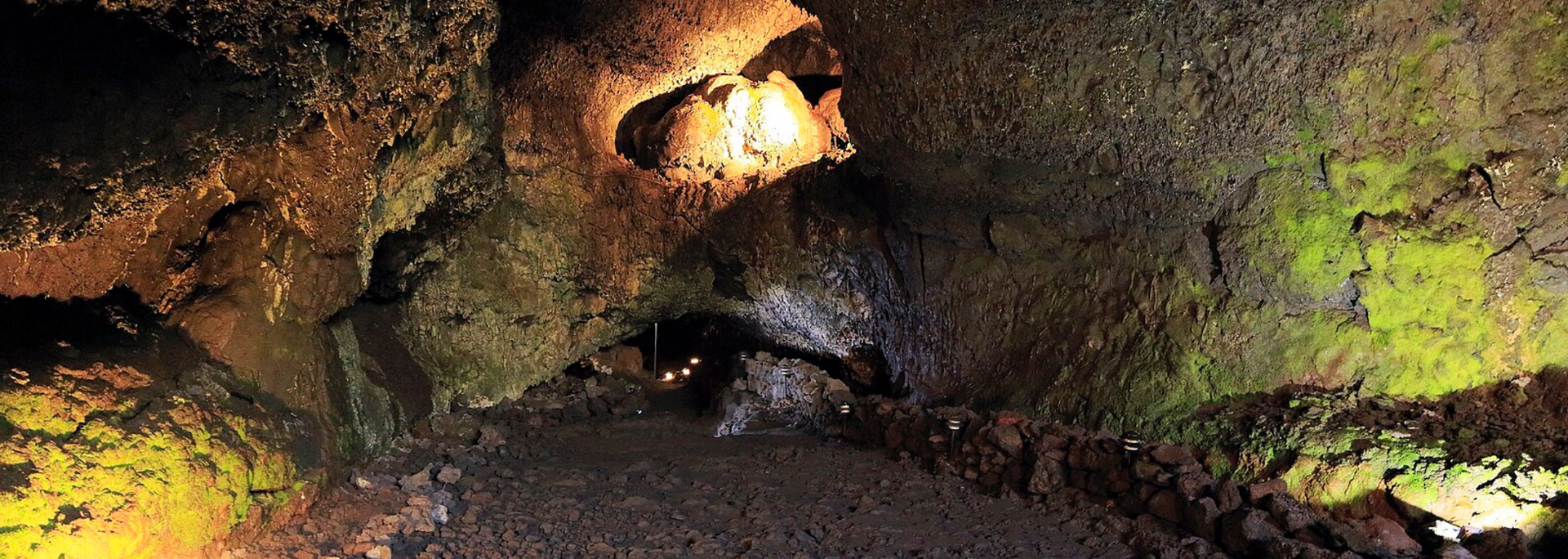
Inside a dark cave, with rough, textured walls lit by amber and green light.

The second, overlapping reason is that lampenflora can produce weak organic acids. Over time, these corrode both limestone and rock formations – those stalagmites and stalactites that make show caves so special.
The problem is even worse when the caves contain ancient cave paintings. These are especially vulnerable to lampenflora.

Show caves are time capsules. Like art galleries or ancient buildings, they preserve our planet's history. Whatever you think of its appearance, lampenflora is like black mould on the Sistine Chapel roof or graffiti on Michelangelo's David.

Thankfully, it doesn't have to be like this. Cave owners the world over are proactive in combatting lampenflora.

How can lampenflora be combatted?

Different methods have been used over the decades to remove lampenflora and inhibit its growth. For a time, toxic herbicides were used until the environmental toll was fully registered.

Other cave owners wiped the rock surfaces down with brine. But this had one main drawback: it took time and had to be done several times a year.

The simplest way to combat lampenflora is with modern lighting. LED lights lack the heat that helps lampenflora grow.

It's not just the lighting itself that helps. It's also where it's positioned. The lighting needs to be kept as far from the surfaces as possible.

Some caves, especially those with prehistoric cave paintings, go so far as to dispense with electric lighting altogether. Instead, visitors light their way with torches.

What different kinds of lampenflora are there?

The most common types of lampenflora are green algae, mosses and cyanobacteria (a type of blue-green algae). It also includes lichens, ferns and even certain flowering plants, such as saxifrage.

It's important to note that the term "lampenflora" only covers cave plants that grow under electric lighting. It doesn't cover fungi and roots growing into caves or plants growing in sunlight at the cave mouth.

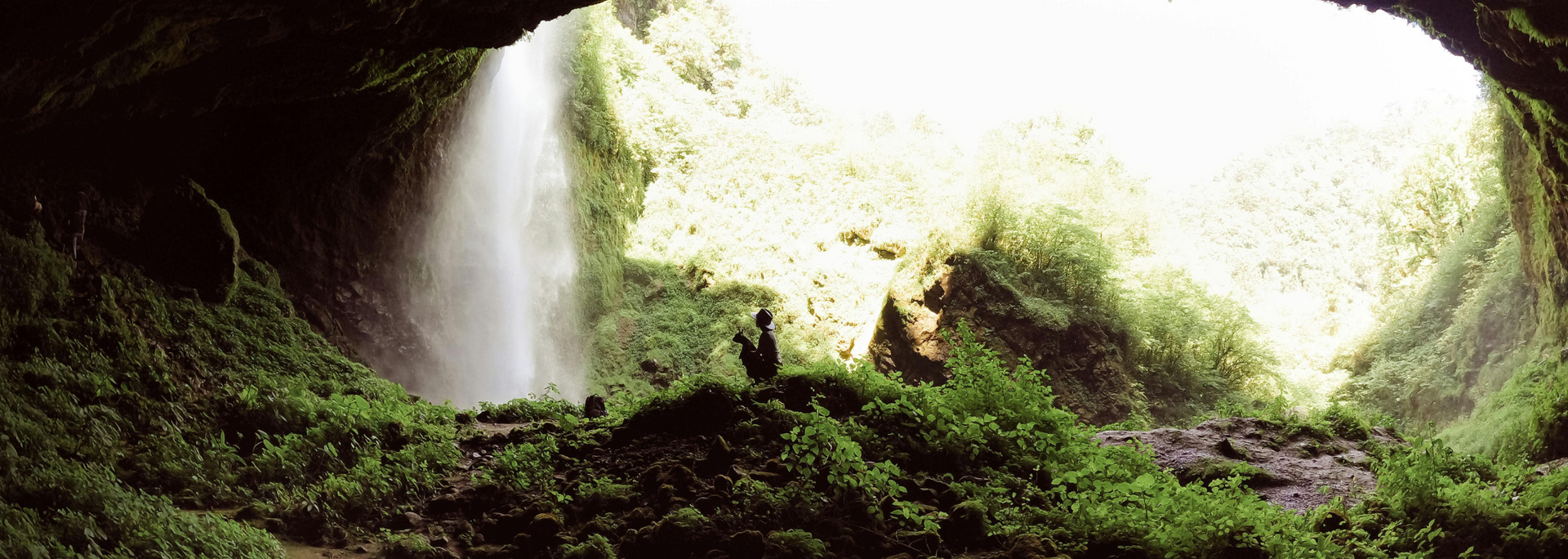
Waterfall cascading into a lush, green cavern. Sunlight streams through the opening, illuminating the foliage.

Where does the word "lampenflora" come from?
Lampenflora
is a German word that literally translates as "lamp flora" or "plants of the lamp". It was introduced by the botanist Klaus Dobat in 1963. Today, it's used everywhere.
It's also sometimes referred to as "green sickness" and
la maladie verte ("the green sickness" in French). This gives you some idea of how unpopular it is in the cave community…
What happened at Lascaux?

Discovered by accident in 1940, Lascaux Cave in France is a prehistoric wonder of the world. It boasts more than 600 wall paintings, mostly of large animals, dating from between 17,000 and 22,000 years ago.

In 1963, however, the caves had to be closed. This was primarily because the sheer number of visitors had changed the cave environment. Lichens and crystals began to appear on the walls, threatening to damage the priceless paintings.

Like the algae-covered Cango Caves of South Africa, Lascaux is a warning from history about what can happen if lampenflora goes unchecked. And at Stump Cross Caverns, it's a warning we take seriously.

That's why we're
raising funds to update our lighting and ensure the caves can be visited for generations to come.
About our fundraiser

Stump Cross Caverns isn't just a business. It's also a conservation project. We're custodians of these magnificent
Yorkshire Dales caves , and we take our responsibilities seriously.
This means balancing the needs of our visitors with the needs of the caves themselves. Electric lighting is a necessity to ensure people can enjoy the subterranean wonders. But we need better lighting to keep the caves looking their prehistoric best.

Our aim is to install state-of-the-art lighting that will protect the cave's formations, cut energy costs and keep the caves open to visitors.

If you want to help us reach this goal, please consider
donating to our crowdfunder . We're grateful for every donation, big or small.

Share this article

Recent Posts

Discover our favourite family-friendly nature days out in Yorkshire
by Simon Edward 12 June 2026
Discover our favourite family-friendly nature days out in Yorkshire, from waterfalls and caves to forests, wildlife and countryside adventures.
Dive into fascinating facts about limestone, from glowing minerals and fossils to caves, crystals
by Simon Edward 8 June 2026
Dive into fascinating facts about limestone, from glowing minerals and fossils to caves, crystals and ancient geological history.
Looking for a family-friendly event in Yorkshire this summer? Explore 10 varied events in our guide.
by Simon Edward 5 June 2026
Looking for a family-friendly event in Yorkshire this summer? Explore 10 varied events in our guide.
Start learning the basics of identifying geodes and their crystal formations with our beginner's gui
by Simon Edward 29 May 2026
Start learning the basics of identifying geodes and their crystal formations with our beginner's guide to geode identification.
Discover some of the largest cave systems in Europe, from vast underground chambers
by Simon Edward 25 May 2026
Discover some of the largest cave systems in Europe, from vast underground chambers to ancient limestone labyrinths and palaces of ice.
Could you be the one to make the next HUGE fossil discovery at Stump Cross Caverns? Join us
by Simon Edward 22 May 2026
Could you be the one to make the next HUGE fossil discovery at Stump Cross Caverns? Join our Ice Age Dig for a once-in-a-lifetime opportunity.
What happened before the Stone Age? Find out about Earth's earliest history, prehistoric life
by Oliver Pyper 22 May 2026
What happened before the Stone Age? Find out about Earth's earliest history, prehistoric life and the world before humans.
Discover the best glamping experiences in the Yorkshire Dales, plus local attractions,
by Simon Edward 18 May 2026
Discover the best glamping experiences in the Yorkshire Dales, plus local attractions, packing advice and tips for family-friendly adventures.
What you've heard is true: birds really are dinosaurs.
by Oliver Pyper 15 May 2026
What you've heard is true: birds really are dinosaurs. Explore this fascinating evolutionary story with us.
Show More