
Secrets of Stump Cross: the Fourth Stream

17 January 2025

Could there be a fourth stream and a lost underground lake at Stump Cross Caverns? Follow the trail today.

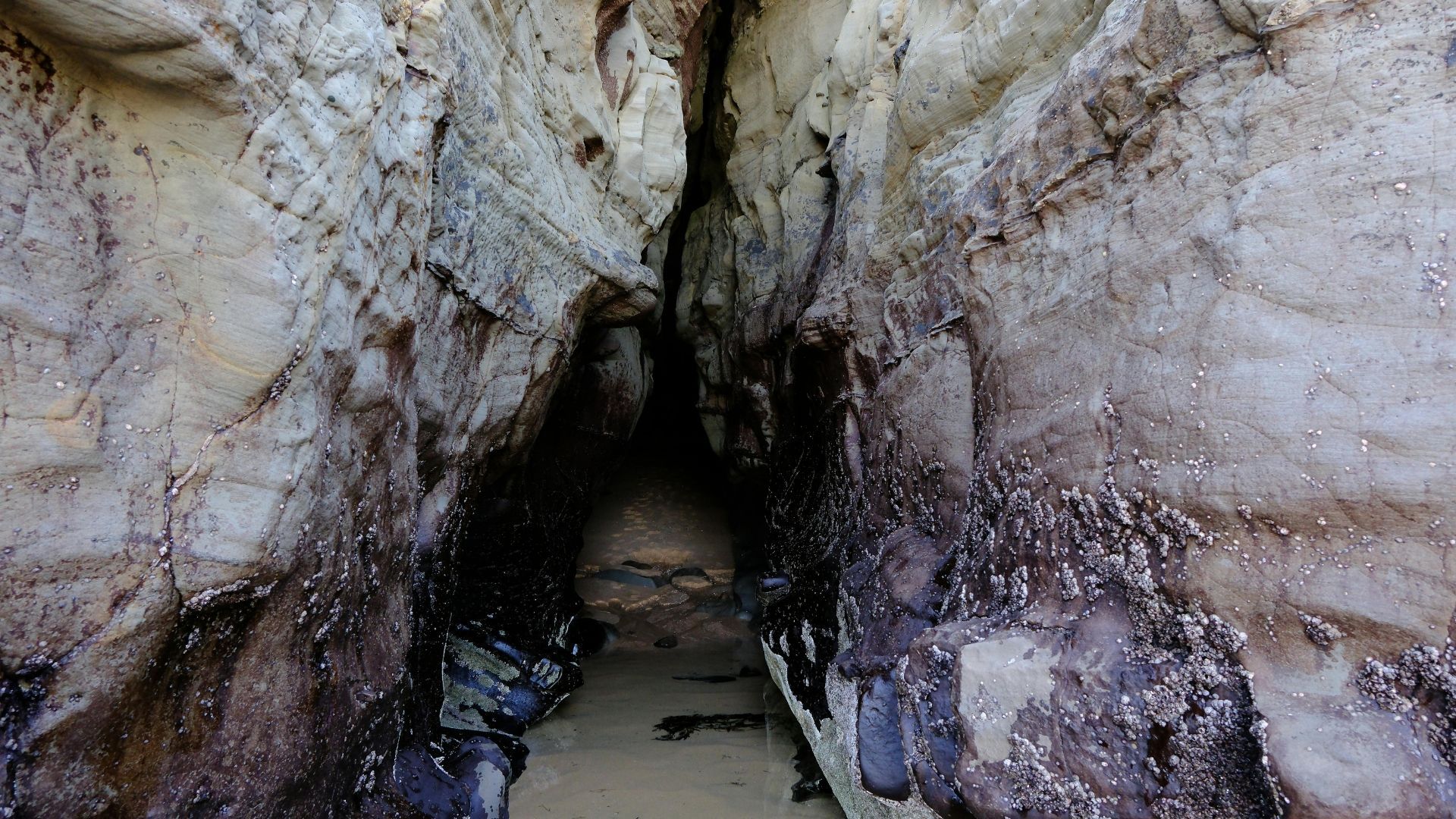
Rock cave entrance with dark opening and light-colored walls.

Here in the Yorkshire Dales National Park, Stump Cross Caverns is a local treasure that's home to ancient treasures. Chambers like Reindeer Cavern and Wolverine Cave are known to cavers the world over.


But Stump Cross is so much more than the sections you can visit. Take the Fourth Stream. It's far from a household name, even among the most passionate of cave lovers. We're not even 100% sure that it exists. But if it does, it could have fascinating consequences for our understanding of the caverns.


It's a story as long and winding as our subterranean passageways – and it all begins with a happy accident one freezing day at the beginning of 1860. So wrap up warm – we're heading down into the caves…


A brilliant mistake


In the second half of the 19th century, the area surrounding Stump Cross Caverns was a hotbed of lead mining. The industry sustained entire communities. It was a hard life that involved combing the landscape for seams and digging, digging, digging.


In January 1860, two brothers from Greenhow Hill were out doing just that. They started digging – but their spades didn't touch the material they were after. Instead, they went right through the ground into a network of passageways and chambers.


The caves were soon opened to the public, who came from all around to marvel at the prehistoric treasures.


For the first 60 years of Stump Cross as a tourist attraction, the caves were relatively dry. Sure – they got a little damp in places, but there were no streams, lakes or other water sources in sight. If there was a stream, it was running somewhere below the visitors' feet.


All that changed in 1922 when a team of Cambridge medical students led by Christopher Long carried out further excavations in the caves.


The initial discovery of Stump Cross Caverns was a brilliant mistake. But the Cambridge cavers knew what they were doing. Long's vision was to extend the network and make it a show cave to compete with its counterparts in Somerset and Derbyshire.

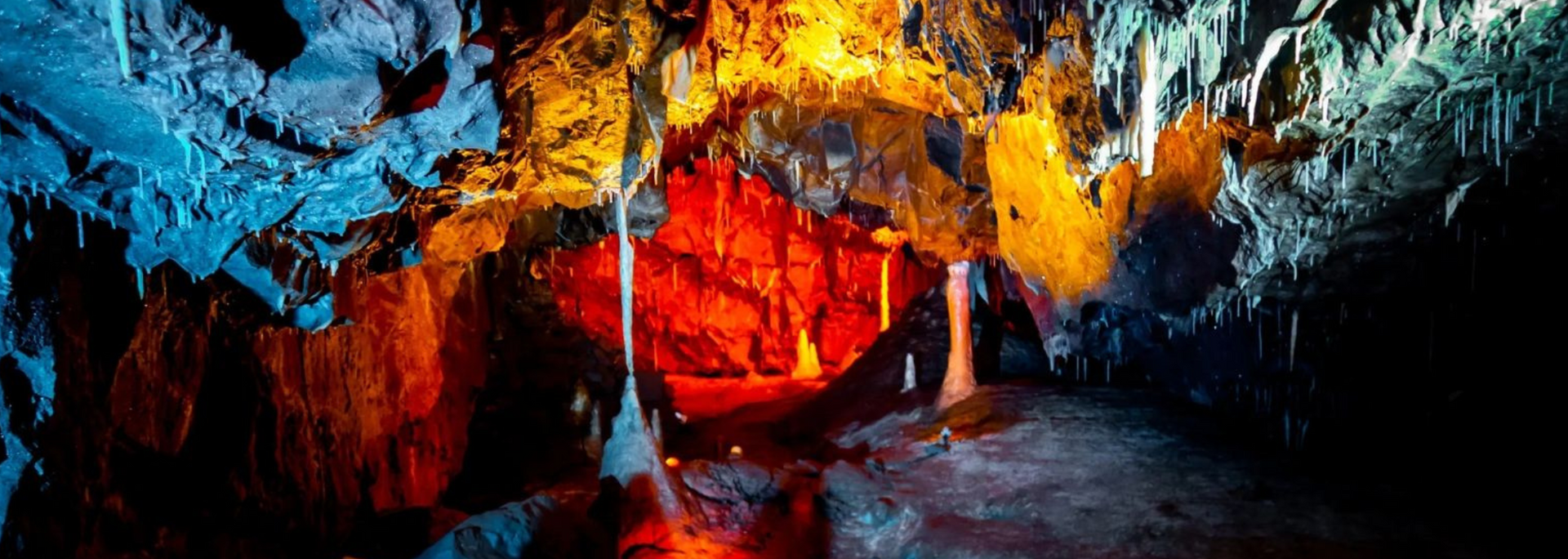
Cave interior illuminated with blue, orange, and red lights, showcasing stalactites and geological formations.

They were in luck – but this time, their luck was helped along by skill, determination and grit. They discovered a second, lower series of caves and a hitherto undiscovered stream.
Big dreams and little streams


The following years saw further explorations by the Craven Pothole Club and others. They traced the First Stream into the Far Upper Stream Passage and identified its source as a swallow hole called North Sink.


In 1949, members of the CPC discovered a series of caves that they called "Heaven" and "Hell". Here, they found a second stream.


Further explorations in the 1950s and 1960s mapped this stream's course all the way from a sink opposite the Mongo North entrance to where it flows into the First Stream.
Around the same time, a third stream was discovered and given the enigmatic name of the Runestream. We don't know who discovered it or when – but there is a story that Martin Davis of the Yorkshire Underground Research Team returned from an expedition with his wet suit in tatters.


This is where it gets interesting. Could there be a fourth stream – and if there is, could the
legend of Long's Lost Lake be true after all?


What is the legend of Long's Lost Lake?


When Christopher Long and his caving companions carried out their excavations in 1922, Long made a remarkable claim. There was, he said, an underground lake in the cave network.


The expedition over, he told the owner about his discoveries. But he had a not-so-ulterior motive. Now that he had uncovered such a fascinating feature, could he earn some money from the show caves?


The answer was a firm "no". In high dudgeon, Long filled in the lake – and it's never been seen since.


Or so the story goes. It could be that Long made the whole thing up as leverage. But not if you ask Stump Cross Caverns legend Geoff Workman.

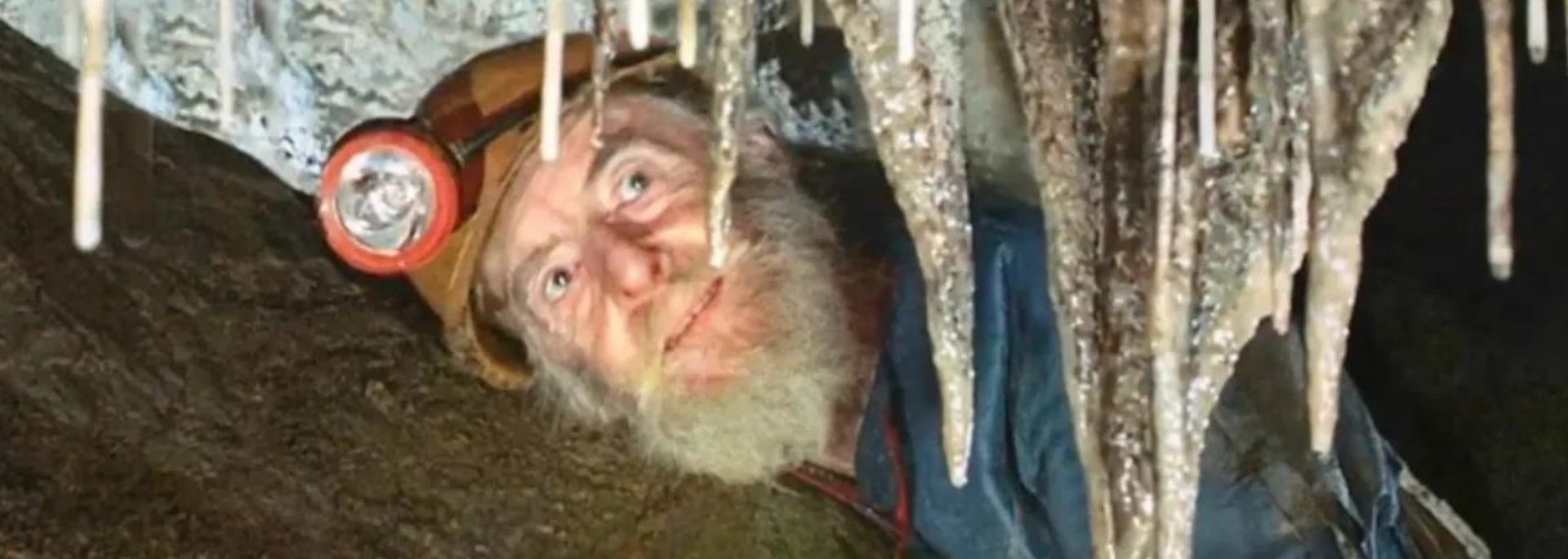
A man wearing a headlamp smiles while looking up at stalactites in a cave.

Who was Geoff Workman?


Geoff Workman was a passionate caver who added hugely to our knowledge of Stump Cross Caverns. He was also a record-breaker,
spending an astonishing 105 days underground in 1963 . At the time, this was the longest time spent in isolation underground.


Above all, he loved to dig. His digging expeditions led him to suspect that there was a fourth stream underground – and that this could flow out of Long's Lost Lake.


A lake needs two things: a stream and a natural dam to contain the water. Geoff knew about the streams – so how about the dam?


He pointed to three pieces of evidence. First, there was the six-inch vein of barite excavated at the start of the Clay Level. Barite doesn't dissolve in water – so if there was barite elsewhere in the caves, could it act as a natural dam?


Then there was a shakehole near the Mongo North entrance that featured the remains of a concrete channel. In the 1960s, it was a water channel. Today, however, it's mostly dry.

Could water have flowed down this channel into the heart of Stump Cross, where it was contained by the barite dam?


Finally, there's a telling detail from the legend of Long's Lost Lake. Long claimed to have found a vein of lead in the Lake Series. Is it a coincidence that stream-washed nuggets of lead ore have been found elsewhere in the cave system?


Taken together, Geoff argued, these pieces of evidence point in one direction: Long's Lost Lake.


So what do you think? Is there a lost lake somewhere in the winding passageways and chambers of Stump Cross Caverns? Or was it the invention of an ambitious young man with his eyes on the prize?


If we learn any more about it, we'll be sure to let you know.


There are many more secrets to discover at Stump Cross Caverns. Looking for an unforgettable
family day out near Harrogate ? It's quick and easy to book your tickets online .

Share this article

Recent Posts

Ice caves are wonders of nature. Discover 5 of the most amazing – and humongous – examples worldwide
by Simon Edward 7 September 2026
Ice caves are wonders of nature. Discover 5 of the most amazing – and humongous – examples worldwide.
From hidden places to unique events… Explore your choice of Heritage Open Days in Yorkshire
by Simon Edward 4 September 2026
From hidden places to unique events… Explore your choice of Heritage Open Days in Yorkshire this year.
Thinking of trying caving? Here's what you'll need to bring as a first-time spelunker,
by Simon Edward 1 September 2026
Thinking of trying caving? Here's what you'll need to bring as a first-time spelunker, including clothing, safety gear and essential supplies.
Want to get your hands on a geode? Learn where to buy geodes in the UK –
by Simon Edward 31 August 2026
Want to get your hands on a geode? Learn where to buy geodes in the UK – and have a go at cracking your own!
Are you looking for a vegetarian restaurant in Yorkshire? Explore 10 of the best in our food guide.
by Simon Edward 28 August 2026
Are you looking for a vegetarian restaurant in Yorkshire? Explore 10 of the best in our food guide.
Is your little learner moving into Key Stage 2? Explore ideas and resources
by Simon Edward 24 August 2026
Is your little learner moving into Key Stage 2? Explore ideas and resources to give them a head start at home.
Welcome to Grassington – a market town nestled in the beating green heart of the Yorkshire Dales.
by Simon Edward 21 August 2026
Welcome to Grassington – a market town nestled in the beating green heart of the Yorkshire Dales.
Fingal's Cave is one of the treasures of the natural world. But how was it formed?
by Simon Edward 14 August 2026
Fingal's Cave is one of the treasures of the natural world. But how was it formed? Let's go back in time…
Do you have a geode that needs valuing? Find out how to put a price on your discovery in our guide.
by Simon Edward 10 August 2026
Do you have a geode that needs valuing? Find out how to put a price on your discovery in our guide.
Show More