How a cave became a musical instrument

Simon Edward • November 13, 2023
BOOK TICKETS

Discover the fascinating story of the Great Stalacpipe Organ – and the eccentric genius who dreamed it up. It all started with a bump on the head…

Discover the fascinating story of the Great Stalacpipe Organ – and the eccentric genius who dreamed it up. It all started with a bump on the head…

On an otherwise ordinary day in 1954, Leland W Sprinkle was exploring Luray Caverns in Shenandoah National Park, Virginia.


It was his son's birthday – and the child was happily exploring the caverns with his father. Back then, it was more difficult to see as the lighting in the caves wasn't thorough or consistent. 


That was when a fortunate act of clumsiness changed Leland's fortunes. In the half-lit gloom, Leland's son bumped his head against a stalactite.


What, you may be wondering, could be so significant about a bump to the head?


Leland W Sprinkle was an observant man. He noticed that a clear, precise tone emanated from the rock when his son's head hit it.


Leland, who was also wonderfully curious, decided to knock a few other stalactites to see what happened. And sure enough, different notes, clear and crisp, came singing out into the echoey chasm.


Leland knew he had literally hit paydirt – and he came up with a brilliant idea.


Now, is this story true? Well, as Rob Wilkins points out in his latest book, some stories are just
too good to check.


What we do know, however it happened, is that a man named Leland W Sprinkle
did take a keen interest in those stalactites and stalagmites. And he did engineer a way to turn them into a cohesive musical instrument. 


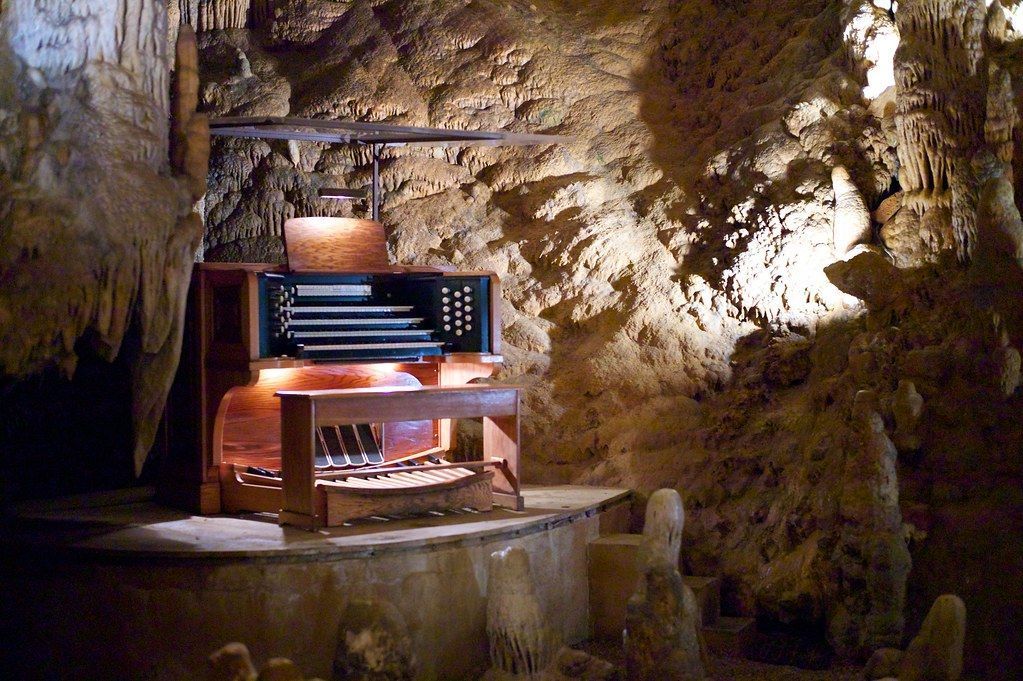
That's right. Leland Sprinkle turned a cave into an organ. There's even a keyboard. It uses the rocks to make music that fills the entire cave. It is called
the Great Stalacpipe Organ.


This is how it all works.


What exactly is the Great Stalacpipe Organ?


First of all, to be clear, "stalacpipe" is not a real word. It's simply the words "stalactite" and "pipe" smooshed together.


But the organ doesn't use pipes. And it's not really an organ.


Picture of the Great Stalacpipe Organ Plaque

So, what are the actual mechanics of the instrument?


The instrument itself is the cave. Specifically, the stalactites located within the cave.


The instrumentation that Sprinkle set up almost 70 years ago involves a series of hammers that strike the stalactites, controlled by a central panel. When the hammers hit the stalactites, they emit a noise which can be heard throughout the cave.


Sprinkle took great pains to ensure the stalactites emitted the proper noise. He painstakingly shaved each stalactite to tune it to a specific pitch. 


Sorry, what's a stalactite?


The objects making the noise are the rocks hanging from the ceiling. These are known as stalactites.


They're different from their cousins, the stalagmites. These rise up from the ground. Both rock formations are created through the same erosive processes.


Feel free to come up with your own mnemonic device to help memorise the difference.


Where is the organ located?


The stalactites that make up the organ cover three-and-a-half miles of the underground cavern. The tunes can be heard anywhere in the cavern, thanks to the acoustics of the underground echo chambers.


The organ's board is located in Luray Caverns, which is a part of a larger cave system lying under Shenandoah National Park. The board was constructed in Waynesborough, West Virginia, and then brought into the caverns.


Why do the stalactites emit noises?


The stalactites are what are known to physicists as "acoustic resonators".


They work via vibration. When a rigid length of material, typically a pipe or metal bar, vibrates at a certain frequency, the air around it begins to emit a high-pitched oscillation which we interpret as a tone. If the resonator is rigid enough, it will create a predictable pitch, as the oscillation will be consistent each time.


Not every type of rock makes a good acoustic resonator. Slate is considered the best, though in Skiddaw – another musical cave – they use what are known as hornfels.


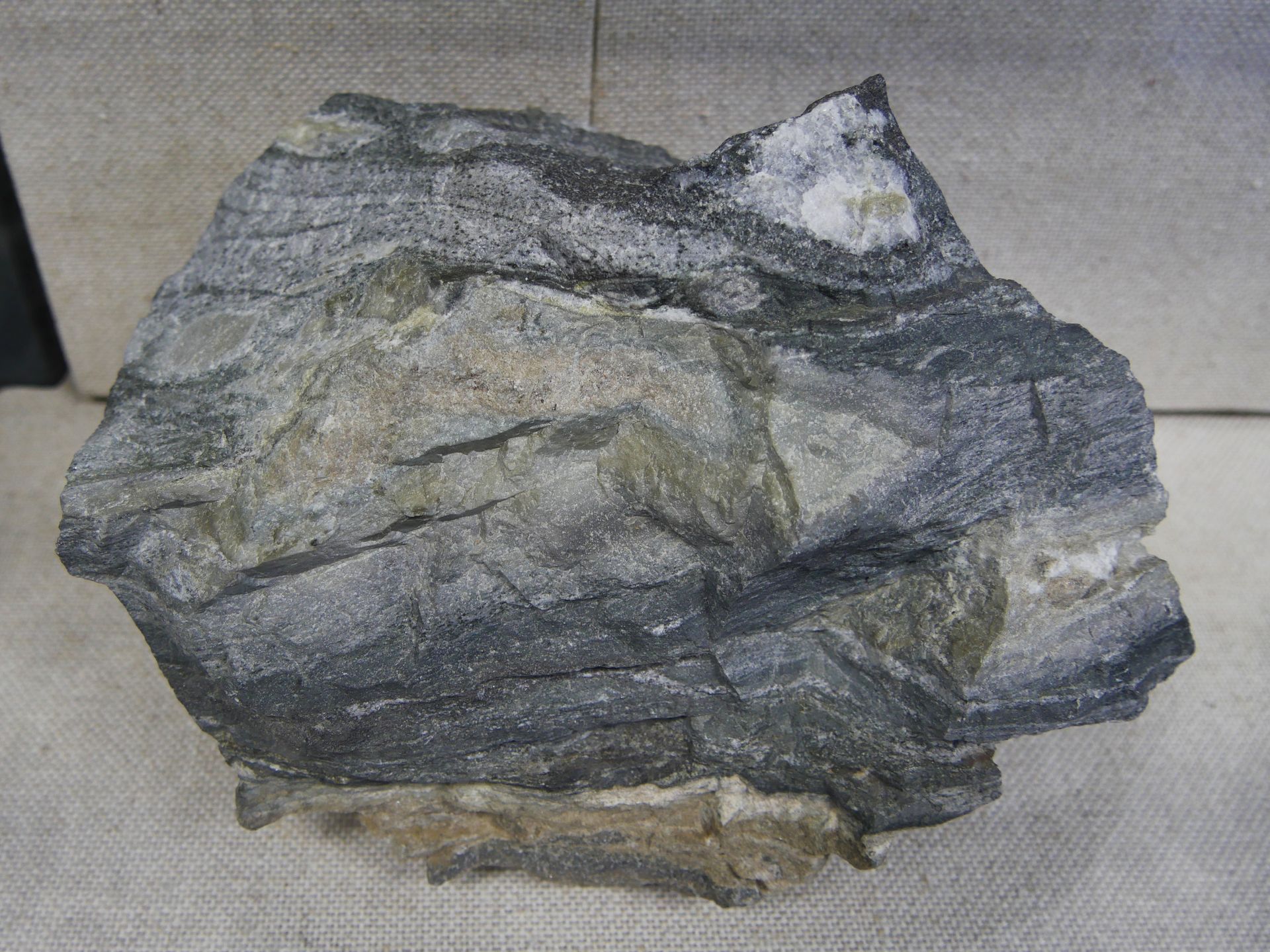
Picture of hornfels rock

Hornfels are metamorphic rocks that are more rigid than usual while also being surprisingly strong. When a rock is rigid, it tends to become brittle. But occasionally – when the conditions are just right – you get rocks like hornfels, which retain their strength despite being very rigid.


The organ at Luray Caverns is unusual. Its stalactites aren't made of slate or hornfels but from a type of limestone called dolomite.


Why would Sprinkle do this?


Nobody really knows for sure – that secret remains with him.


Perhaps Sprinkle understood that this was one of the most human endeavours anyone could ever think up. Nature is wild and untamed – but people love to try to tame it. Sprinkle's organ is the ultimate expression of this impulse – he took a magnificent and ancient set of rocks and turned them into an instrument that could be controlled and enjoyed by people.


In any case, we think it's great he had the foresight to give it a try.


Is the organ still there?


It is! You can listen to it every day. Each tour of Luray Caverns includes a piece of organ music, played by an automated system.


Are there other instruments like it?


Yes – Kenya, Pennsylvania, Colorado, India and Vietnam are all home to various instruments that are similar to the Great Stalacpipe Organ.


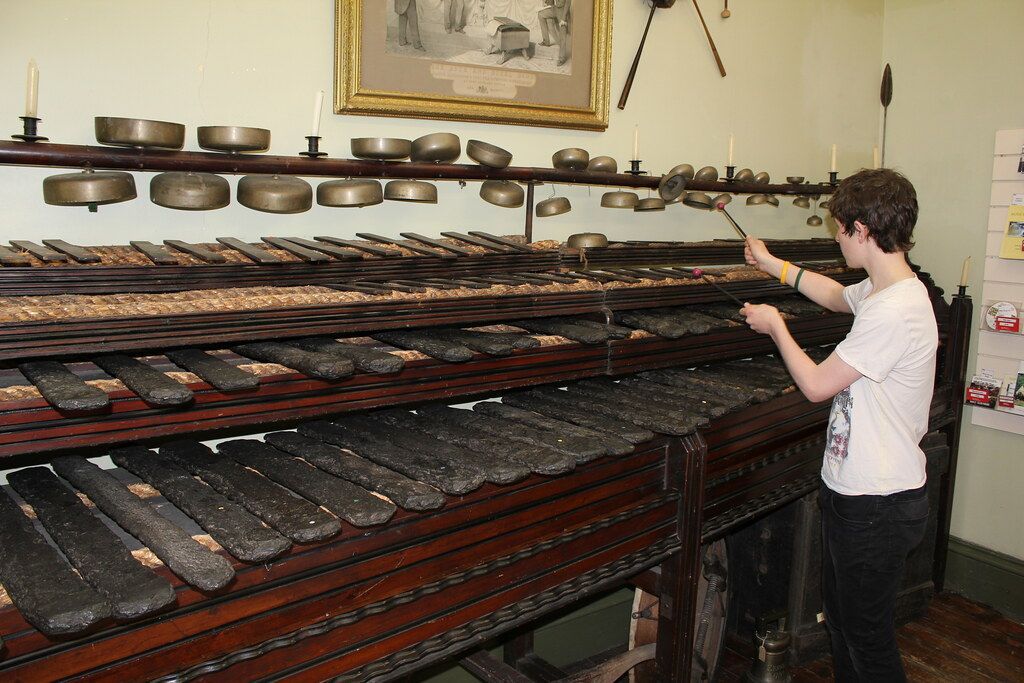
The most interesting one (besides Sprinkle's invention) is probably Musical Stones of Skiddaw, which were set up hundreds of years ago by Peter Crosthwaite.


Picture of the Musical Stones of Skiddaw

These types of instruments – where rocks are struck to emit musical tones – are fairly rare. However, they're common enough to have been given a name: "lithophones".


Where can I hear music in a cave?


You don't have to track down a lithophone to hear some real rock music (excuse the pun).


Lots of caves around the globe hold concerts. And it makes sense – caves are very resonant, so they make fantastic venues for acoustic music.


One of the most famous cave venues was Chislehurst Caves in London. These man-made mining tunnels held concerts by David Bowie, Pink Floyd, Jimi Hendrix and a host of other 60s superstars.


We've even been known to hold the occasional music event here at Stump Cross Caverns. Want to experience one for yourself? Be sure to check out our ongoing programme of
fun activities in Yorkshire.


See you at the front!


Explore engaging Stone Age project ideas for your Year 3s, with creative activities, teaching tips
By Simon Edward May 1, 2026
Explore engaging Stone Age project ideas for your Year 3s, with creative activities, teaching tips and inspiring field trip opportunities.
Discover great restaurants and eateries near Stump Cross Caverns, from pubs to cafes – all perfect
By Simon Edward April 27, 2026
Discover great restaurants and eateries near Stump Cross Caverns, from pubs to cafes – all perfect for refuelling after exploring the Dales.
Discover Stone Age dietary and dental habits, early methods of cleaning teeth, and what cavemen used
By Simon Edward April 24, 2026
Discover Stone Age dietary and dental habits, early methods of cleaning teeth, and what cavemen used instead of toothpaste.
Discover the best apps for navigating the Yorkshire Dales, with maps, weather and safety tools
By Simon Edward April 20, 2026
Discover the best apps for navigating the Yorkshire Dales, with maps, weather and safety tools to help you explore with confidence.
Discover scenic wild swimming spots in the Yorkshire Dales, with essential safety tips
By Simon Edward April 17, 2026
Discover scenic wild swimming spots in the Yorkshire Dales, with essential safety tips to help you enjoy the water responsibly.
Discover the best rainy day activities in North Yorkshire, from museums to cosy cafes and caves
By Simon Edward April 13, 2026
Discover the best rainy day activities in North Yorkshire, from museums to cosy cafes and caves that are perfect for April weather.
Planning a birthday party for an inquisitive mind? Discover creative ideas
By Oliver Bowerman April 10, 2026
Planning a birthday party for an inquisitive mind? Discover creative ideas to make your child's special day educational and fun.
Get ahead with your weird and wonderful cave knowledge. Learn the amazing answers
By Oliver Bowerman April 6, 2026
Get ahead with your weird and wonderful cave knowledge. Learn the amazing answers to some of the most common questions kids ask about caves.
Discover beautiful wildflower meadows in the Yorkshire Dales this spring
By Simon Edward March 31, 2026
Discover beautiful wildflower meadows in the Yorkshire Dales this spring – from limestone valleys to hay fields near Stump Cross Caverns.
Discover how Yorkshire does Easter differently, from folk theatre and unique baking customs
By Oliver Bowerman March 30, 2026
Discover how Yorkshire does Easter differently, from folk theatre and unique baking customs to springtime sparkle beneath the ground.
More Posts