Vug vs geode: what's the difference?

Simon Edward • 21 September 2026

Vugs and geodes are both kinds of cavities in rock. How are they different – and how are they the same?


Vugs and geodes are both kinds of cavities in rock. How are they different – and how are they the same?

The world is filled with ancient rocks. Some are millions and even billions of years old. And many of them have been shaped, sculpted, eroded and beautified by the elements.

One example of these slow-moving and jaw-dropping changes is the many cavities that fill the world's rocks.


These cavities range in size from cavernous caves like the ones here at Stump Cross Caverns to smaller cavities like vugs and geodes.


Not heard of these? You're not alone. Vugs and geodes are far from being household names, although some households have geodes on display.

They're both kinds of rock cavities. Every geode has a cavity like a vug, but not all vugs are geodes. The main difference is in how they form and how they look.


So, what are the differences? Let's dig deeper.


What is a vug?

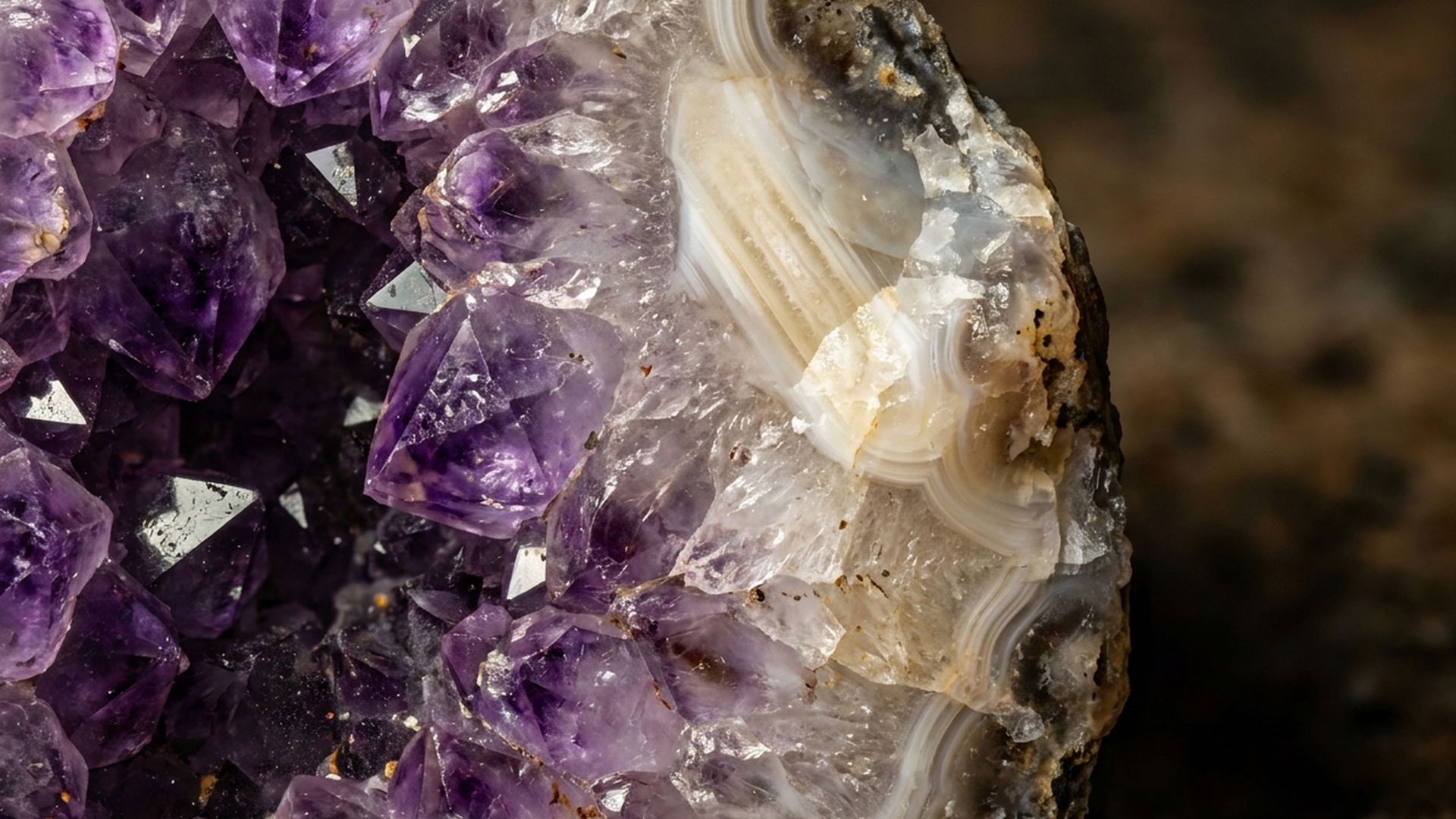
A vug may sound like an alien from a sci-fi film. In fact, it's a small- to medium-sized cavity within a rock. Often, these cavities are lined with crystals or mineral coatings. Common linings include quartz, calcite, fluorite and amethyst.


Vugs form when minerals dissolve or when gas bubbles or spaces are left during the slow process of rock formation.


The vug is part of a larger rock. It's a rock pocket rather than a detachable object. In terms of size, it can range from just a few millimetres across to several centimetres.


What's a geode?

Whereas a vug is a pocket in a larger rock, a geode is a rock itself. Like a vug, it's often lined with crystals or mineral layers.


Typically, a geode starts its rocky life as a hollow bubble in volcanic rock or a cavity in sedimentary rock – primarily limestone, dolomite or shale. Over time, mineral-rich water deposits crystals on the inner walls of these cavities.


Geodes typically exist as nodules that can be picked up and collected, whereas vugs are part of a larger rock. Many geodes are a few centimetres wide, but some specimens reach over a metre.


They're plain-looking rocks with treasure inside – a kind of prehistoric chocolate egg.

How are vugs and geodes like caves?


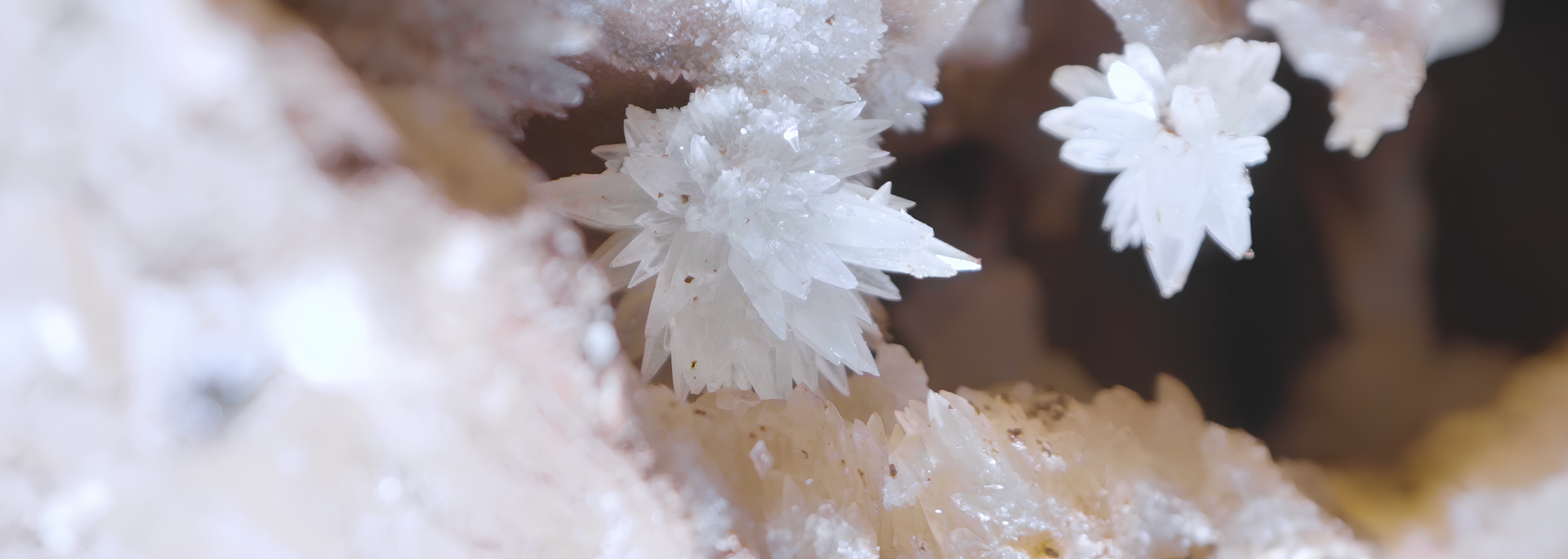
Picture of crystals in a cave.

Vugs, geodes and caves are all cavities in rock – hollow spaces formed over thousands of years by mineral-rich water. In the right conditions, crystals can grow in all three, along with minerals like quartz, calcite and gypsum.

The key difference between these three kinds of cavities is size. Vugs are tiny pockets in rocks, and geodes can often be held in the hand. Caves, by contrast, are often big enough for humans and other animals to enter.


And while they form in similar ways, there are differences, too.

Vugs and geodes are usually created by small-scale processes. That might be gas bubbles in lava, dissolved mineral pockets or crystal-filled cavities.

Most caves, however, form when groundwater dissolves rocks – often limestone, as in the case of Stump Cross Caverns.


In short, vugs, geodes and caves are different geological features. But they all show how empty spaces can form in rock and become filled with beautiful crystals and minerals.


How can you tell a geode from a vug?

Geodes and vugs differ in shape and structure. Geodes are round or oval without sharp edges, whereas vugs have a jagged or irregular shape.


Vugs are cavities or cracks inside a bigger rock. They don't have an outer shell or rind. Geodes, on the other hand, have a hard outer shell or rind made of chalcedony or limestone. You can easily remove a geode from the rock it's found in.


Geodes are sealed. You can't see the crystals inside until you cut or break them open like a nut. Vugs, meanwhile, are open and visible with no need to crack the rock.


How are vugs and geodes alike?

Both vugs and geodes are natural cavities or hollow spaces found inside rocks, and both are typically lined with slow-growing crystals.

Like caves, vugs and geodes are openings inside a larger geological formation. They're also like caves in the way they contain crystals like quartz and calcite. These are created by mineral deposits from groundwater.


They're also related geologically. A geode, in fact, is a specific type of vug formed under special conditions – conditions that give it its distinctive shell.

What crystals can you find in geodes and vugs?

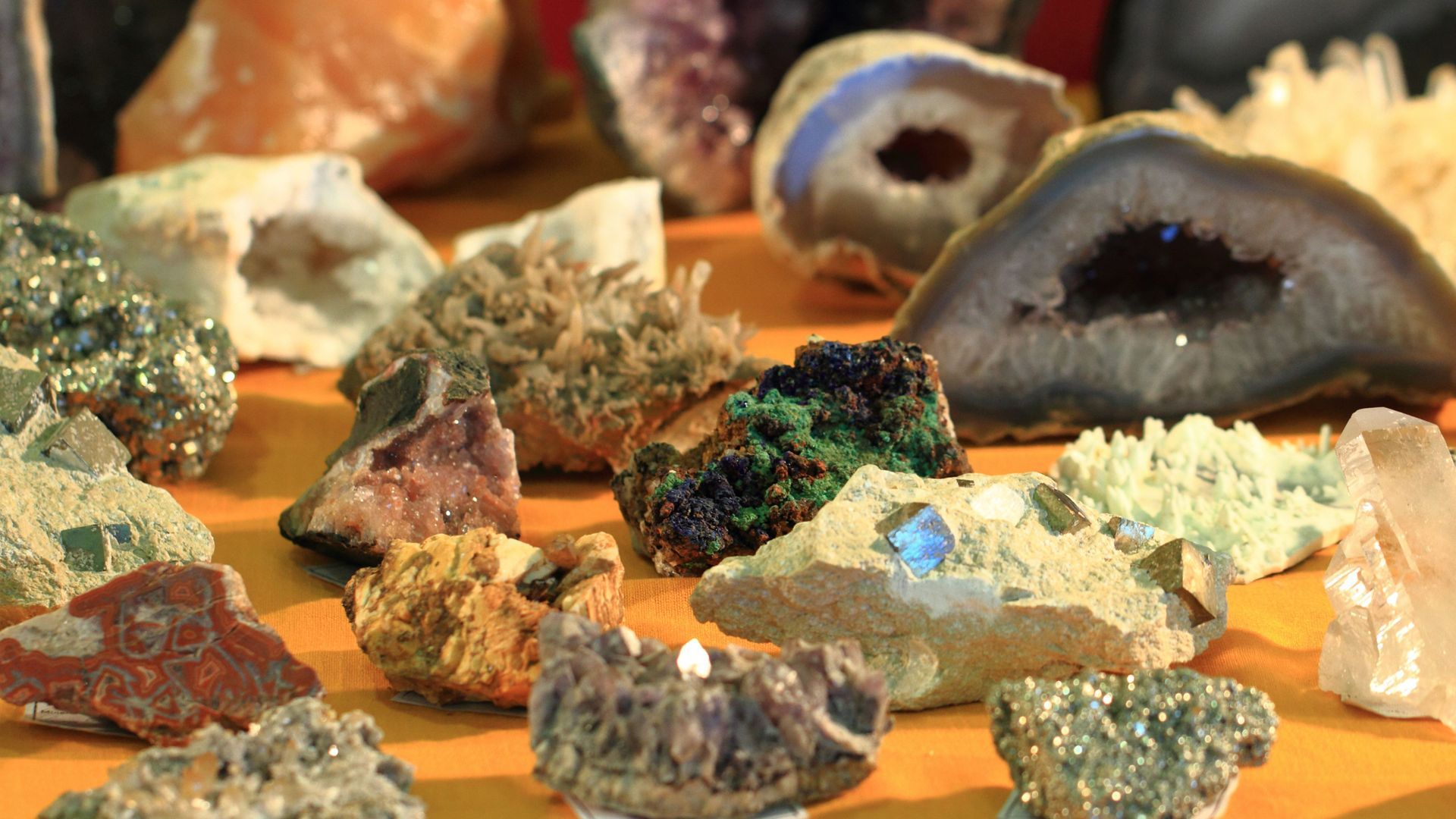
Geodes and vugs both contain a wide variety of minerals and crystal formations. These are formed when mineral-rich groundwater deposits crystals inside the rock.


Common crystals in geodes and vugs include quartz, amethyst, calcite, agate, chalcedony, celestite, fluorite and pyrite.

Quartz and calcite are the most common. These tend to be clear, white, grey or tan.


Other colours you might see in a geode or vug include:

  • 🟣 Purple (amethyst)
  • 🟡🟤 Yellow and brown (some kinds of calcite and quartz)
  • ⭐️ Metallic gold (pyrite)
  • 🔵 Deep blue (azurite)
  • 🩵 Pale blue (celestite)
  • 🟢 Green (malachite)

How long do geodes and vugs take to form?

Geodes and vugs can take anywhere from thousands to millions of years to form. It depends on the size of the cavity, the flow of the water and the nature of the environment.


Crack your own geode at Geode James's Geode Shack

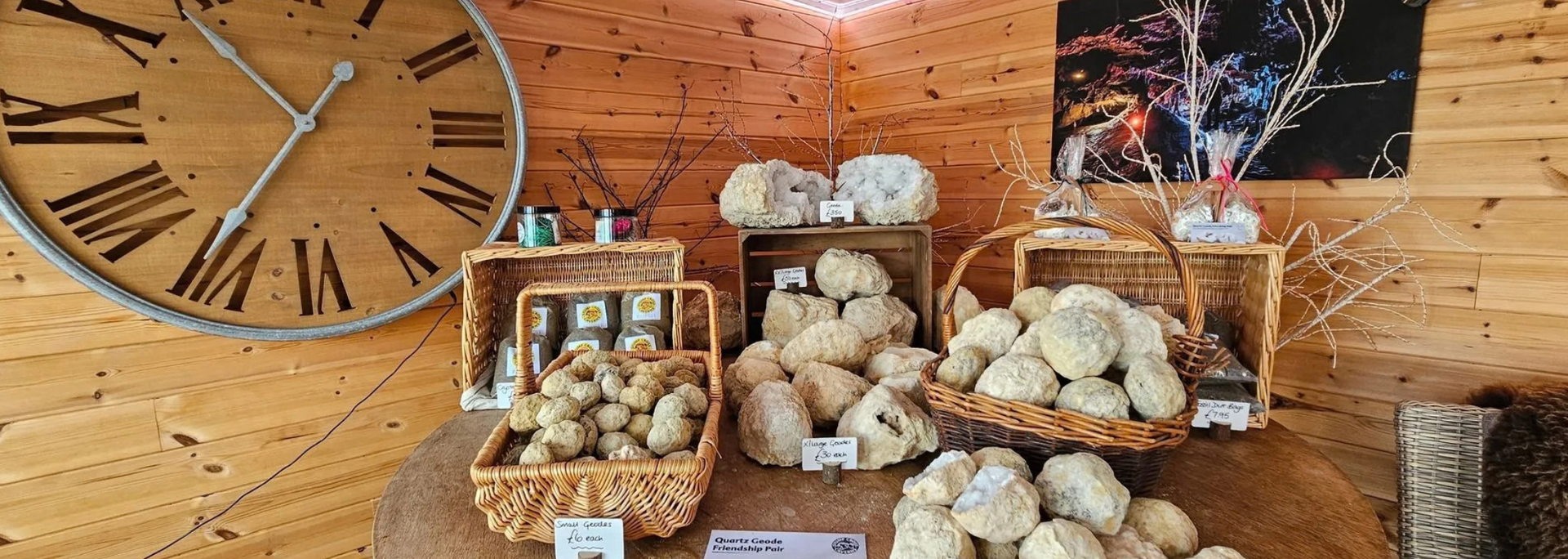
Picture of Jame's Geode Shack.

Geodes are fascinating geological objects. But they're also lots of fun – not least because the only way to find out what's inside is to crack them open.

And when you do crack open a geode, you're the first person to see the contents. That means you're looking at something not seen since its creation thousands or even millions of years ago.


Here at Stump Cross Caverns, we have Geode James's Geode Shack. Come and buy a real unopened geode and watch it get cracked before your eyes. You can then take the geode home as a souvenir.


You'll find us in the Yorkshire Dales between Pateley Bridge and Grassington. Want to make sure you get the geode you want before you arrive? It's easy to book your spot online.


Learn more about our geode cracking experience.


Share this article

Recent Posts

Looking for hiking inspiration in North Yorkshire? Explore 6 varied walks near Masham
by Simon Edward 18 September 2026
Looking for hiking inspiration in North Yorkshire? Explore 6 varied walks near Masham on the edge of the Dales.
Looking for KS2 Stone Age homework inspiration? We've got you covered. Discover 6 ideas
by Simon Edward 14 September 2026
Looking for KS2 Stone Age homework inspiration? We've got you covered. Discover 6 ideas to keep pupils engaged in and out of the classroom.
Discover 9 country pubs with rooms in North Yorkshire – the perfect way to get some rest
by Simon Edward 11 September 2026
Discover 9 country pubs with rooms in North Yorkshire – the perfect way to get some rest before exploring the area.
Ice caves are wonders of nature. Discover 5 of the most amazing – and humongous – examples worldwide
by Simon Edward 7 September 2026
Ice caves are wonders of nature. Discover 5 of the most amazing – and humongous – examples worldwide.
From hidden places to unique events… Explore your choice of Heritage Open Days in Yorkshire
by Simon Edward 4 September 2026
From hidden places to unique events… Explore your choice of Heritage Open Days in Yorkshire this year.
Thinking of trying caving? Here's what you'll need to bring as a first-time spelunker,
by Simon Edward 1 September 2026
Thinking of trying caving? Here's what you'll need to bring as a first-time spelunker, including clothing, safety gear and essential supplies.
Want to get your hands on a geode? Learn where to buy geodes in the UK –
by Simon Edward 31 August 2026
Want to get your hands on a geode? Learn where to buy geodes in the UK – and have a go at cracking your own!
Are you looking for a vegetarian restaurant in Yorkshire? Explore 10 of the best in our food guide.
by Simon Edward 28 August 2026
Are you looking for a vegetarian restaurant in Yorkshire? Explore 10 of the best in our food guide.
Is your little learner moving into Key Stage 2? Explore ideas and resources
by Simon Edward 24 August 2026
Is your little learner moving into Key Stage 2? Explore ideas and resources to give them a head start at home.
Show More