
The largest ice caves in the world
Ice caves are wonders of nature. Discover 5 of the most amazing – and humongous – examples worldwide.

The world is full of geological wonders. Perhaps some of the most extraordinary are ice caves – rock, limestone or lava caves filled with ice all year round.
These ice kingdoms are like something from a fairy tale or myth. But they're as real as the limestone caves here at Stump Cross Caverns – and like Stump Cross Caverns, many can be visited.
In this article, we take you on a whirlwind tour of five of the largest ice caves in the world. But first, we need to clear up the lingo.
What does "ice cave" mean, exactly?
The term "ice cave" is more complicated than it first appears. It covers two types of natural features: bedrock ice caves and glacier caves.
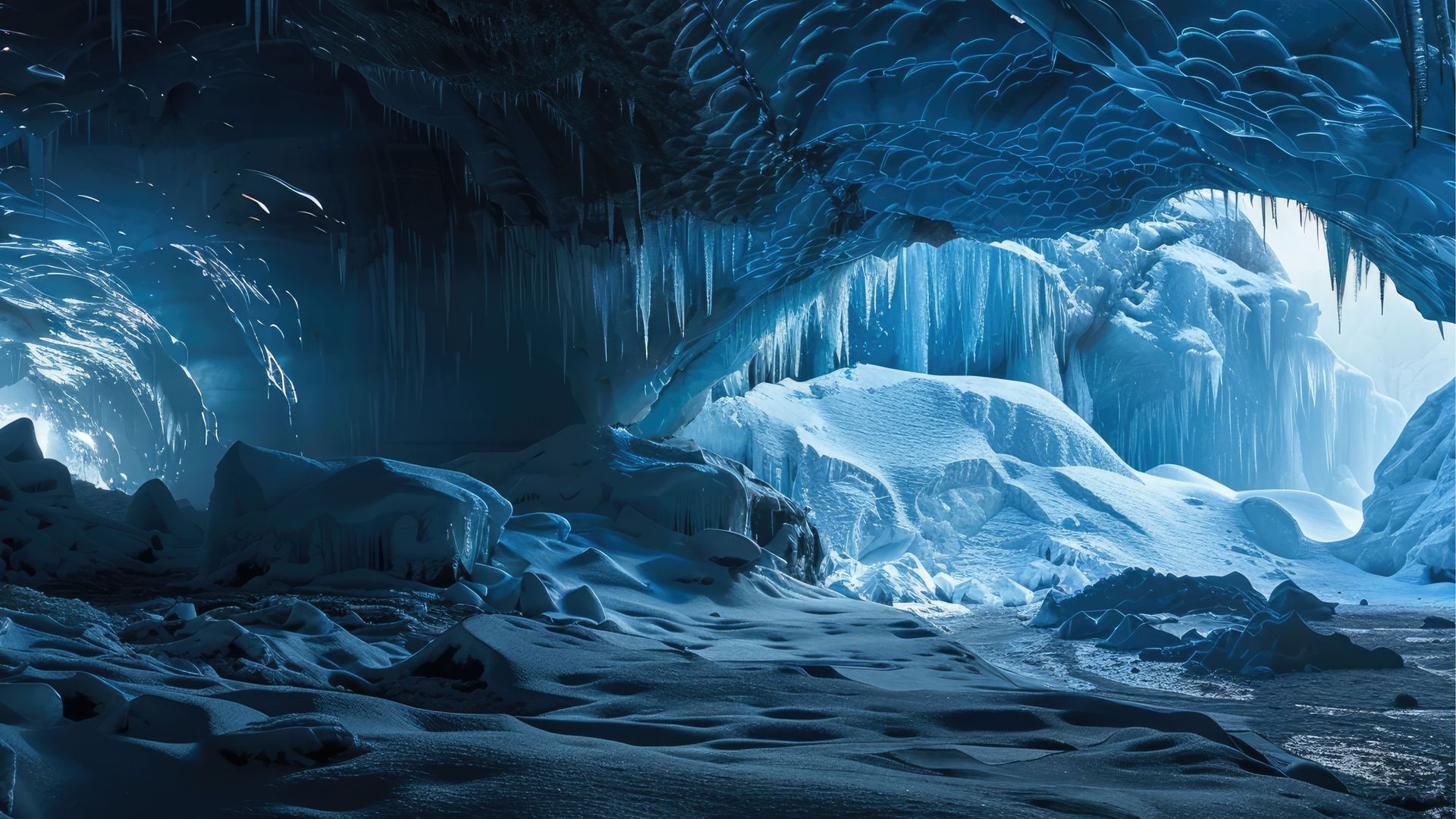
A bedrock ice cave is sometimes known as a "true ice cave". It's a rock, limestone or lava tube cave that stays freezing, in whole or in part, all year round. These caves trap cold air, meaning any water that seeps in freezes into icicles, ice floors and crystalline formations.
Bedrock ice caves are different from glacier caves. These are tunnels and chambers within moving glaciers. They're carved out by meltwater and boast astonishing, electric-blue walls.
In this article, we look at both kinds of ice caves. Let's kick off with the world's biggest – Eisriesenwelt in Austria.
Five of the world's biggest ice caves
1. Eisriesenwelt, Austria
This is the record-breaker. Translating into English as "World of the Ice Giants", Eisriesenwelt is a limestone and ice cave in Werfen, Austria. It's located about 40 kilometres south of Salzburg in the Tennengebirge stretch of the Alps.
It's about 42 kilometres long – that's the length of a marathon! The majority of the cave is limestone, but the first kilometre is all ice.
This ice world was formed by the Salzach river. Above ground, snow thawed and seeped into the cave. There it froze and formed remarkable ice formations.
Once upon a time, locals thought Eisriesenwelt was a portal to Hell. Perhaps for this reason, it wasn't properly explored til 1879. Today, around 200,000 tourists visit every year.
2. Dachstein Rieseneishöhle, Austria
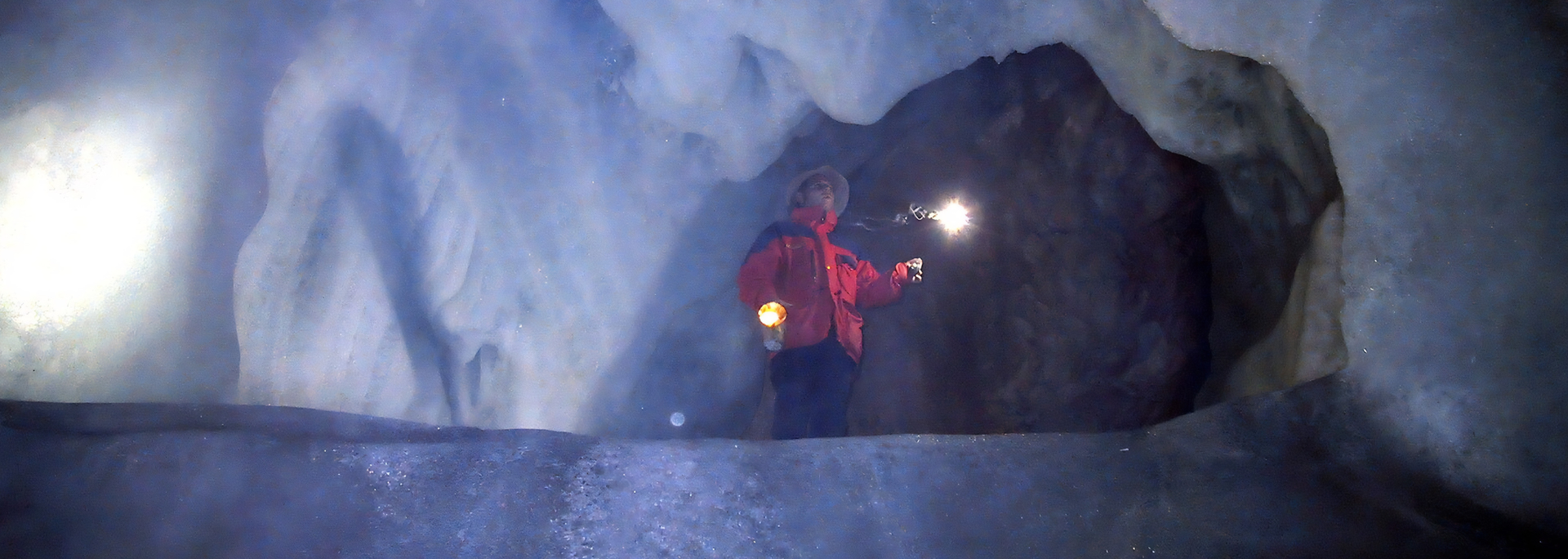
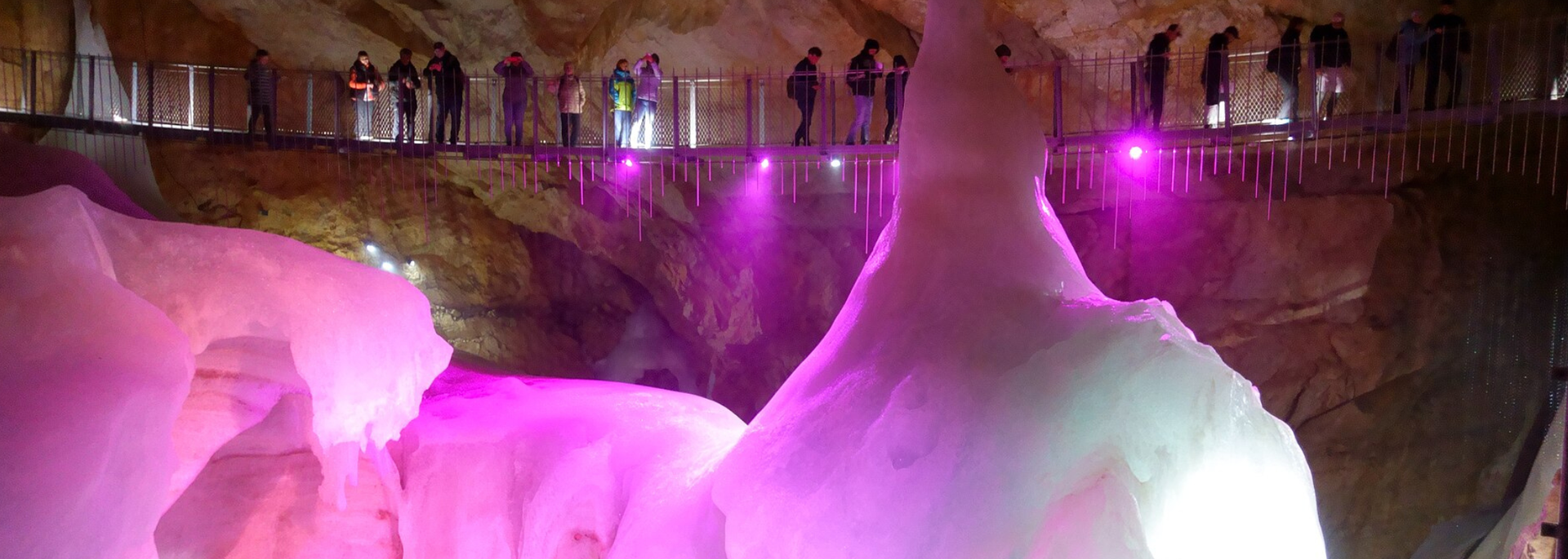
Another large Austrian ice cave is Dachstein Rieseneishöhle near Obertraun – a remarkable site filled with ice pillars, walls and stalactites.
Even in summer, the cave never gets warmer than -2°C (36°F). Visitors can cross a rope bridge over a 30-metre-deep drop, marvel at illuminated ice formations and learn about prehistoric cave bears.
Dachstein Rieseneishöhle has something in common with Eisriesenwelt – and with Stump Cross Caverns. Only a small section of the cave network is open to the public. In the case of Dachstein Rieseneishöhle, visitors can only see a small section of the 70-kilometre cave system.
3. Scărișoara Glacier Cave, Romania
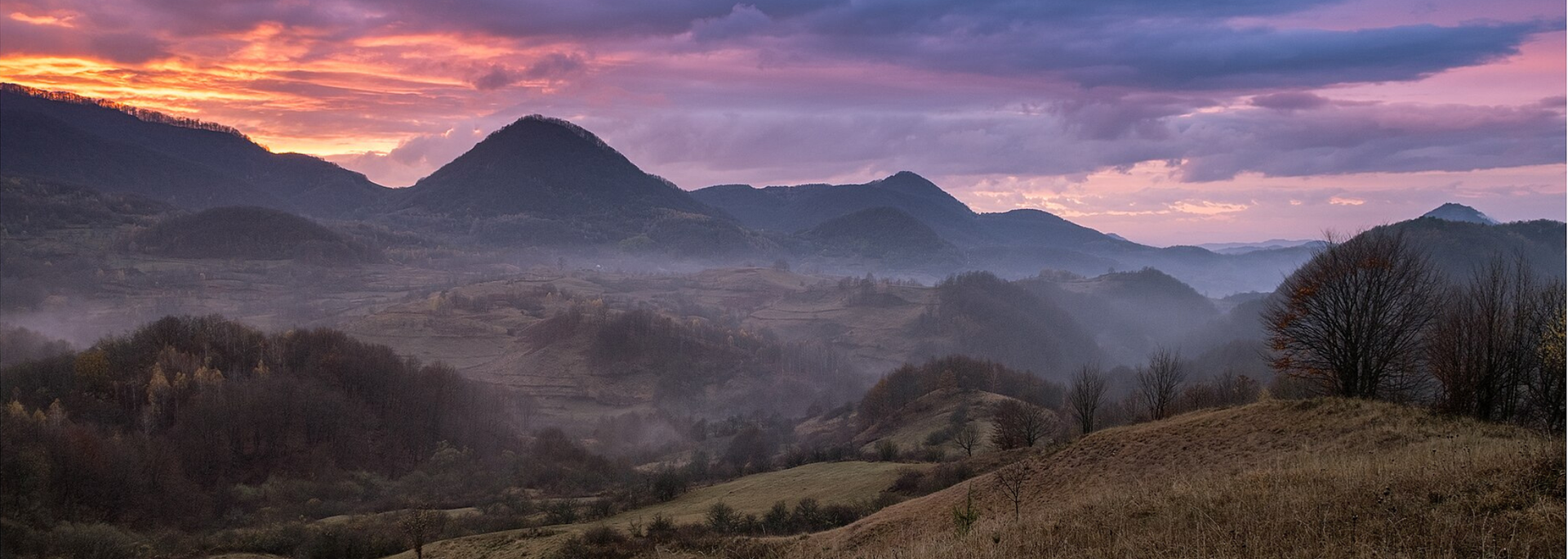
While we know it formed around 3,500 years ago, no one is sure when this huge ice cave in Romania was discovered. It was first mentioned in 1863 by Arnold Schmidl – but was it explored before then?
The stats are remarkable. Scărișoara Glacier Cave lies at an altitude of around 1,150 metres above sea level. It's 120 metres deep and 720 metres long.
The 160-foot-deep entrance shaft leads you to the Great Hall – a 108-metre-long and 78-metre-wide chamber. This features an 18-foot-tall ice cliff overlooking an ice pool.
It's no wonder that Scărișoara Glacier Cave earned third place in the
Seven Natural Wonders of Romania.
4. Dobšinská Ice Cave, Slovakia
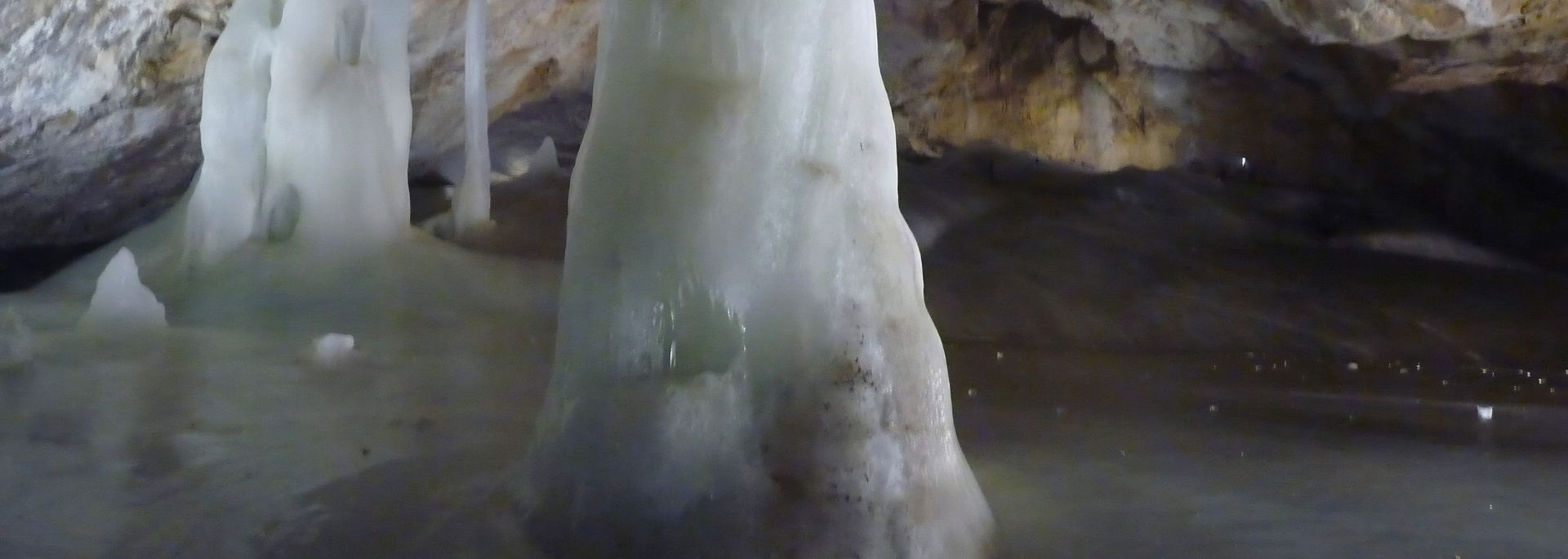
Located near the mining town of Dobšiná, the Dobšinská Ice Cave is one of the lowest ice caves in the world.
Just 920 metres above sea level, its unique formations and unforgettable beauty have secured it a place on the UNESCO World Heritage list.
Once known as Studená diera, or "cold hole", it was discovered by a mining engineer in 1870 and opened to the public a year later. It also goes down in the history books as the first electrically lit cave in Europe.
5. Langjökull ice caves, Iceland
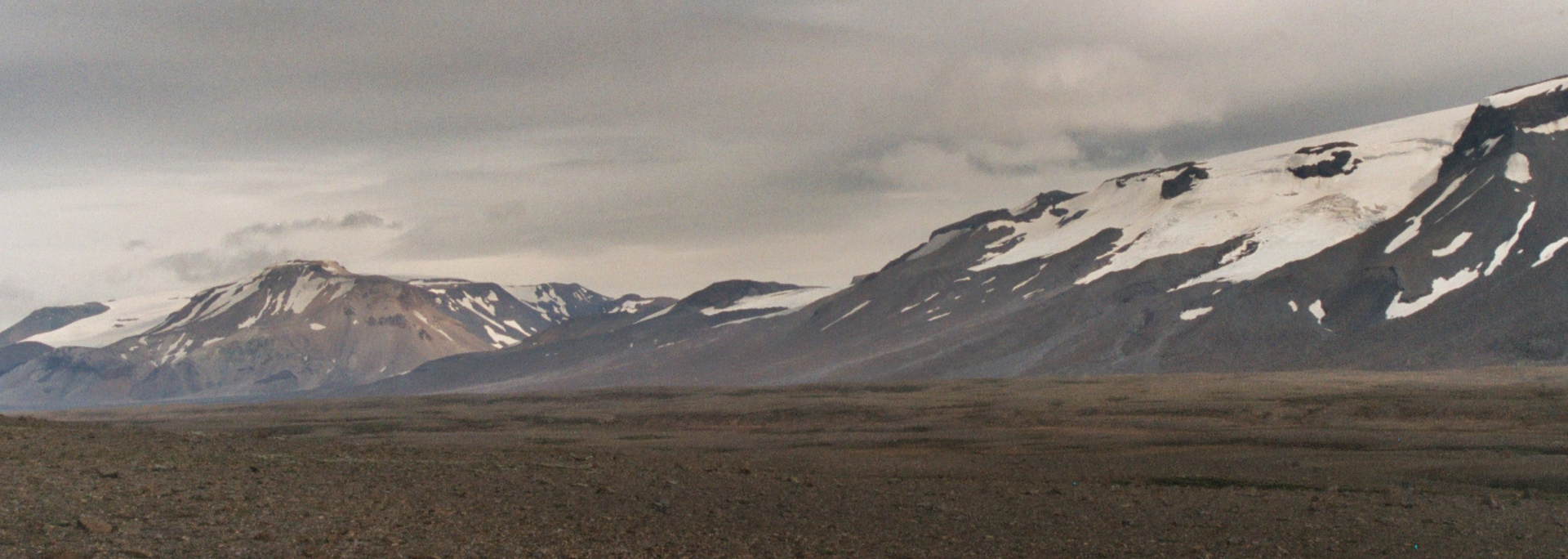
Iceland has around 269 glaciers, covering about 11% of the country. And at Langjökull – the country's second biggest glacier – tourists flock to explore the natural and man-made tunnels and chambers deep inside the glacier.
The ice is an unforgettably intense blue. This is because the ice is densely compressed. Pressure squeezes out the air and makes the ice crystals bigger. The ice then absorbs the red light and scatters the blue.
When we talk about the Langjökull ice caves, we're really talking about two different things.
First, there's the glacier – a large man-made tunnel system filled with tunnels, chambers and an ice chapel.
Then there are the naturally occurring ice caves and tunnels. These change from year to year and sometimes disappear altogether. For this reason, you can only visit them on specially organised expeditions.
Why don't ice caves melt?
Ice caves stay frozen because of their unique shapes. They're essentially huge, naturally occurring fridges. They trap cold winter air far from the reach of the summer sun.
The cold winter air flows downwards into the lower regions of the cave. The density of the cold air pushes out warm air.
Meanwhile, the thick rock acts as a natural insulator. The heat outside can't penetrate the rock walls, so the underground ice stays intact.
And if any heat does manage to get inside, it's not enough to raise the overall temperature. It might make a small difference to the ice but not nearly enough to melt it.
Was there ice at Stump Cross Caverns?
Stump Cross Caverns is a limestone cave network here in the Yorkshire Dales. But many thousands of years ago, it was surrounded by glaciers and ice.
Today, we're excavating C Chamber – a process that involves trawling through tonnes of real Ice Age mud. (And you can help us sift through it to find real treasure!)
Are you looking for amazing tourist attractions in the Yorkshire Dales? There's so much to see and do at Stump Cross Caverns, from our ancient caves to our fun family workshops. It's quick and easy to book your tickets online.