What's the difference between a cave and a cavern?
Caves and caverns: same difference? Learn the difference between caves and caverns in our simple geology guide.

Have you ever wondered what the difference is between a cave and a cavern? The two words are often used interchangeably, and it's easy to see why.
Both describe fascinating underground spaces formed naturally in the Earth, often featuring dramatic rock formations, hidden passageways and mysterious chambers.
However, there are some differences in how these terms are commonly used. Whether you're planning an underground adventure or simply curious about the natural world, understanding the distinction can help you appreciate these incredible geological features.
What is a cave?
A cave is a natural underground space large enough for a person to enter. Caves can be found in mountains, cliffs, forests and even beneath the ocean. Some are relatively small, while others extend for many kilometres underground.
Caves form in several ways. One of the most common is when water gradually dissolves rock over thousands or even millions of years. This process is particularly effective in limestone, a rock that dissolves slowly when exposed to slightly acidic water.
Other caves form when lava cools and leaves tunnels behind, when waves erode coastal cliffs or when cracks and weaknesses in rock gradually widen.
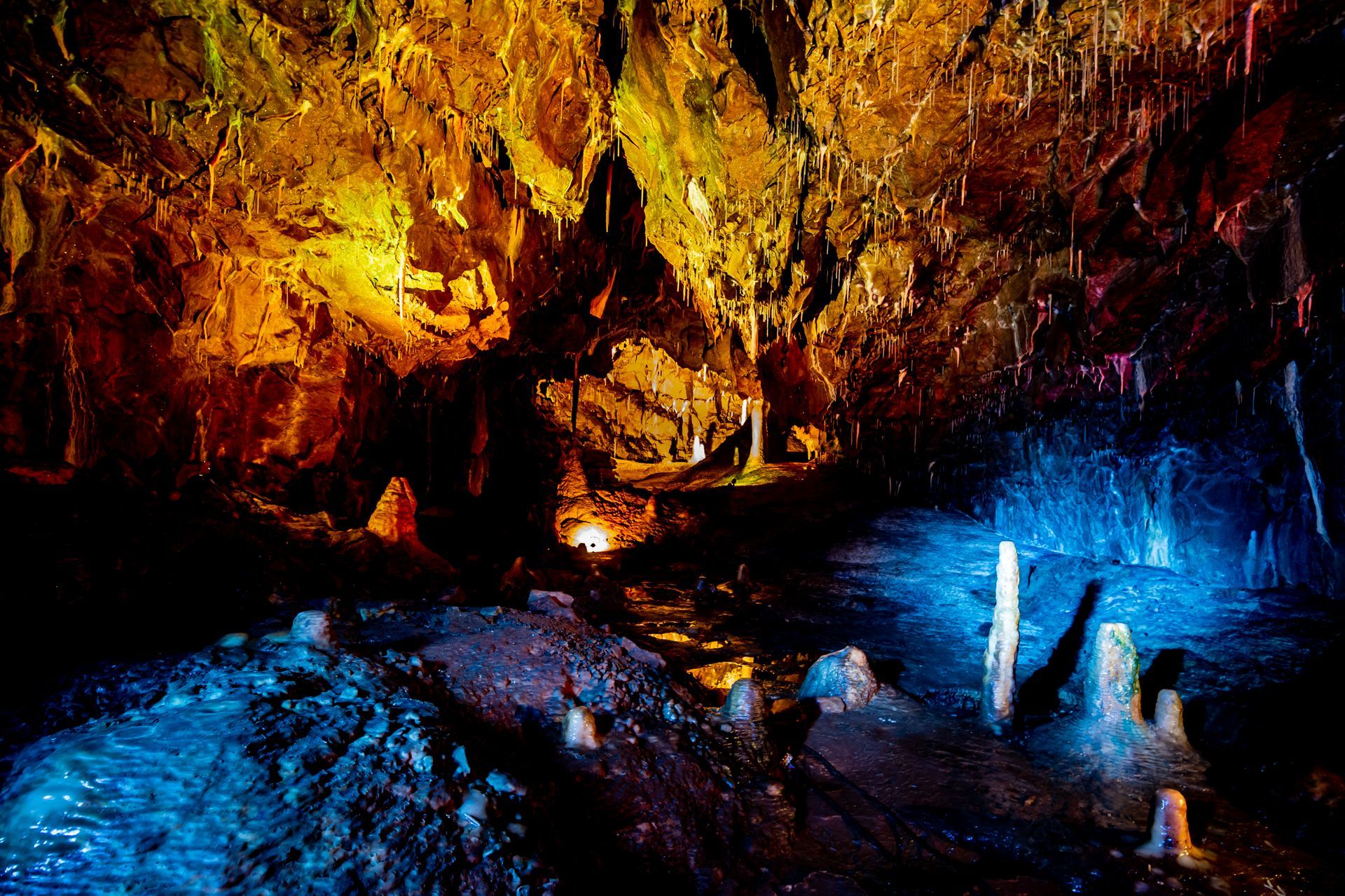
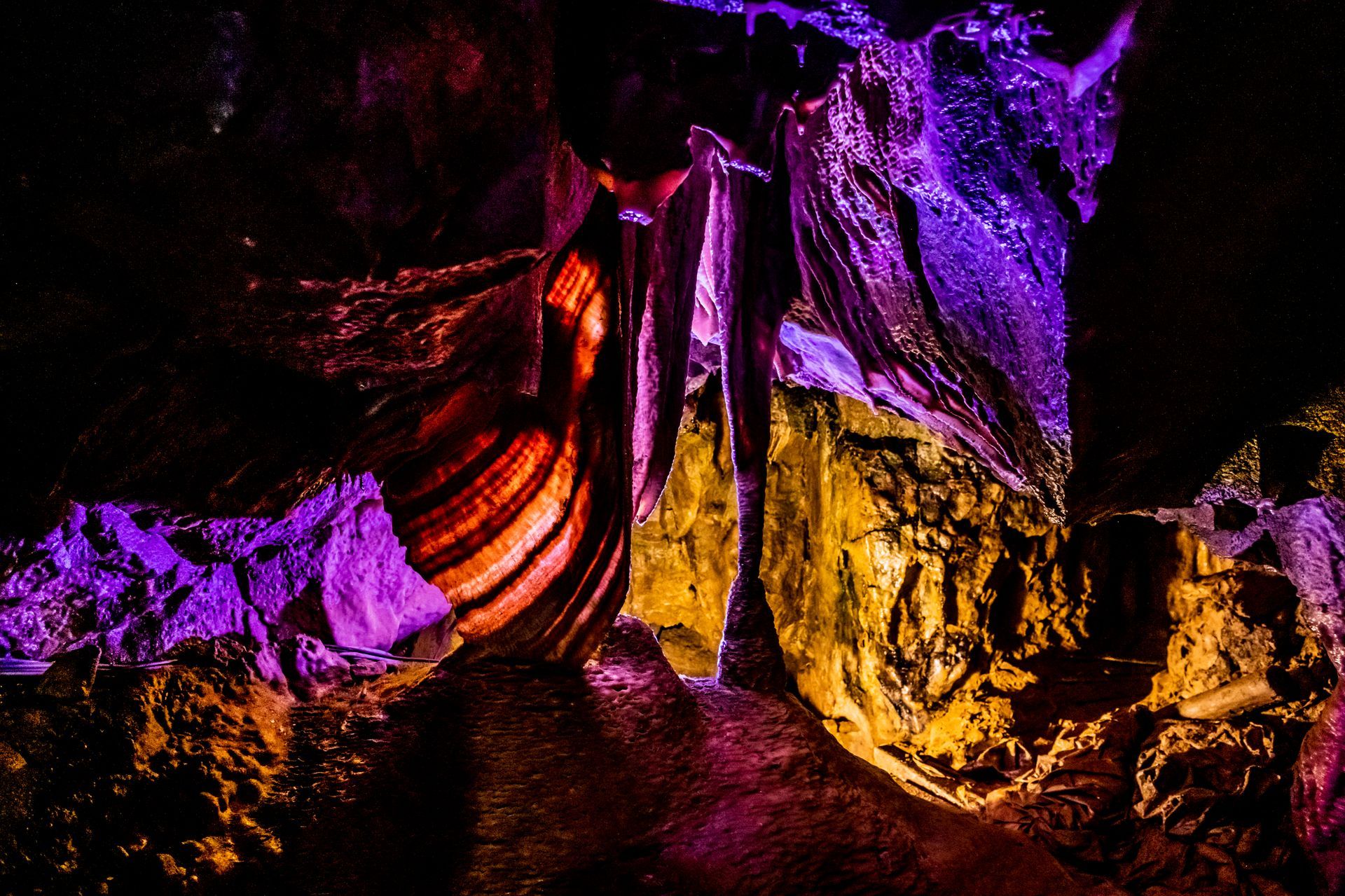
Caves can contain a variety of natural features, including narrow passages, underground streams, large chambers and unusual rock formations. They also provide important habitats for wildlife, such as bats and specialised cave-dwelling insects.
In simple terms, "cave" is a general term for a natural underground opening that you can enter.
What is a cavern?
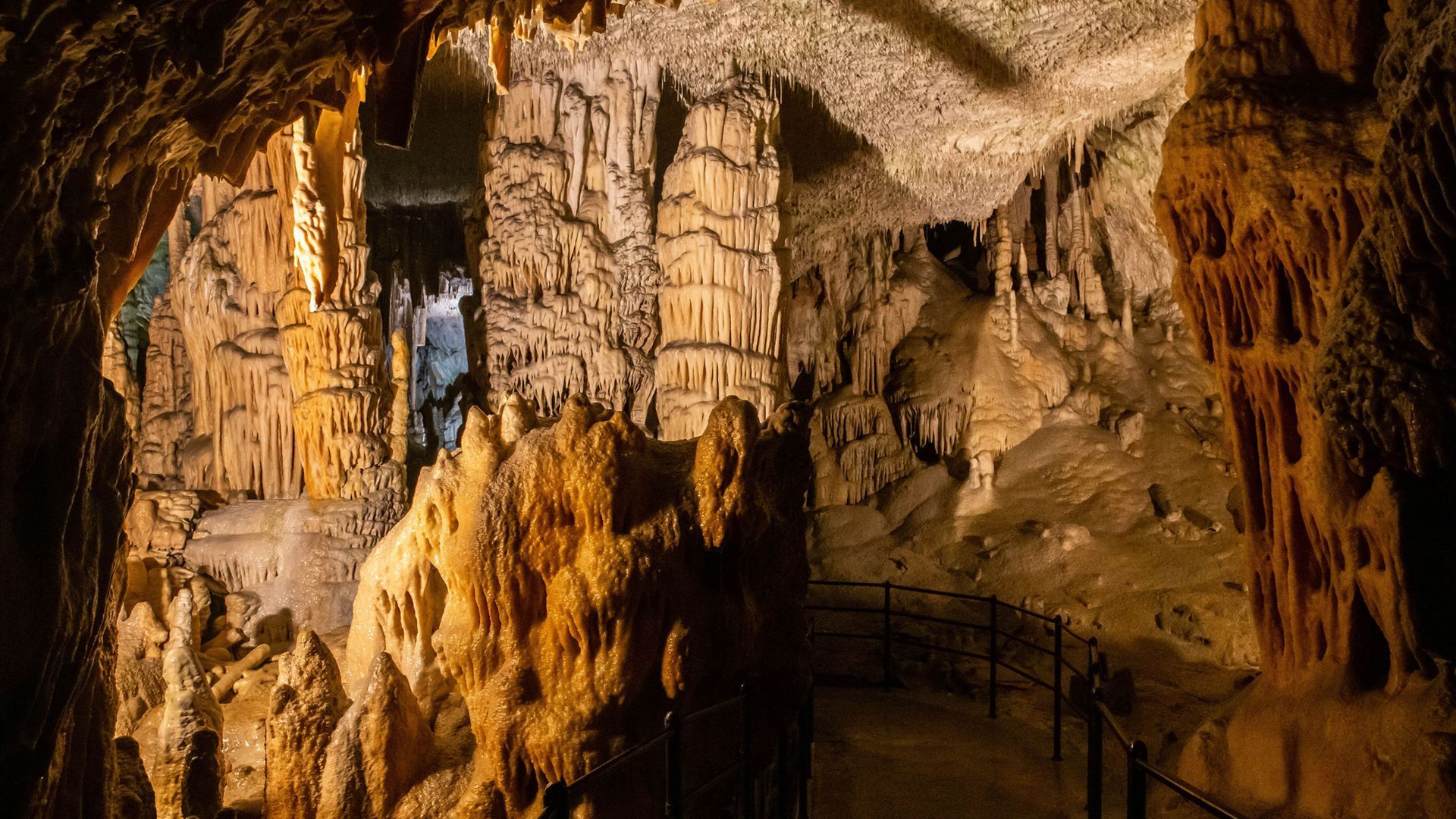
The word "cavern" generally means a large cave or an extensive underground chamber system. The word often brings to mind spacious rooms, impressive ceilings and spectacular rock formations.
Caverns are frequently associated with limestone landscapes, where water has dissolved rock over long periods to create large underground spaces.
Inside, visitors might discover stalactites hanging from the ceiling, stalagmites rising from the floor and other formations shaped by dripping mineral-rich water.
Some caverns are so large that they contain several connected chambers, underground lakes or passages stretching deep into the surrounding rock.
However, there's no scientific rule stating that a cave must be smaller than a cavern. In geology, the terms can overlap, and the word "cavern" is often used to describe a particularly large or impressive cave system.
Cave vs cavern: what's the main difference?
The biggest difference is how the words are commonly used rather than a strict scientific distinction.
"Cave" is the broad term for a natural underground space, while "cavern" usually suggests a larger, more spacious or more complex underground environment. There's a reason our mile-long show cave is known as "Stump Cross Caverns".
Think of it this way: all caverns can be described as caves in everyday language, but not every cave would normally be called a cavern.
It's worth remembering that this is the main difference. However, the name given to an underground feature may also reflect local tradition, history or the name chosen for a particular attraction.
How are caves and caverns formed?
Many caves and caverns develop through a process called "chemical weathering". Rainwater absorbs carbon dioxide from the atmosphere and soil, forming a weak acid. As this water moves through cracks in limestone, it slowly dissolves the rock.
Over thousands of years, tiny cracks can develop into narrow tunnels, which may eventually grow into substantial passages and chambers. Underground rivers can help enlarge these spaces by carrying away dissolved minerals and loose material.
As water drips from the ceilings of limestone caves, it can also leave behind calcium carbonate. Gradually, this mineral builds up to create stalactites (which hang down from the ceiling) and stalagmites (which grow upwards from the floor).
Other caves form through different geological processes. Sea caves are carved by waves, lava tubes develop in volcanic regions and ice caves form within or beneath glaciers.
The size and appearance of an underground space depend on the surrounding rock, water movement and how long these processes have been taking place.
Are caverns more impressive than caves?
Not necessarily! While the word "cavern" often suggests something grand and spacious, smaller caves can be just as fascinating.
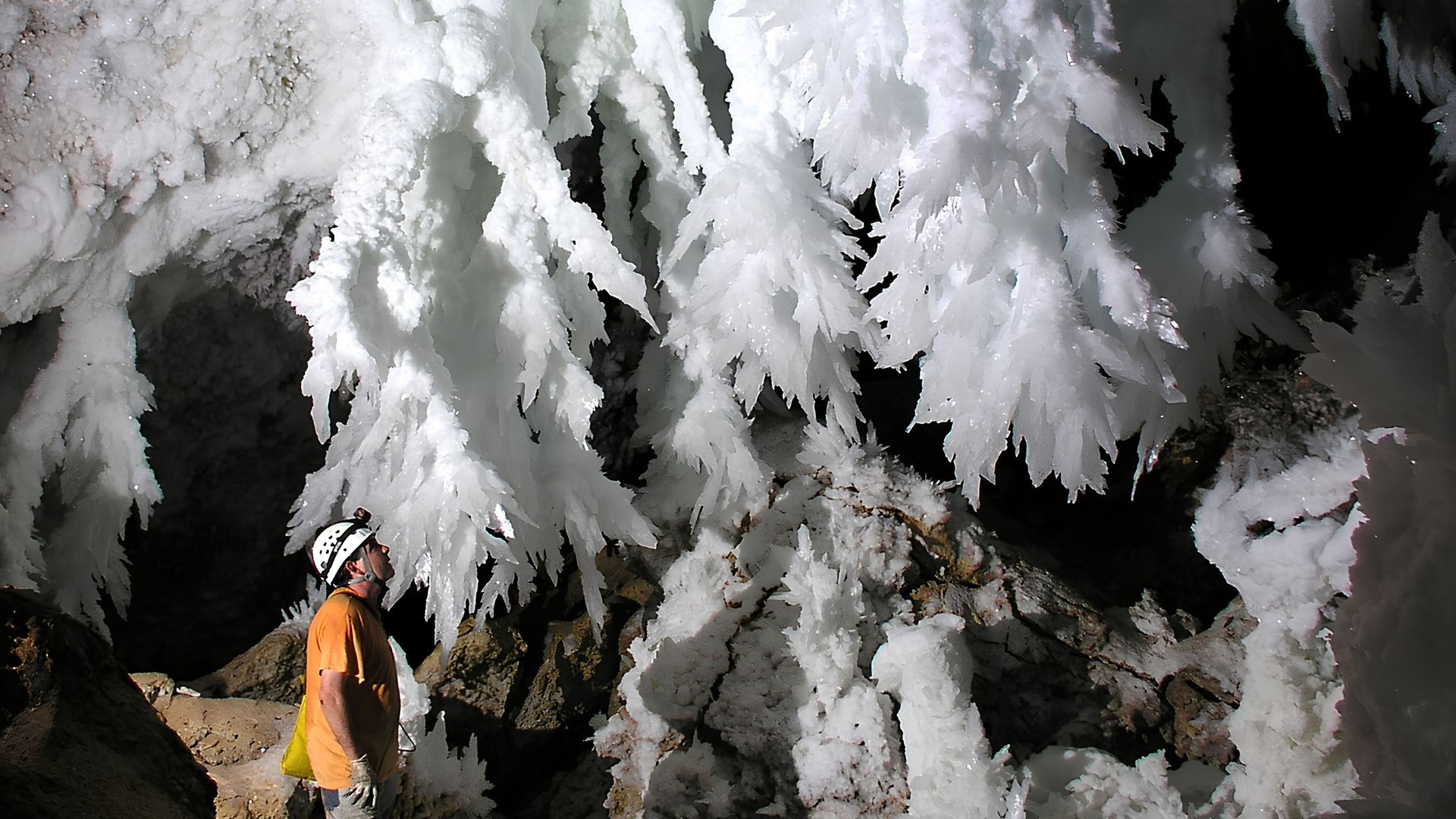
A narrow cave might reveal ancient fossils, unusual minerals or evidence of early human activity. A large cavern, on the other hand, might impress visitors with towering rock walls, echoing chambers and spectacular mineral formations.
Both can offer valuable insights into Earth's history. Caves and caverns can preserve evidence of past climates, changing landscapes and the animals and people that once inhabited them.
They're also important natural environments, supporting delicate ecosystems that can be easily disturbed.
Can you visit a cave or cavern?
The answer is a reverberating "yes!" Many caves and caverns around the world welcome visitors, offering guided tours, educational displays and opportunities to discover geology up close.
Some attractions feature well-lit walkways and accessible routes, while others involve uneven surfaces, steps or low ceilings. It's always worth checking access information, footwear recommendations and tour requirements before visiting.
Want to discover the difference for yourself? Exploring an underground attraction is a wonderful way to see how nature creates these remarkable spaces.
Discover Stump Cross Caverns in Yorkshire
For an unforgettable underground adventure, why not visit us at Stump Cross Caverns in the Yorkshire Dales? Here, you can experience spectacular stalactites, stalagmites and winding underground passages, offering a glimpse into the natural history of the Yorkshire landscape.
Whether you're visiting with family or simply curious about what lies beneath your feet, Stump Cross Caverns makes for an unforgettable day out in Yorkshire. It's your chance to discover the wonders of the underground world and experience the magic of a real cavern for yourself.
Ready for an underground adventure in the Yorkshire Dales? It's quick and easy to book Stump Cross Caverns tickets online.