How Lechuguilla Cave in New Mexico was lost for 5 million years

Simon Edward • 1 November 2026

Lechuguilla Cave lay almost completely hidden for millions of years. Discover how cavers finally broke into its extraordinary crystal-filled depths.


Lechuguilla Cave lay almost completely hidden for millions of years. Discover how cavers finally broke into its extraordinary crystal-filled depths.


Imagine discovering a hole in the ground.


You climb down. You explore a few hundred feet of dry, dusty passageway. And then… nothing. The cave ends.

Or so it seems.


Now imagine that hidden beneath your feet is one of the longest and most spectacular cave systems on Earth.


Beyond the cave you know lies a vast underground world of chambers, crystal-lined passages and strange formations that look like they belong on another planet.


That's the story of Lechuguilla Cave in New Mexico.

For millions of years, most of this incredible place was cut off from the world above. Even after people found its entrance, they had no idea what was hiding below.


Then someone noticed something unusual.


The cave was breathing.

Where is Lechuguilla Cave?

Lechuguilla Cave lies beneath the Guadalupe Mountains in Carlsbad Caverns National Park, New Mexico.

And when we say it's big, we mean really big.


More than 145 miles (233 kilometres) of passages have been mapped, while explorers have descended more than 1,600 feet (488 metres) below the entrance. It's one of the longest cave systems in the world.


Yet for most of human history, almost all of it was completely unknown.

People did know about a small cave entrance in Lechuguilla Canyon. In 1914, miners even extracted small amounts of bat guano (that's bat poo) from its upper passages.


But there didn't seem to be much there. A 90-foot pit led to around 400 feet of dry passages before the cave apparently came to a dead end.


The miners left. Occasional visitors came and went. Yet none of them knew that beneath the rubble lay mile after mile after mile of spectacular caverns.


So, how was Lechuguilla Cave "lost"?

Strictly speaking, Lechuguilla wasn't lost like an ancient city might be lost beneath a jungle. People knew about its entrance, after all.


Instead, the secret was its size.

Around five million years ago, the cave was already taking shape deep underground. Parts of this subterranean environment later became isolated from the surface. In fact, scientists have studied microbes from areas cut off for more than four million years.


Meanwhile, rocks and rubble blocked the route between the little cave people knew about and the enormous system below.


From the surface, there was little clue that anything extraordinary was down there.

Little clue, that is, apart from the wind.


The cave that breathed


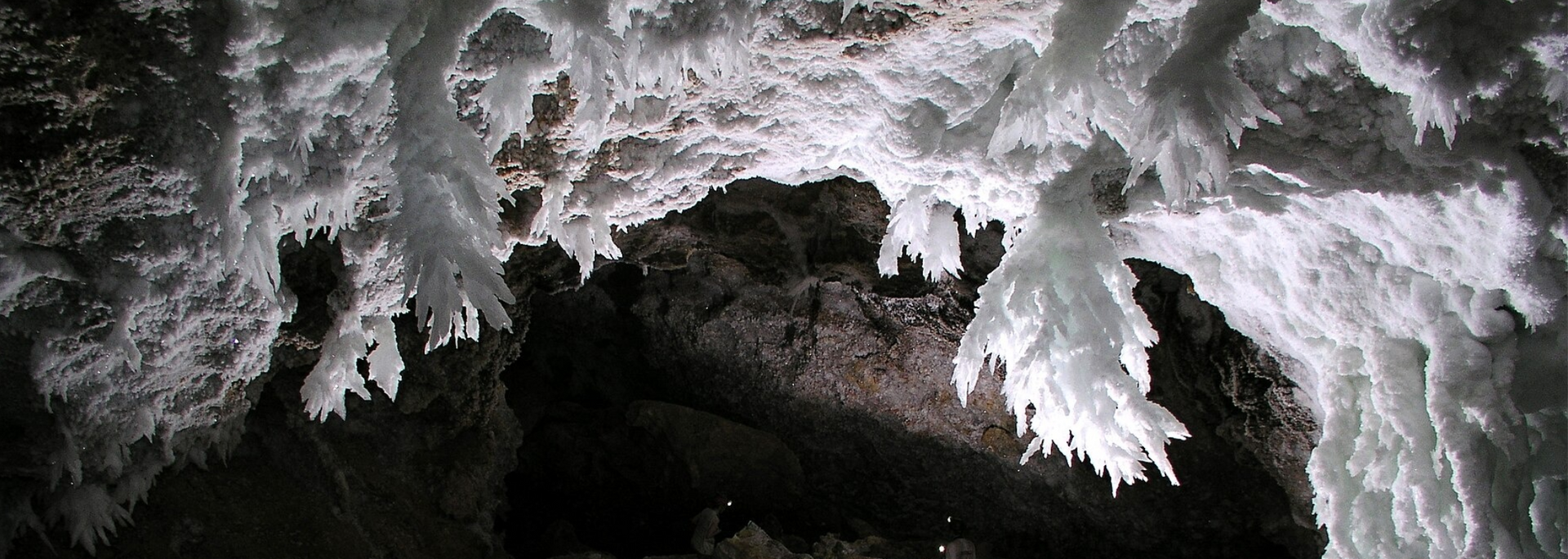
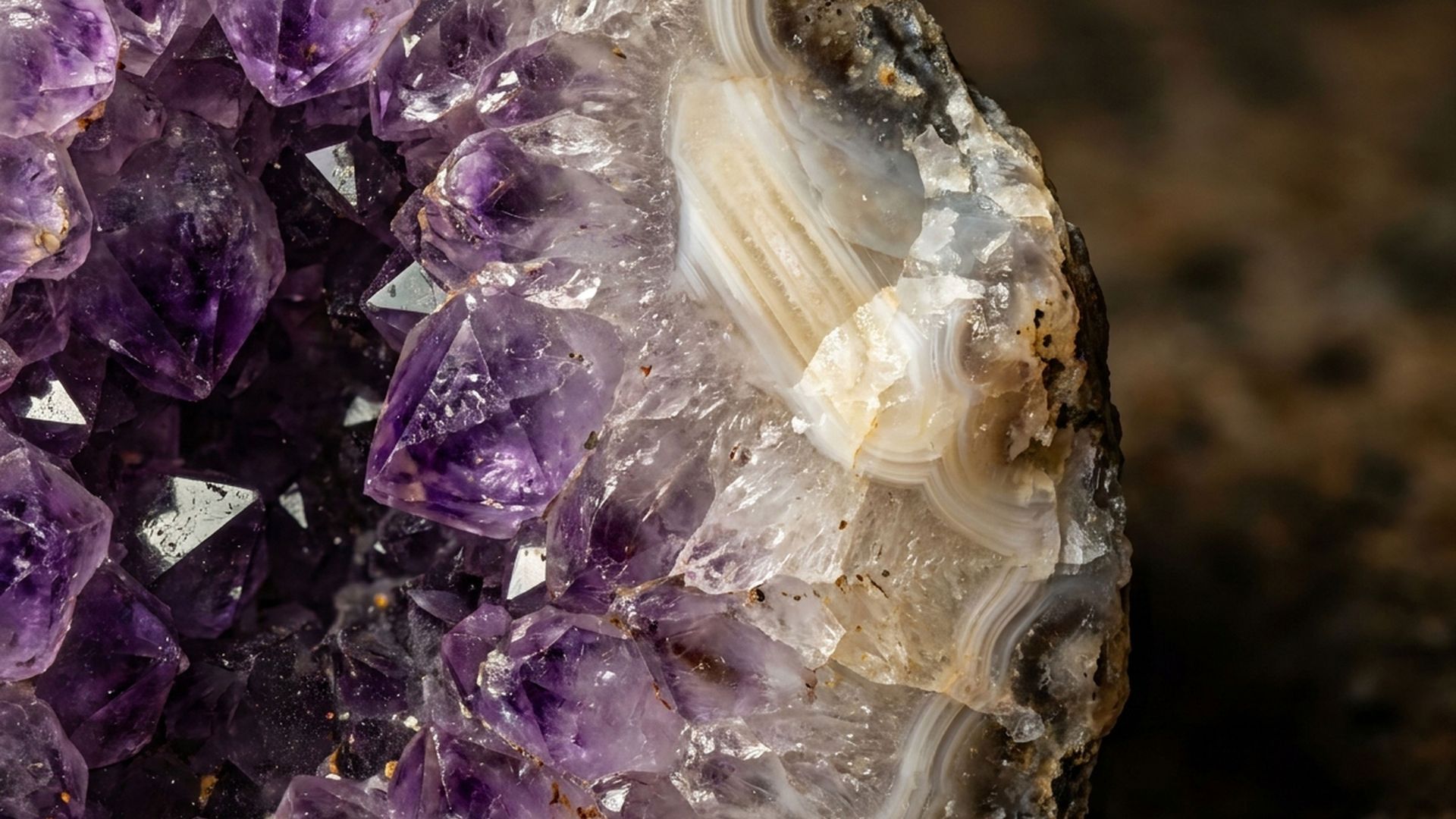
Picture of crystal formations in Lechuguilla Cave.


During the 1950s, cavers noticed something odd at the bottom of Lechuguilla's entrance pit. Air was roaring upwards through the rubble.


Caves often have moving air. Changes in temperature and air pressure can push air into and out of underground passages.


But a strong draught can tell a caver something very exciting. It tells them there may be more cave beyond the blockage.


Some explorers suspected exactly that. Somewhere underneath the pile of rock, there had to be another passage.

The problem was reaching it. And so, years passed without a breakthrough.


Then, in 1984, a group of cavers from Colorado received permission from the National Park Service to start digging.


It was slow work. Imagine shifting rocks and dirt underground without even knowing whether there's anything on the other side.


But they kept going. And on 26 May 1986, everything changed.


The diggers broke through into a large passage. After millions of years, Lechuguilla Cave had finally opened its doors.


What did they find inside?

Not just another tunnel.


The discoveries that followed transformed Lechuguilla into one of the world's most important caves. Explorers found huge rooms, deep pits, underground pools and passages covered in delicate mineral formations.


Some looked almost snowy. Others looked decidedly weird. There are cave pearls, gypsum flowers, strange curling formations and enormous deposits of gypsum.


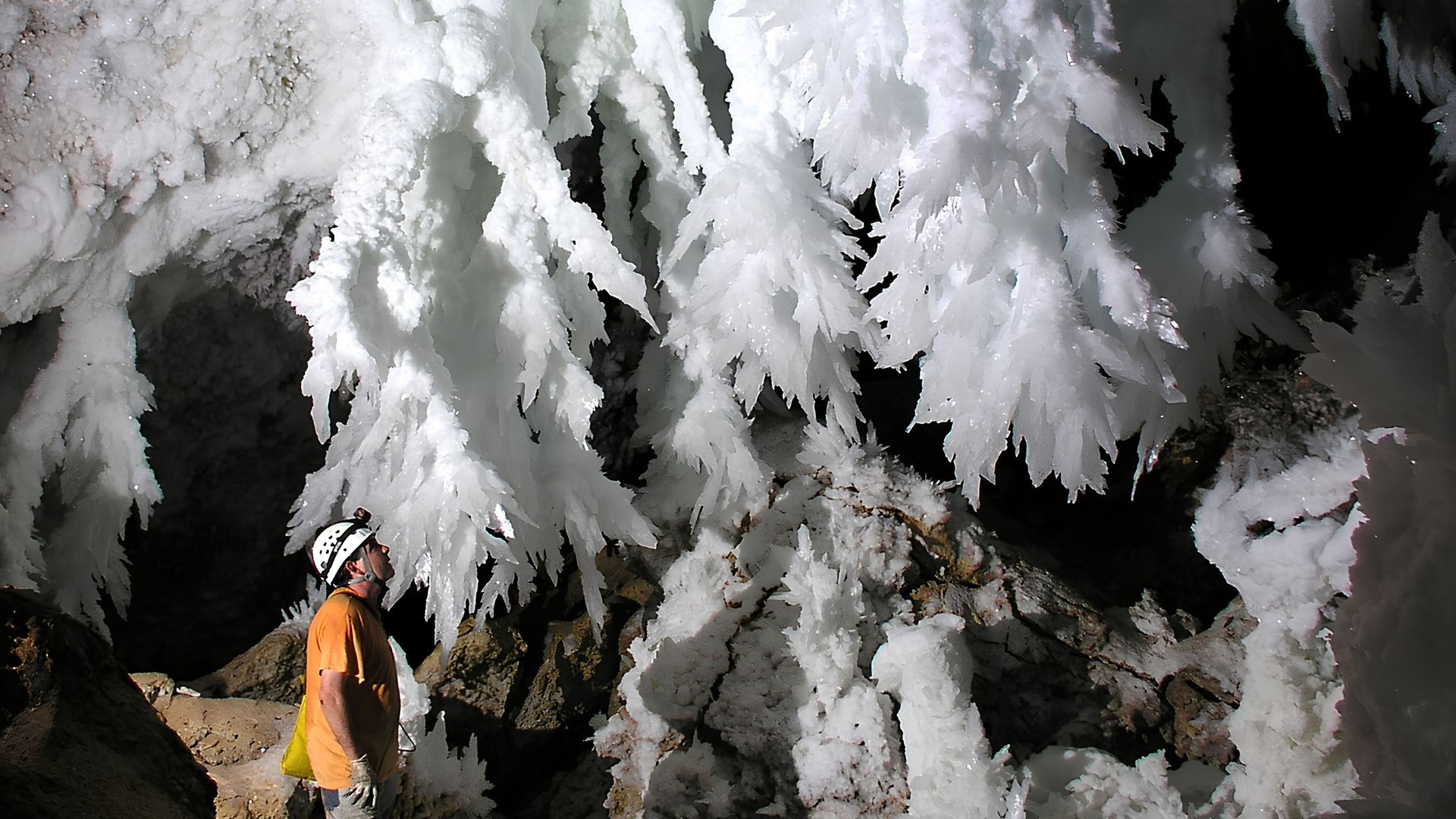
But most famous of all is the Chandelier Ballroom. Here, huge branching gypsum crystals hang from the ceiling like giant frozen chandeliers. Some reach around six metres tall.


And because much of Lechuguilla had remained isolated and unusually dry, many of its fragile gypsum formations survived in remarkable condition. That's one of the things that makes the cave so scientifically valuable.


How did Lechuguilla Cave form?

Here's where the story gets even stranger.


Many limestone caves form from above. Rainwater absorbs carbon dioxide, becomes slightly acidic and seeps down through cracks in limestone. Over a very long time, it dissolves the rock and opens up passages.


Lechuguilla was different. Its main cave-making ingredient came upwards from deep underground.


Hydrogen sulphide-rich water rose through cracks in the limestone of the Guadalupe Mountains. When that hydrogen sulphide met oxygen-rich water, chemical reactions produced sulphuric acid.


And sulphuric acid is very good at dissolving limestone.


Between roughly four and six million years ago, this process helped hollow out the caves beneath the Guadalupe Mountains. Instead of being carved mainly from the top down, they were dissolved largely from below.


The chemical reactions also helped create the huge quantities of gypsum that make Lechuguilla so spectacular today.

So, those enormous white chandeliers aren't simply decorations. They're also clues to the cave's extraordinary past.


Is Lechuguilla Cave still being explored?

Yes.

The 1986 breakthrough was only the start of the story. Cavers have spent decades mapping new passages and chambers, and exploration continues today.


But don't start booking your flights to New Mexico just yet. Lechuguilla isn't a show cave. It's closed to ordinary visitors, with access carefully controlled because of its fragile formations and enormous scientific importance.


That means most of us will have to admire its gypsum chandeliers through photographs.


Fortunately, however, there are ancient caves you can explore much closer to home.

Discover an ancient cave in the Yorkshire Dales


Picture of Stump Cross Caverns.

Lechuguilla isn't the only cave whose true size stayed hidden for a very long time.


Here at Stump Cross Caverns, our own underground story involves another accidental discovery.


In 1860, lead miners Mark and William Newbould were digging beneath the Yorkshire Dales when they broke through into a natural limestone passage.


Instead of the lead they were searching for, they found chambers decorated with stalactites and stalagmites.

More discoveries followed. Cavers opened new passages in the decades that followed, and parts of the Stump Cross system are still being unearthed today.


The best bit? You don't need ropes, digging equipment or special permission to see some of it for yourself. All you need to visit this mysterious underground world is a helmet, which we provide on arrival.


Adventure awaits. Come underground at Stump Cross Caverns and explore an ancient world hidden beneath the Yorkshire Dales. It's quick and easy to book tickets online.


Share this article

Recent Posts

What are cave lions and when did they go extinct?
by Simon Edward • 1 November 2026
What are cave lions and when did they go extinct? Learn all about this fascinating prehistoric animal.
Geodes are a wonder of nature, and they contain all manner of gorgeous crystals.
by Simon Edward • 30 October 2026
Geodes are a wonder of nature, and they contain all manner of gorgeous crystals. Learn what kinds of crystals you can find hidden inside.
There are loads of family Christmas events in Yorkshire in 2026. Make room in your diary
by Oliver Pyper • 21 October 2026
There are loads of family Christmas events in Yorkshire in 2026. Make room in your diary for these festive attractions.
Want to experience the weird and wonderful side of Yorkshire? Discover 11 unusual places to visit
by Oliver Pyper • 12 October 2026
Want to experience the weird and wonderful side of Yorkshire? Discover 11 unusual places to visit for a truly unique day out.
Do you want to take the kids to meet Santa this Christmas? Here are 10 options
by Oliver Pyper • 9 October 2026
Do you want to take the kids to meet Santa this Christmas? Here are 10 options to get the whole family into the festive spirit.
Don't know your druse crystal from your geode? Learn how to spot the difference
by Simon Edward • 5 October 2026
Don't know your druse crystal from your geode? Learn how to spot the difference and identify manmade reproductions.
Cave arches, stacks and stumps are formed over thousands to millions of years.
by Simon Edward • 2 October 2026
Cave arches, stacks and stumps are formed over thousands to millions of years. Learn the fascinating process behind their formation.
Does Mars have caves? Yes! Discover everything you need to know about Martian caves –
by Simon Edward • 28 September 2026
Does Mars have caves? Yes! Discover everything you need to know about Martian caves – no rocket ship required.
Vugs and geodes are both kinds of cavities in rock. How are they different –
by Simon Edward • 21 September 2026
Vugs and geodes are both kinds of cavities in rock. How are they different – and how are they the same?
Show More