What crystals can you find inside geodes?
Geodes are a wonder of nature, and they contain all manner of gorgeous crystals. Learn what kinds of crystals you can find hidden inside.

Geodes are among nature's most fascinating geological treasures.
From the outside, they often look like ordinary, unremarkable rocks. Split one open, though, and you could discover a sparkling cavity filled with colourful crystals and intricate mineral patterns.
Each geode is unique, shaped by the minerals and geological conditions that influenced its formation over thousands or even millions of years.
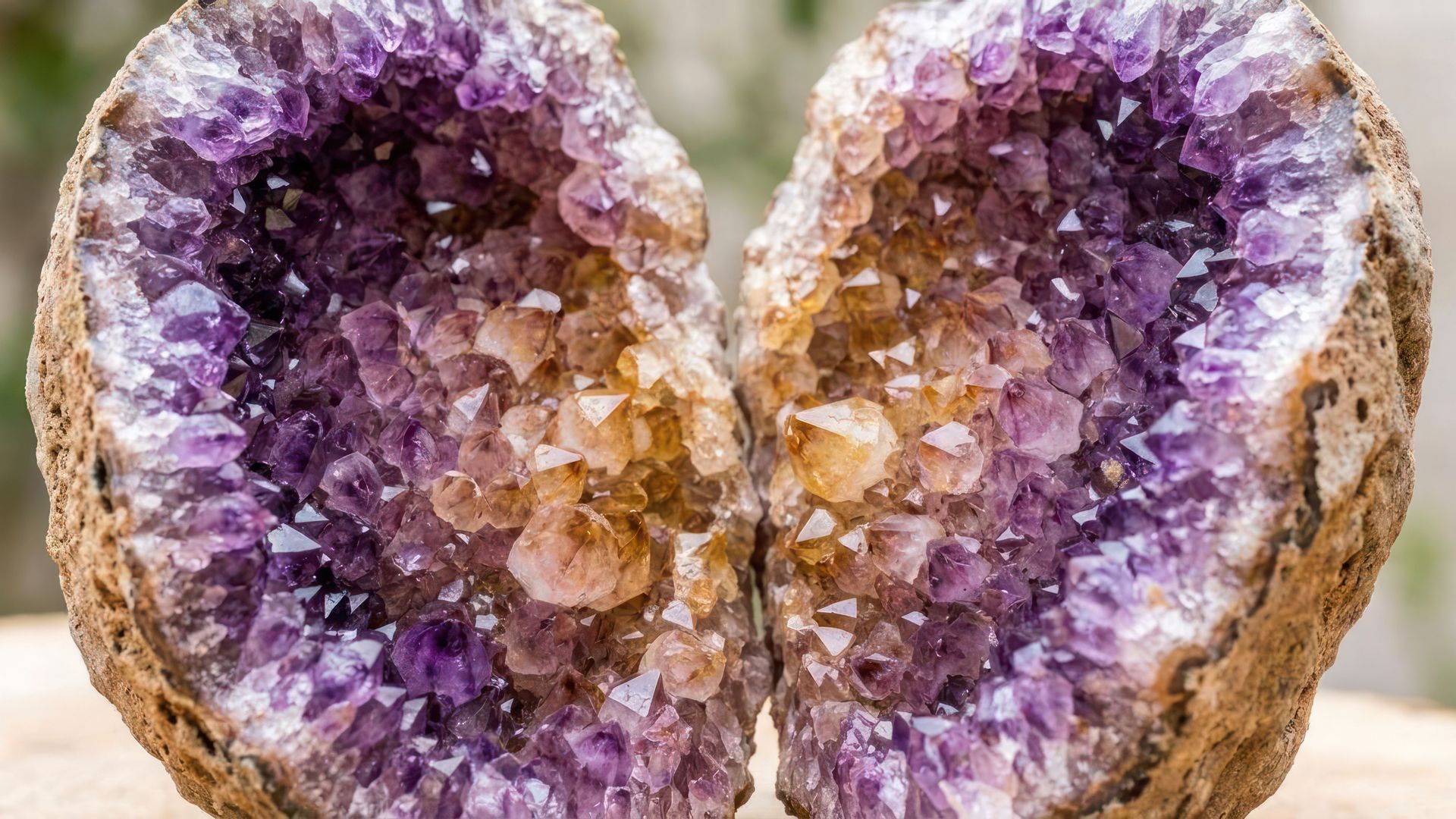
The crystals inside geodes vary considerably. Some contain clear or milky quartz. Others reveal vibrant purple amethyst, delicate calcite formations or unusual minerals prized by collectors.
Understanding these hidden treasures makes geodes even more exciting, whether you're an experienced rock collector or simply curious about the natural world.
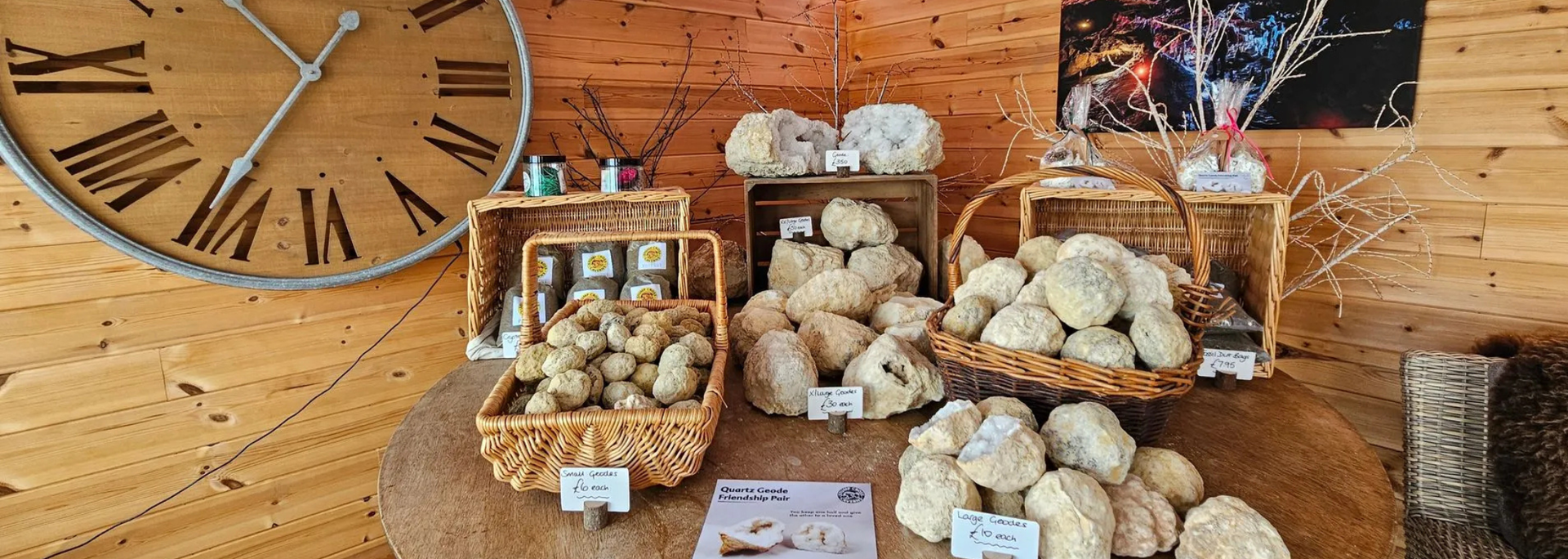
For anyone keen to discover these geological wonders first-hand, Geode James's Geode Shack at Stump Cross Caverns is a real treat. It offers an opportunity to experience the excitement of opening a geode and revealing its hidden, never-seen-before interior.
What are the main types of crystals found in geodes?
Several minerals appear regularly in geodes, each producing distinctive colours, textures and crystal formations. Together, these minerals account for many of the classic geode appearances, although the precise combination depends on the environment in which each specimen formed.
Quartz
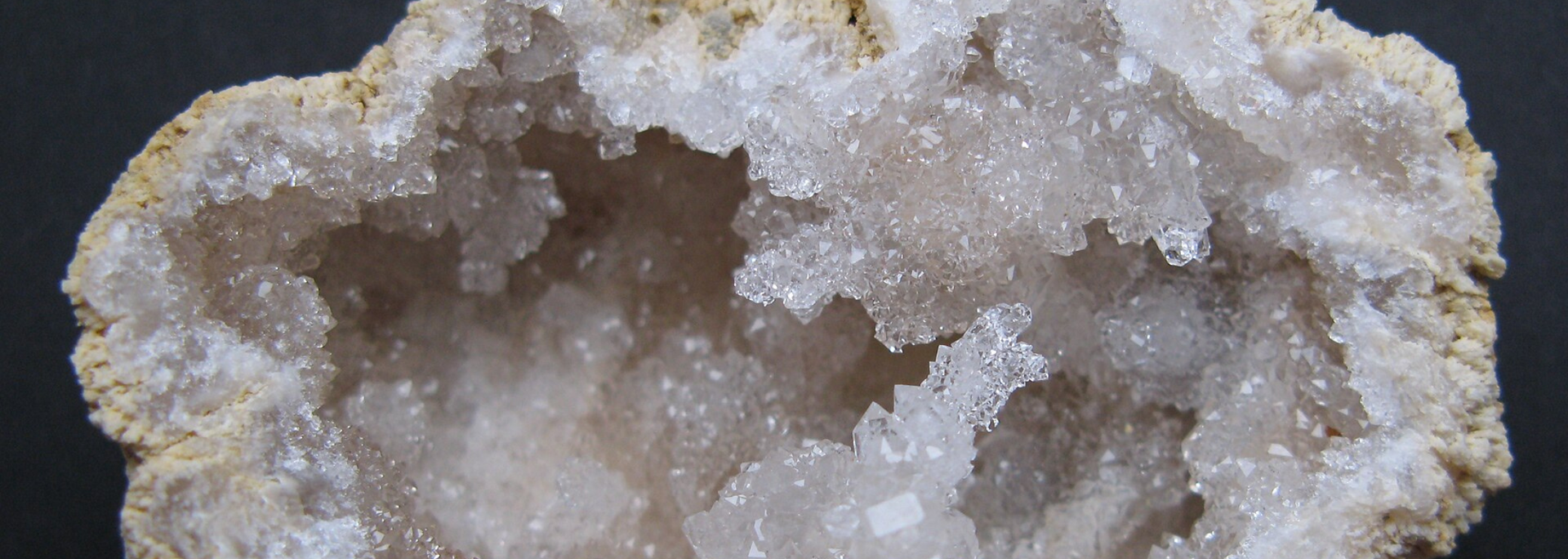
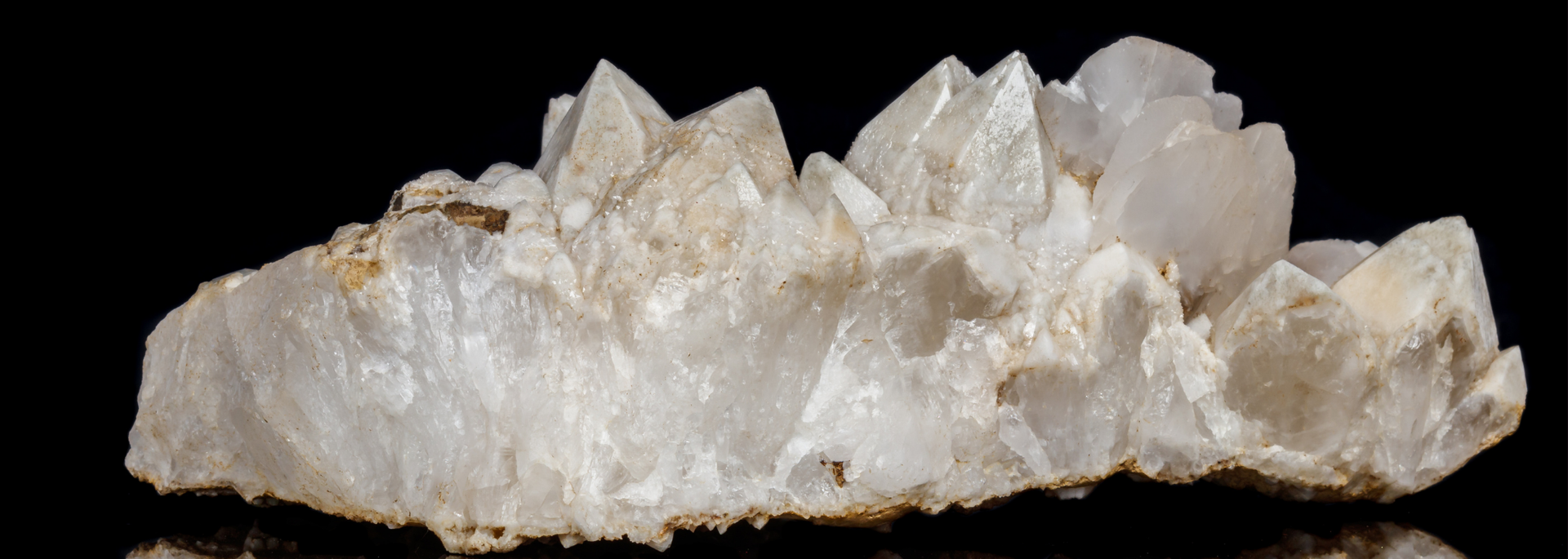
Quartz is one of the most common minerals you might find. It typically appears as clear, white or translucent crystals that grow inwards from the cavity walls.
These crystals can be tiny and densely packed (which creates a sparkling surface known as a "druse"), or they can appear as larger, defined points. Quartz is particularly popular with collectors because of its clarity, durability and attractive natural formations.
Amethyst

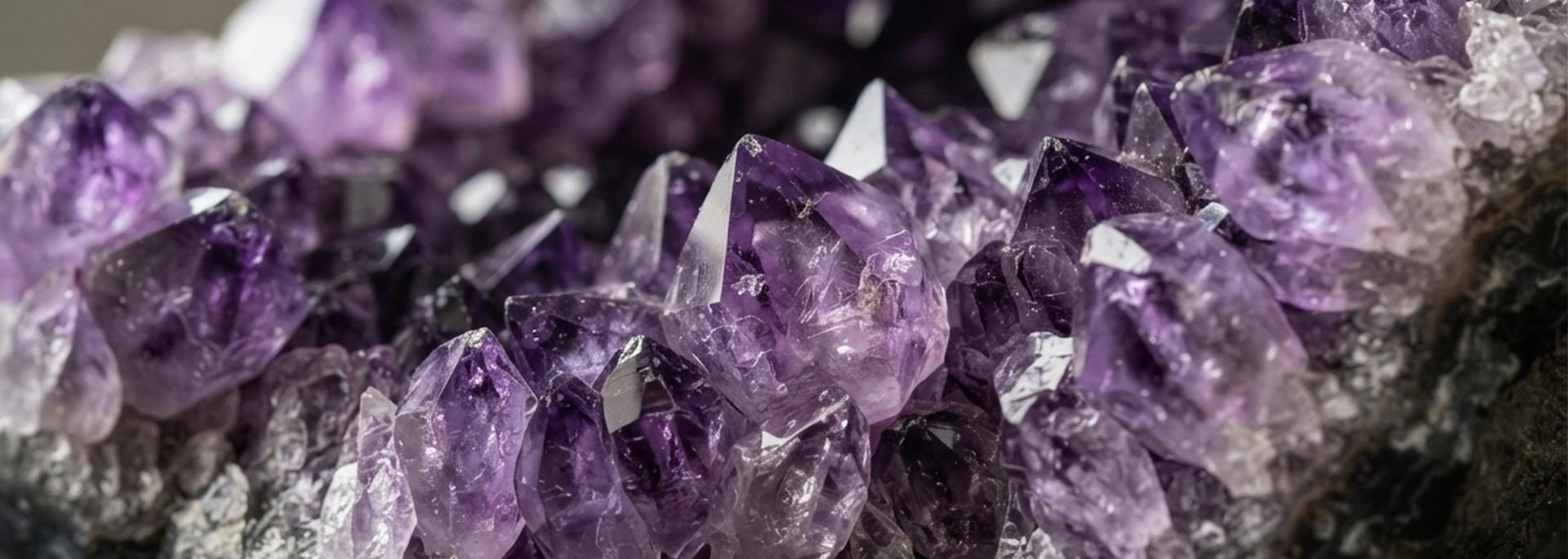
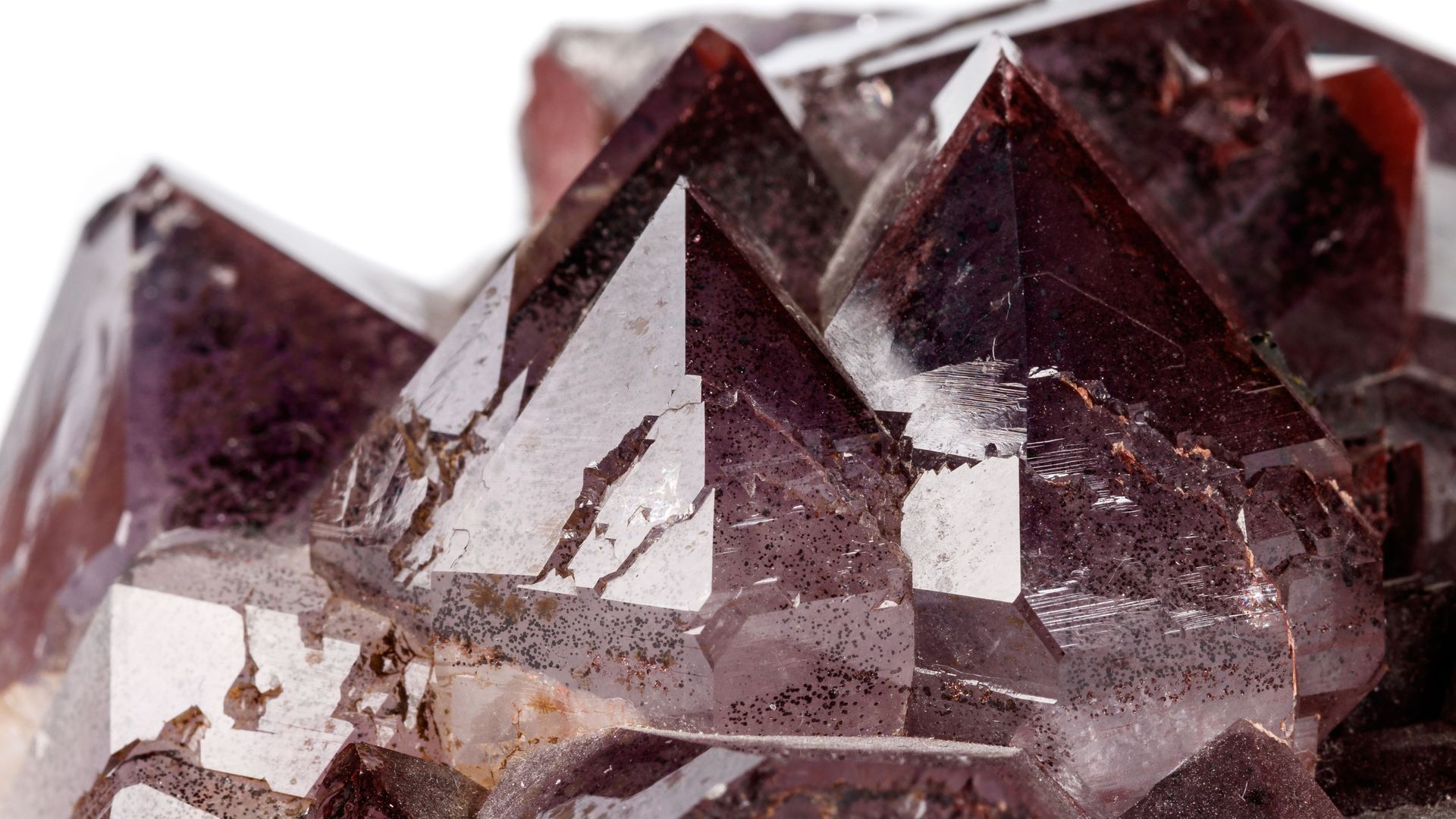
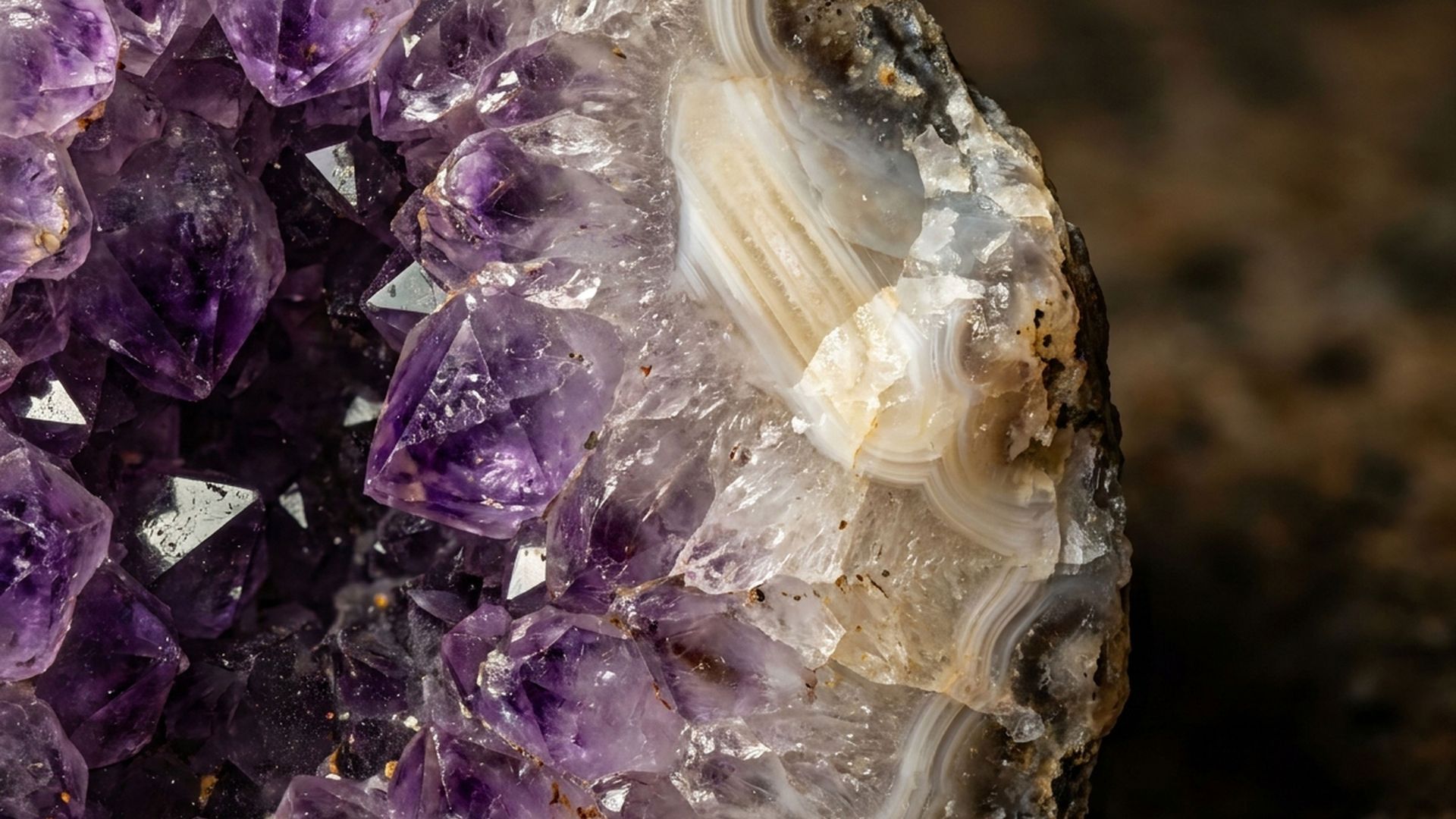
Amethyst is a purple variety of quartz and one of the most recognisable minerals found in geodes. Its colour ranges from pale lilac to deep violet, with the intensity influenced by trace iron and natural radiation during formation.
Amethyst geodes can be spectacular, especially when numerous crystals create a rich purple interior. Large amethyst specimens are frequently displayed as decorative centrepieces.
Calcite

Calcite is another common geode mineral, particularly in sedimentary rock environments. Composed of calcium carbonate, it can form white, cream, honey-coloured or occasionally tinted crystals.
Its shapes vary from pointed formations to more blocky or curved structures. Calcite is especially interesting because its crystal forms can look quite different from the sharp points associated with quartz.
Agate and chalcedony
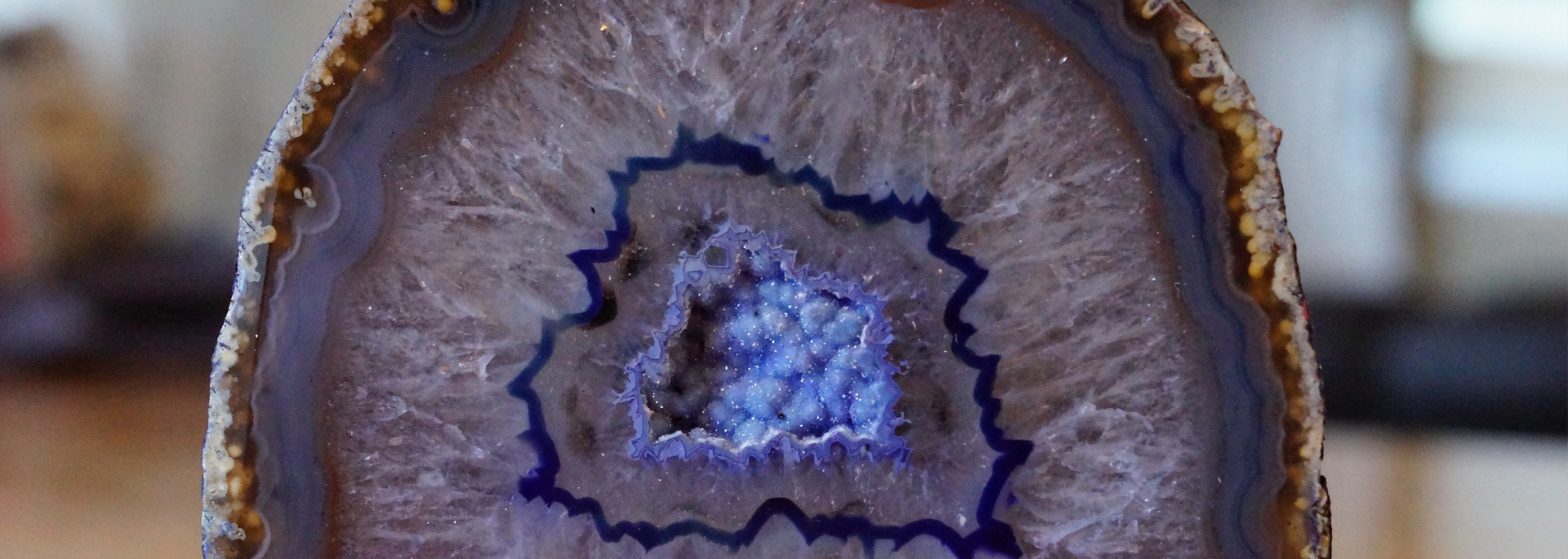
Agate and chalcedony are closely related silica minerals that often form the outer layers of geodes. Agate is recognised by its distinctive bands of colour, while chalcedony has a smooth and waxy appearance.
These materials can create beautiful concentric rings around a cavity before quartz crystals develop further inside. Some geodes contain these layered patterns without a large hollow centre.
Rare types of crystals found in geodes
While quartz, amethyst and calcite are relatively familiar, some geodes contain less common minerals that make them particularly desirable to mineral enthusiasts.
Celestite

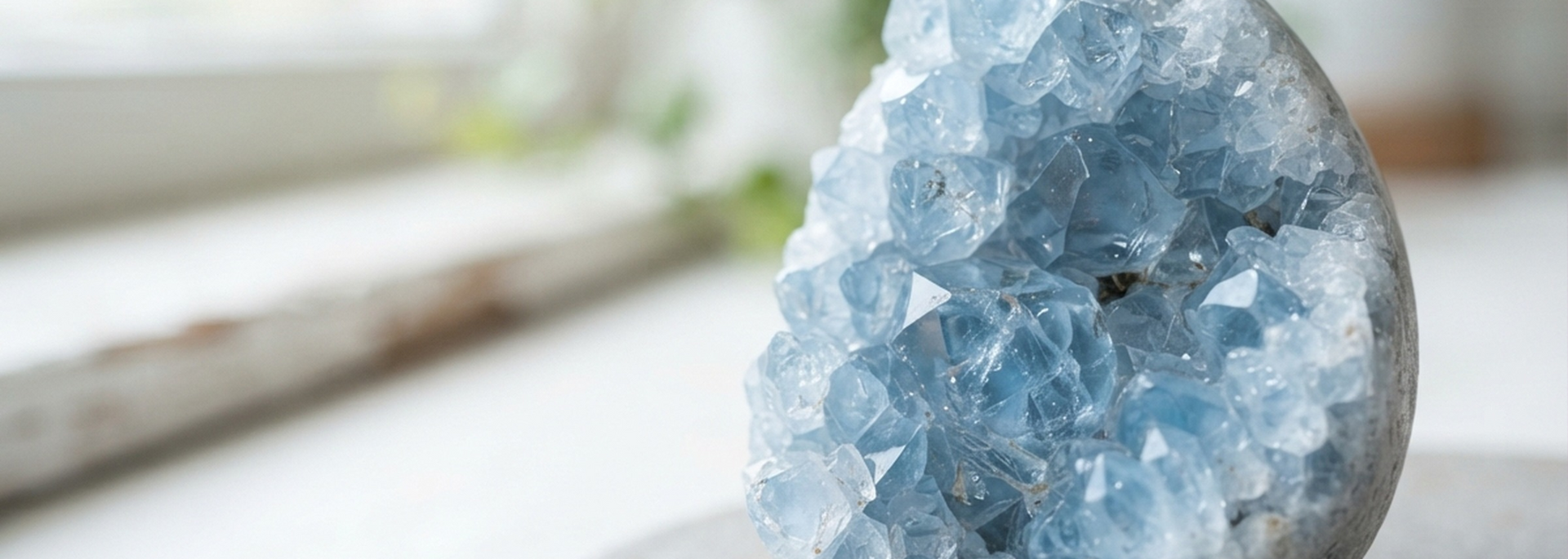
Celestite, also known as "celestine", is famous for its delicate pale-blue crystals. It's composed of strontium sulphate and can produce striking, sky-blue interiors.
Although celestite geodes are well known in certain geological regions, specimens with particularly attractive colour and crystal development can be highly sought after.
Barite
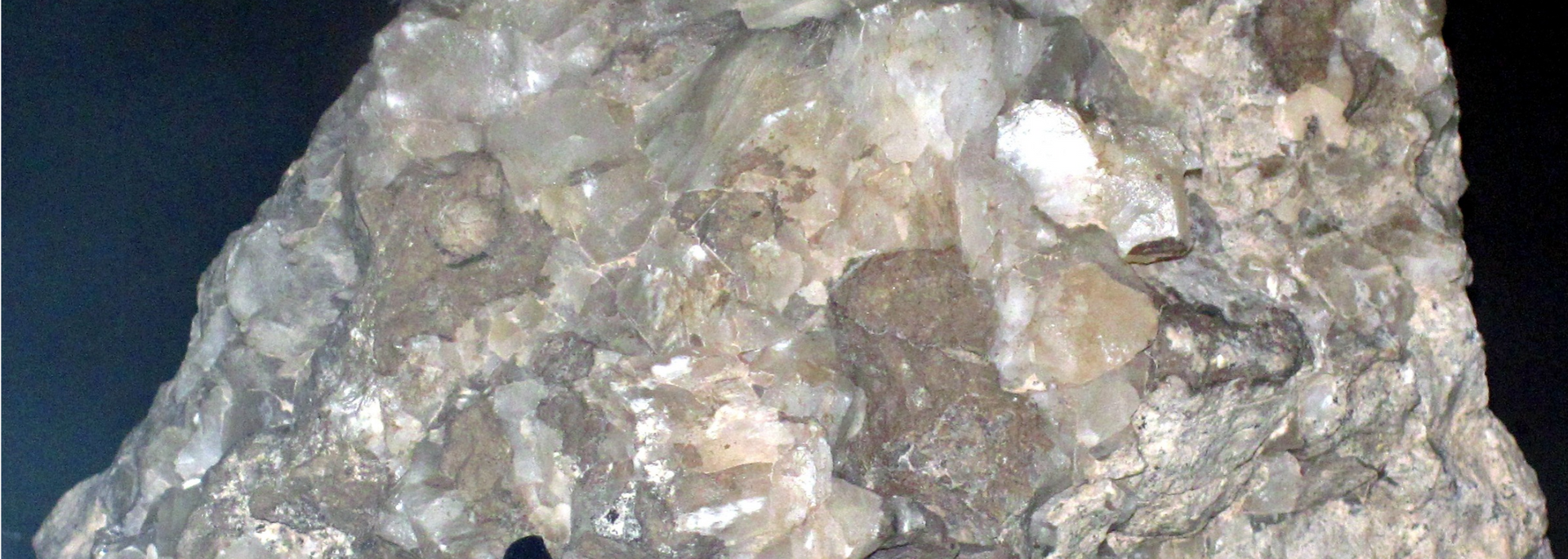
Barite is another mineral occasionally found in geodes. It's composed of barium sulphate and may appear as white, cream or colourless crystals, sometimes forming distinctive blades or plates. Its varied crystal shapes make it an interesting addition to a mineral collection.
Rhodochrosite
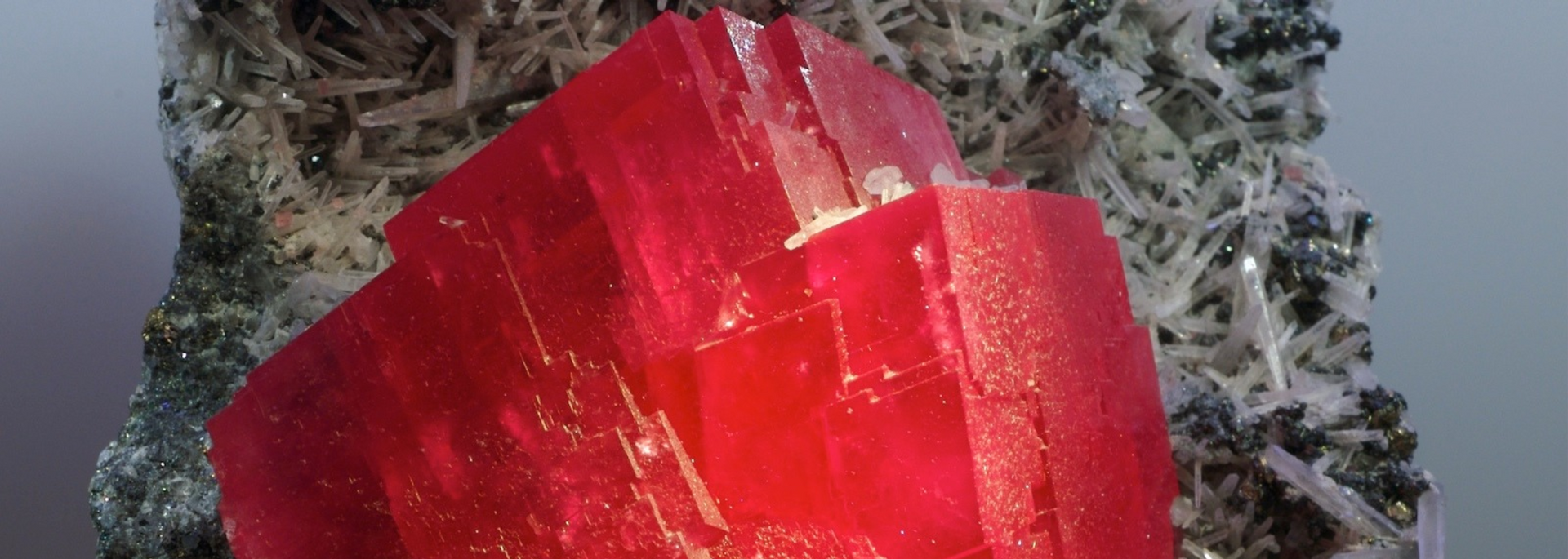
Rhodochrosite is prized for its attractive pink-to-reddish colouring. It's less typical of ordinary geodes. However, where it occurs, its rich colour can make it a standout specimen.
Opal

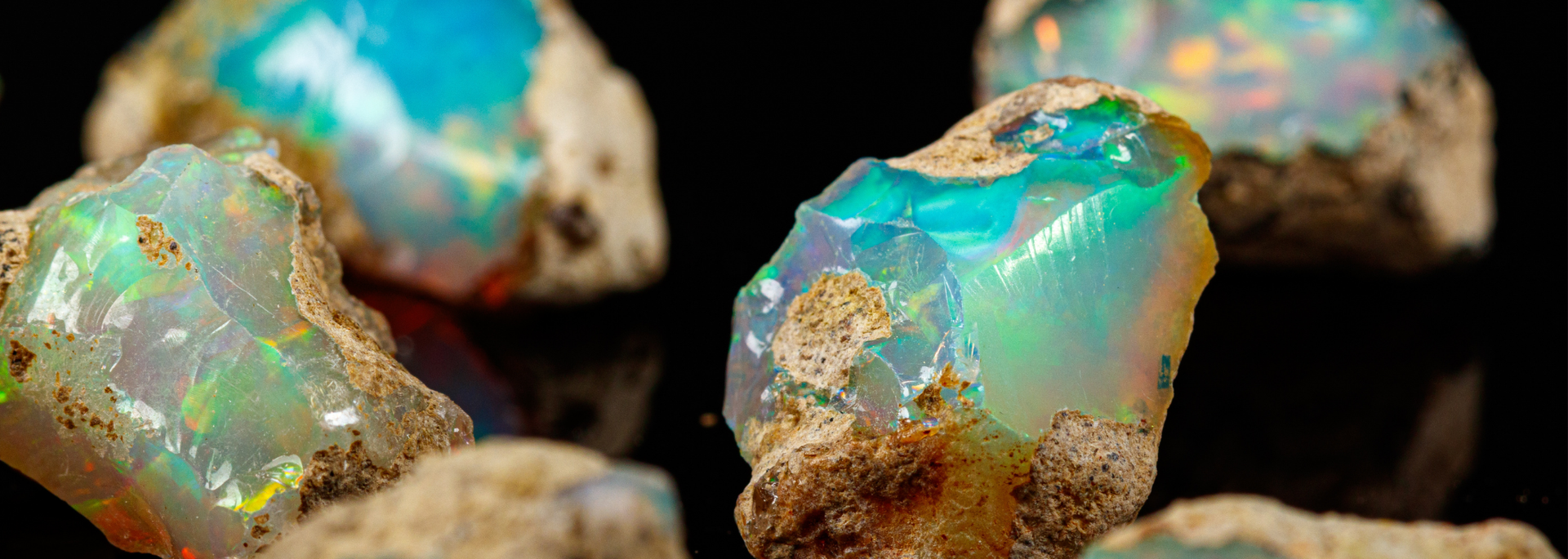
Opal can also occur in cavities, sometimes displaying a remarkable play of colour as light interacts with its internal structure. Unlike quartz, opal doesn't have the same crystalline structure, so it's more accurately described as a mineraloid.
Other rare finds
Other occasional discoveries include pyrite, dolomite and unusual varieties of quartz.
It's worth remembering that rare minerals aren't guaranteed to appear in any particular geode. Their presence depends on local geology and the specifics of their formation.
How geodes form and develop their crystals
Geode formation is a slow geological process that transforms an ordinary-looking rock into something extraordinary. Although geodes develop in different environments, they all require a space where minerals can accumulate.
Some geodes begin as gas bubbles trapped in cooling volcanic rock. Others develop in sedimentary rocks, where cavities form through mineral dissolution or other geological processes. Over time, these spaces become enclosed by a surrounding rock structure.
Mineral-rich water then seeps into the cavity through tiny openings or surrounding porous rock. This water contains dissolved substances, such as silica or calcium carbonate, which can gradually crystallise when the right chemical and physical conditions occur.
As the water deposits minerals on the inner walls, tiny crystal seeds begin to grow. Over time, these crystals develop larger faces and points, generally extending towards the centre of the cavity.
In some geodes, silica forms layers of chalcedony or agate first, followed by a lining of quartz crystals.
The minerals present in the water determine what ultimately forms. Silica-rich fluids can produce quartz and amethyst, while calcium-rich conditions may encourage calcite. Temperature, pressure, trace elements and changes in water chemistry all influence the final result.
Geode formation can take thousands to millions of years. Some cavities remain partly hollow, while others become almost completely filled with minerals.
This slow, variable process explains why no two geodes are exactly alike and why opening one offers such an exciting glimpse into the Earth's geological history.
Geode James's Geode Shack: what to expect

Here at Stump Cross Caverns, we offer a hands-on introduction to geodes at Geode James's Geode Shack.
It goes like this. Visitors browse a selection of unopened geodes in different sizes, choose one that catches their eye and have it cracked open in front of their eyes.
It's amazing to think you're the first person to see the contents of the geode. Even better, you get to take it home with you as a souvenir.
Want to crack your own geode and be the first to see the sparkly treasures inside? Come to Geode James's Geode Shack at Stump Cross Caverns in the Yorkshire Dales. You can buy your geode online in advance to make sure you get the size you want.