
8 historical sites in the Yorkshire Dales

4 March 2024

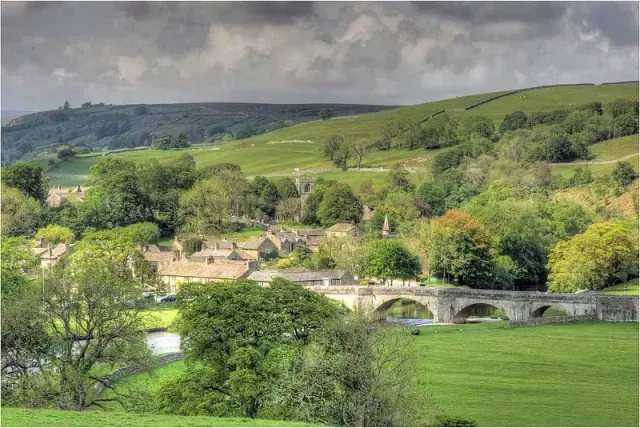
Got a hankering for some history? Explore these 8 historical sites in the gorgeous Yorkshire Dales.


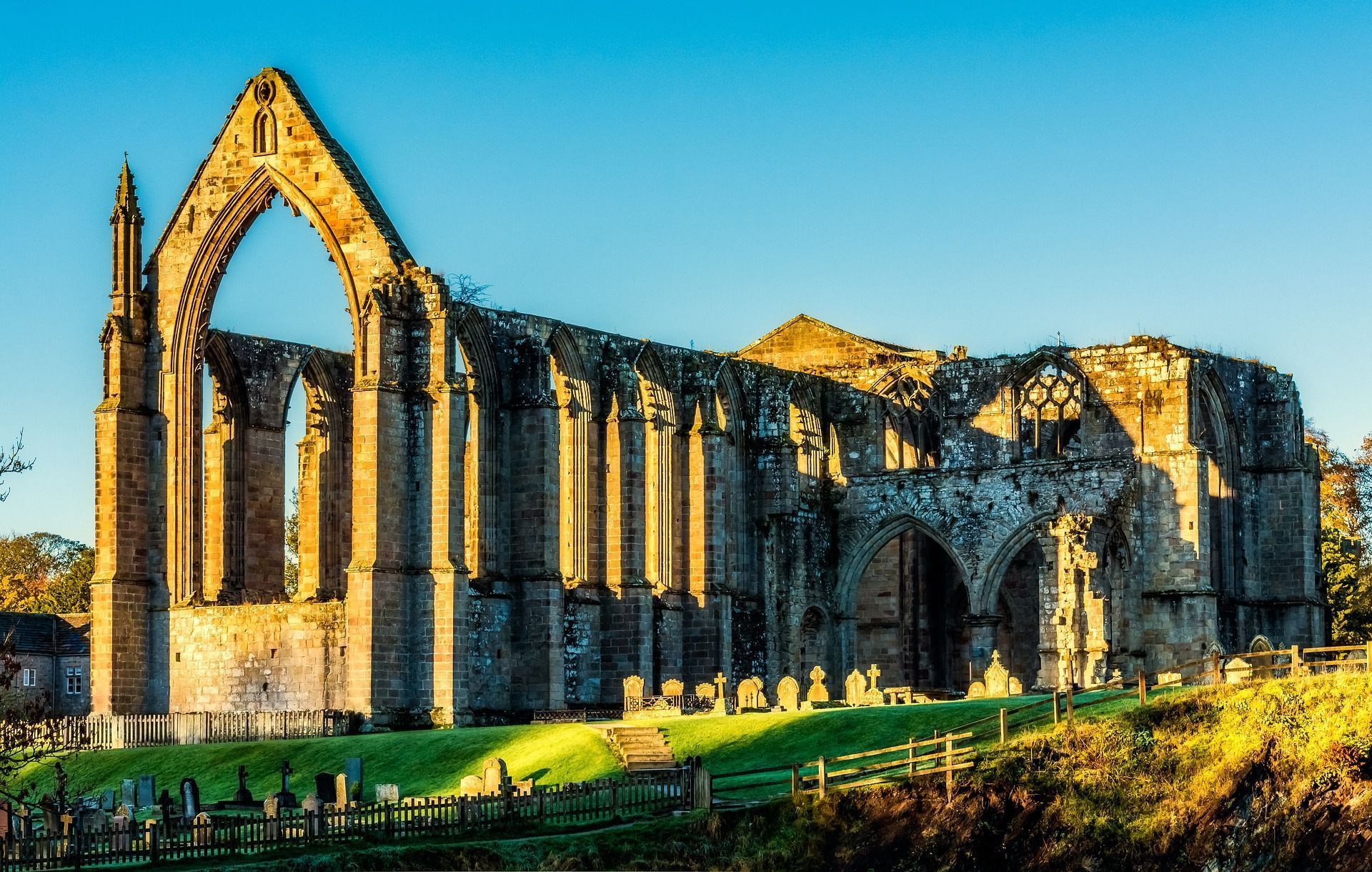
Ruined stone abbey under a bright blue sky, with arches and sunlight.

Humans have lived in the Yorkshire Dales for more than 12,000 years, so it's no wonder it's filled to the brim with fascinating historical sites.


They span from the ancient world right up to the recent past. Yes – visit the Dales and you can expect to see everything from fabulous castles to impressive feats of the industrial age.


Here are just a few of the places you can explore.


1. Bolton Abbey

Ruined stone abbey under a bright blue sky, with arches and sunlight.

A trip to the Yorkshire Dales isn't complete without a visit to the unforgettable Bolton Abbey.


This Augustinian monastery, known for its striking riverside setting, was founded in 1120. It has been a source of inspiration for poets, novelists and painters ever since – among them William Wordsworth, the Brontë sisters and J. M. W. Turner.


It was still in construction when Henry VIII ordered the dissolution of the monasteries in 1539 – and at the time, it was one of the largest Monasteries in England.


The nave of the former priory church has remained intact thanks to Prior Moone, who negotiated with Thomas Cromwell to keep it safe as a place of worship for the local community.


Connecting the Abbey grounds to its breathtaking surroundings are the 60 crossing stones over the river. These were first used by the lay workers of the Abbey. (You can also use a nearby bridge, in case hopping over wet rocks seems too daunting.)


Also close is the forebodingly named Valley of Desolation, which rewards hardy walkers with a beautiful waterfall – and, from the peak of Simon's Seat, some of the best views the Dales has to offer.


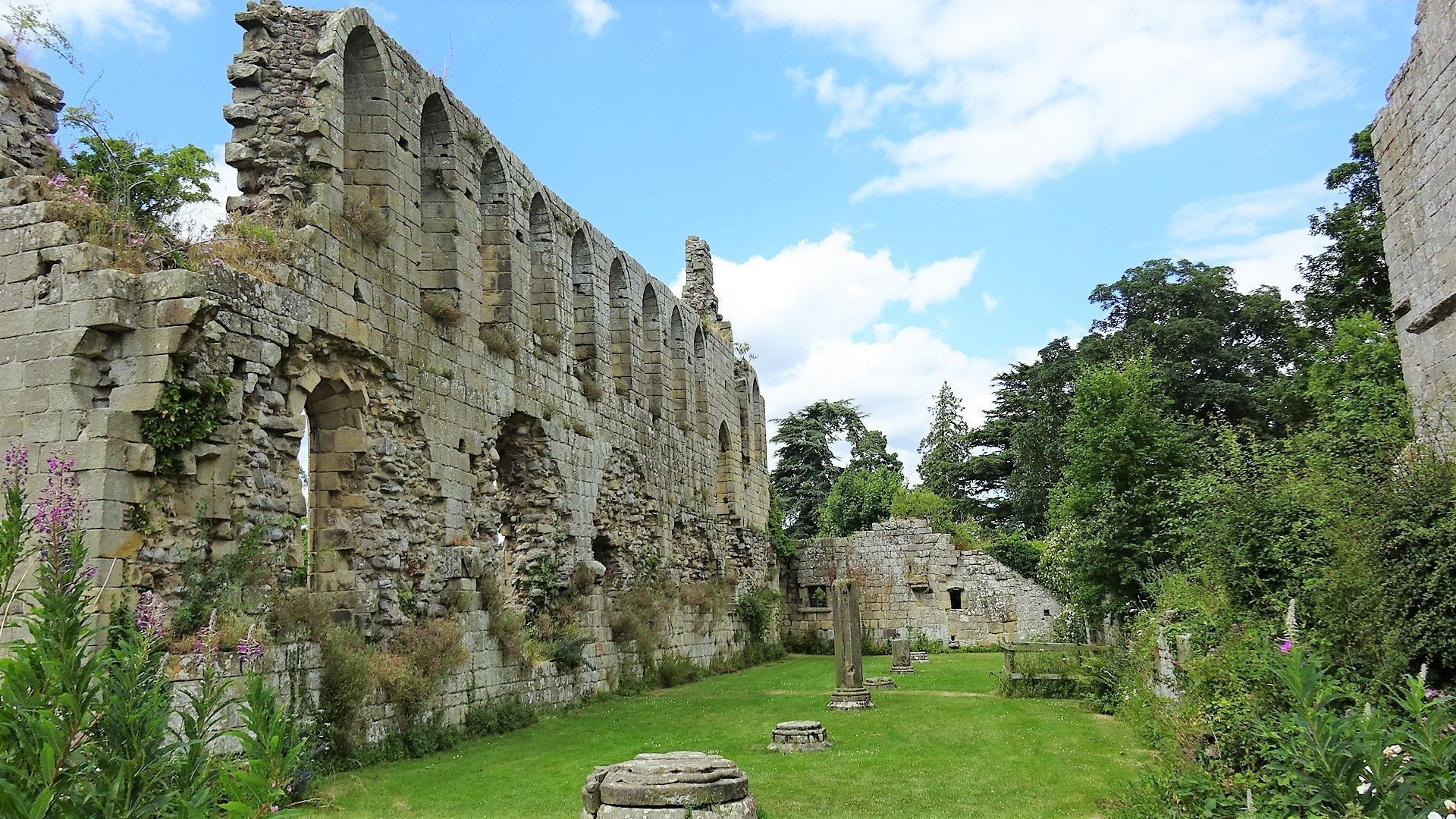
2. Jervaulx Abbey

Ruins of a stone building with arched windows, surrounded by green grass and trees, under a blue sky.

Established in 1156, Jervaulx Abbeywas home to Cistercian monks, who built its church and monastery. At the peak of its powers, the abbey owned half of the Wensleydale Valley and was famous for its well-bred horses.


It's also the site where Wensleydale cheese was first produced – originally using Ewe's milk. 


It's not all cheese and tonsures, though. Dig into the history books and you'll discover that the abbey has a few gruesome tales to tell.


First, in 1279, Abbot Philip of Jervaulx was murdered by one of his monks. Then, after the Dissolution in the 16th century, the abbey was ruined and pillaged. Today, the church and claustral buildings remain, festooned with beautiful wildflowers, shrubbery and trees.


Located right in the heart of the Yorkshire Dales, Jervaulx Abbey is atmospheric, haunting and overflowing with historical charm.


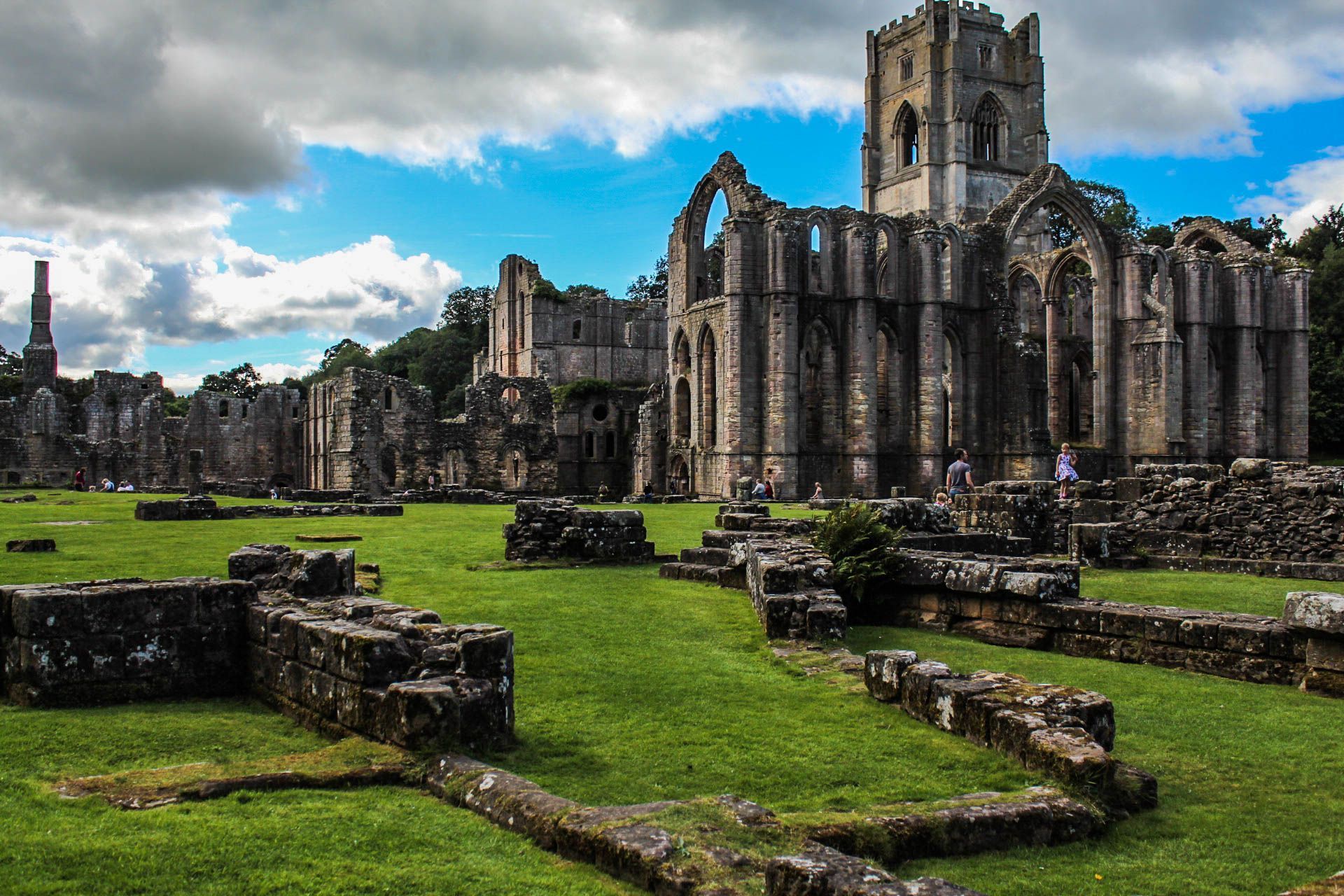
3. Fountains Abbey

Ruins of Fountains Abbey in England, with a central tower and surrounding stone structures in a grassy field.

Fountains Abbey is situated in a magnificent World Heritage Site, which also includes Studley Royal: one of England's most spectacular Georgian water gardens.


It is the largest collection of monastic ruins in the country – and an absolute must-see for visitors to the Yorkshire Dales.


The abbey was founded in 1132 by 13 Benedictine monks, who came looking for a modest life in the solitude of the Yorkshire countryside. With the help of lay brothers, the abbey soon amassed considerable wealth thanks to its cattle rearing, horse breeding, stone quarrying and lead mining activities.


Following the Dissolution, the abbey fell into ruin. Since the 19th century, it has been surrounded by a stunning blanket of white snowdrops in early spring.


As well as visiting the abbey, you can see the restored Fountains Mill: the oldest standing building owned by the National Trust. The mill processed grain continuously from the 12th century up until 1927.


Nearby, you'll also find Stanley Grange – a monastic farm that holds regular crafting events – and Fountains Hall, an elegant 17th-century mansion. 


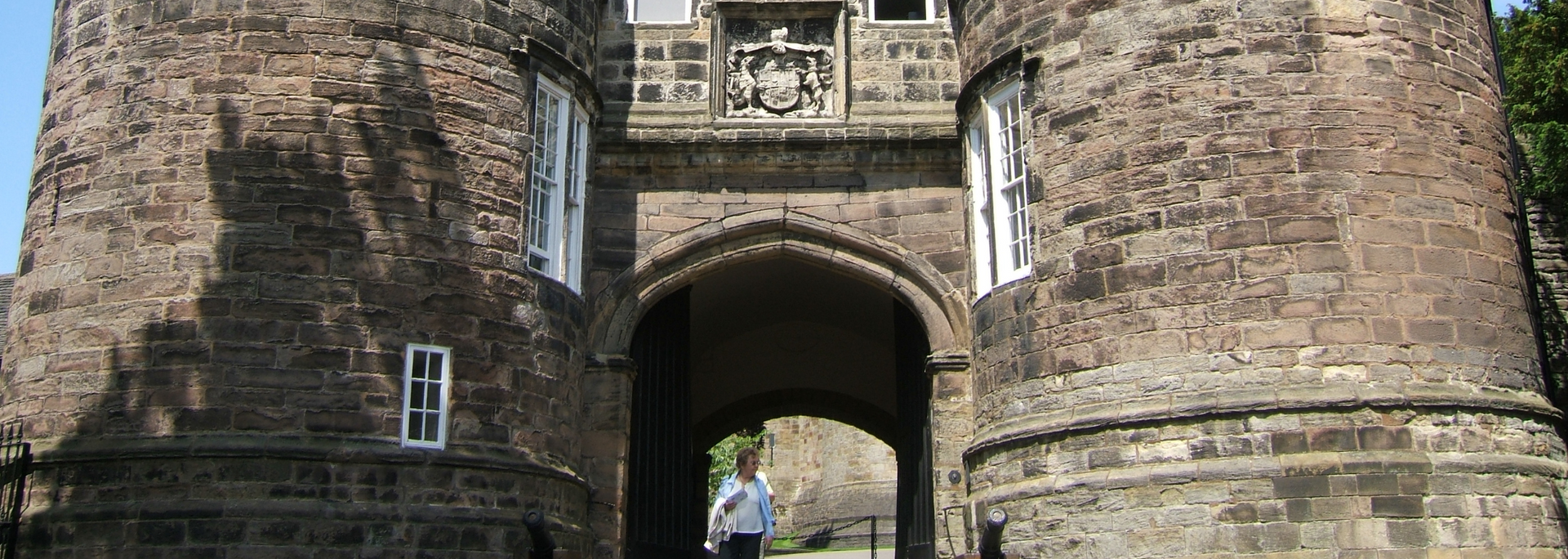
4. Skipton Castle

Stone archway entrance with two large round towers, a person stands in the archway.

At the top of Skipton's delightful, bustling high street sits the "Guardian of the Gateway" to the Yorkshire Dales: the spectacular Skipton Castle.


Over 900 years old and one of the best-preserved medieval castles in the UK, this fully roofed castle features an imposing watchtower, atmospheric dungeons, a captivating early-Tudor courtyard and a decadent banqueting hall.


And if you feel like a break after all that exploring, you can chill out on the serene chapel terrace or grab a slice of cake in the Clifford Tearooms. 


The castle famously survived a three-year siege during the English Civil War. According to legend, sheep fleeces were hung on the walls to protect them from incessant cannon fire. Sheep fleeces now adorn the town's coat of arms. 


Visitors are given a fantastic free guide to the castle on entry, full of fascinating historical facts.


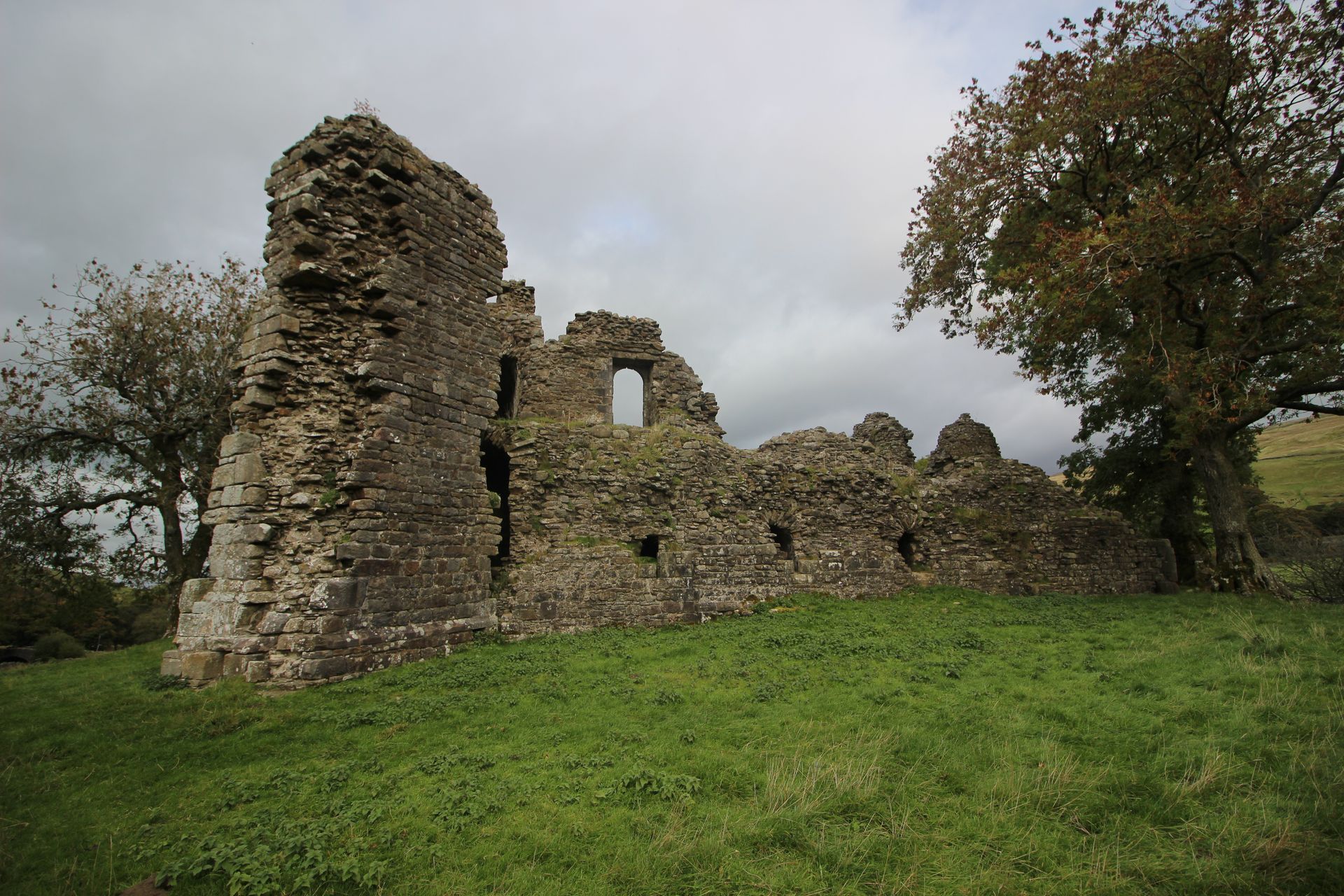
5. Pendragon Castle

Ruins of a stone castle on a grassy hill under a cloudy sky, with a tree to the right.

Legend has it that Pendragon Castle was built in the fifth century by Uther Pendragon, King Arthur's father. While modern historians dispute this, believing instead that it was built in the 12th century, Pendragon Castle remains steeped in history. 


Among its many notable owners was Sir Hugh de Morville, a knight who was involved in the murder of Sir Thomas Beckett in 1170. After the castle fell to ruin, it was restored by Lady Anne Clifford, a patron of the arts who also added a brewhouse, a bakehouse, a coach house and some stables. 


The castle is surrounded by a sublime landscape. It overlooks the winding River Eden, while the majestic peaks of Wild Boar Fell and Mallerstang Edge loom in the distance.


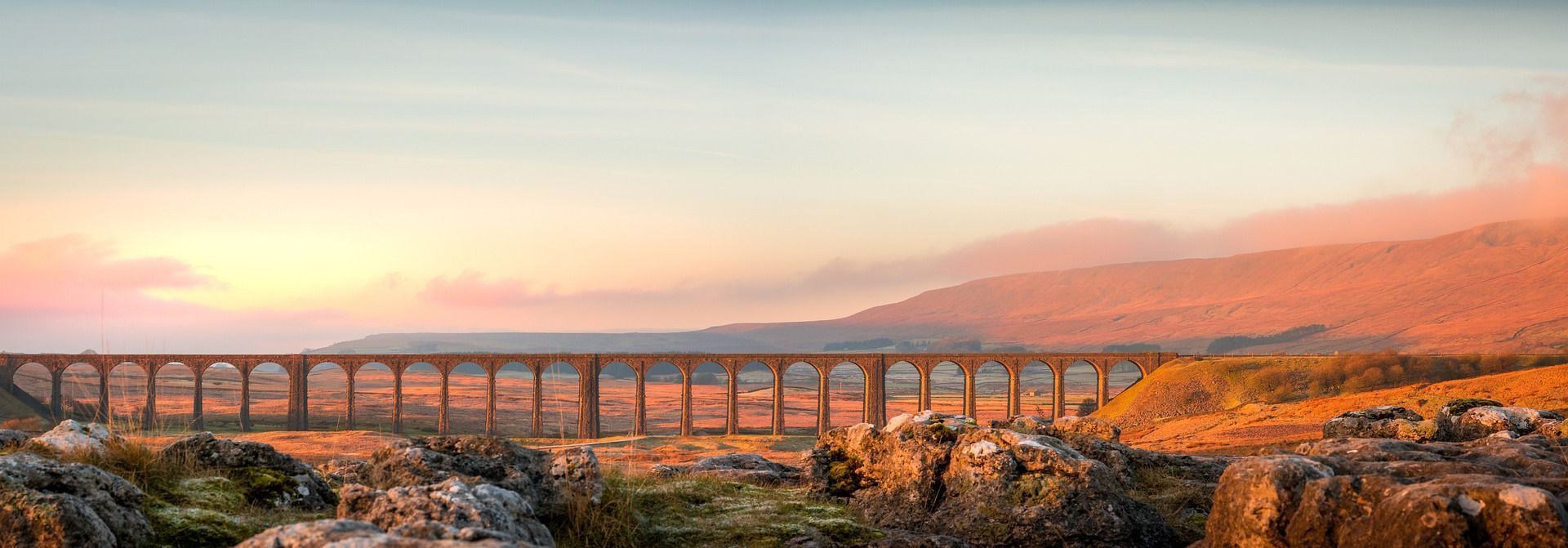
6. Ribblehead Viaduct

Long stone railway bridge against a colorful sunset, with rolling hills.

One of the great engineering feats of the Victorian age, the Ribblehead Viaduct has a somewhat chequered history. It was built by a workforce of 2,000 men, over 100 of whom lost their lives creating the 24 colossal stone arches that reach 104 feet above the moor. Such was the loss of life that the Midlands Railway subsequently paid for an extension of the local graveyard. 


There are several local memorials commemorating the lives of some of the men who worked and died during the construction of the viaduct, including at St Mary's Church in Outhgill and St Leonards' Church in Chapel-le-dale.


The Ribblehead Viaduct remains an outstanding achievement of the Industrial era. You'll find this iconic structure in the centre of the Three Peaks of the Yorkshire Dales. 


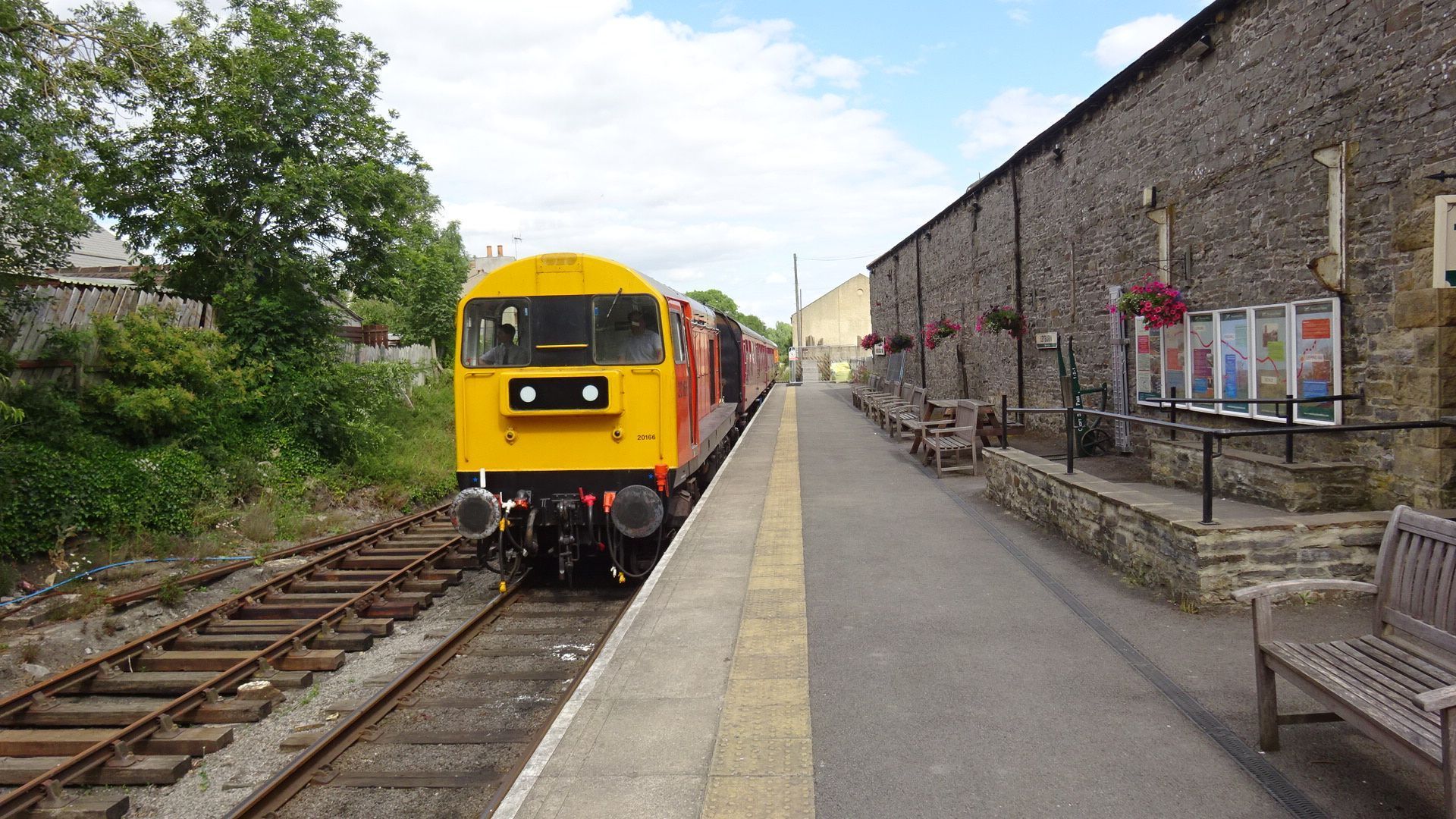
7. Wensleydale Railway

Yellow and red train at a train station platform with a stone building on the right.

All aboard! The Wensleydale Railway is a tourist and heritage railway line, spanning from the town of Northallerton to the hills of the Yorkshire Dales.


Passengers can enjoy the constantly evolving scenery: the ancient farmlands of the Vale of Mowbray, the picturesque market towns of Bedale and Leyburn and, of course, the unparalleled beauty of the Dales. 


The Wensleydale Railway has overcome many setbacks. Its original passenger service ceased way back in 1954. The railway continued shipping limestone until 1992, after which the Ministry of Defence occasionally used the line for transporting military vehicles.


Thankfully, the line is open to the public once again – and voyagers can watch the awe-inspiring vistas of "God's Own Country" unfold before them on heritage trains.


Steam services operate on a special service on weekends, so passengers wishing to experience a fully authentic experience would be wise to check the timetable first. 


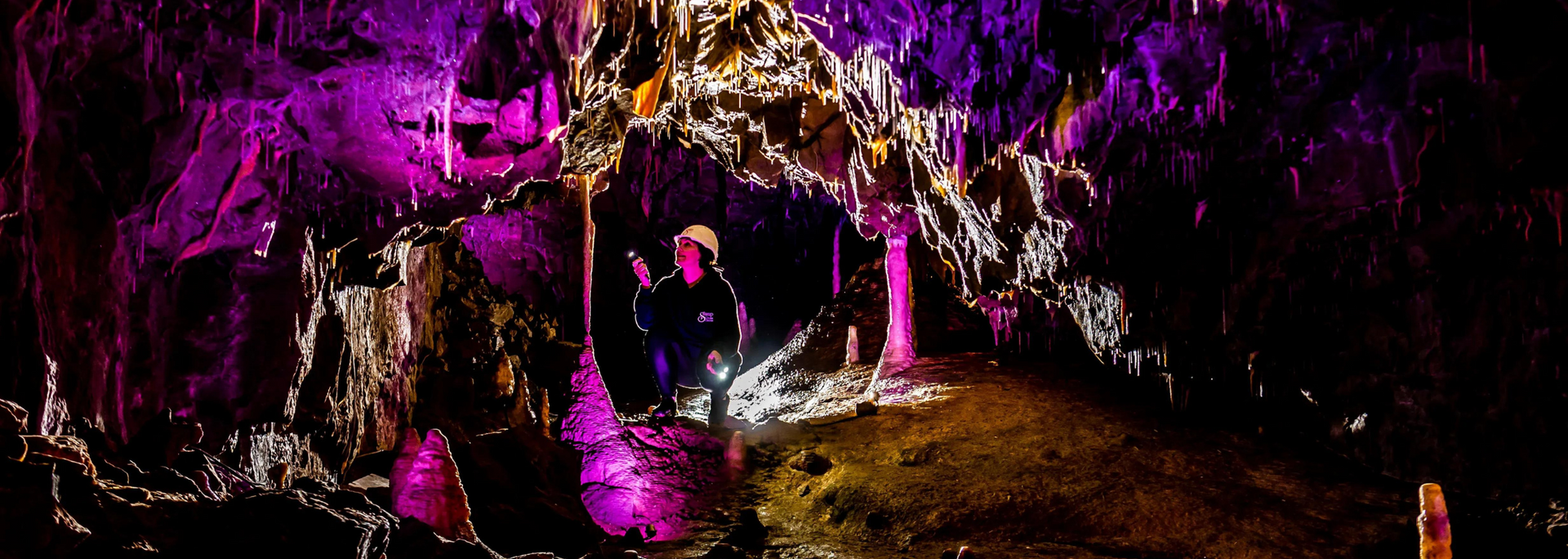
8. Stump Cross Caverns

A person in a cave illuminated by purple and yellow lights, showcasing stalactites.

Last (but by no means least) is our very own Stump Cross Caverns.


For the ultimate trip back in time, be sure to visit our winding prehistoric
caves near Pateley Bridge . On a self-guided tour, you can explore a twisting network of stunning stalagmites and stalactites, gasp at the resplendent rock formations and learn all about our 300-million-year history.


Ready to be amazed? It's quick and easy to
book your tickets online .

Share this article

Recent Posts

Dive into fascinating facts about limestone, from glowing minerals and fossils to caves, crystals
by Simon Edward 8 June 2026
Dive into fascinating facts about limestone, from glowing minerals and fossils to caves, crystals and ancient geological history.
Looking for a family-friendly event in Yorkshire this summer? Explore 10 varied events in our guide.
by Simon Edward 5 June 2026
Looking for a family-friendly event in Yorkshire this summer? Explore 10 varied events in our guide.
Start learning the basics of identifying geodes and their crystal formations with our beginner's gui
by Simon Edward 29 May 2026
Start learning the basics of identifying geodes and their crystal formations with our beginner's guide to geode identification.
Discover some of the largest cave systems in Europe, from vast underground chambers
by Simon Edward 25 May 2026
Discover some of the largest cave systems in Europe, from vast underground chambers to ancient limestone labyrinths and palaces of ice.
Could you be the one to make the next HUGE fossil discovery at Stump Cross Caverns? Join us
by Simon Edward 22 May 2026
Could you be the one to make the next HUGE fossil discovery at Stump Cross Caverns? Join our Ice Age Dig for a once-in-a-lifetime opportunity.
What happened before the Stone Age? Find out about Earth's earliest history, prehistoric life
by Oliver Pyper 22 May 2026
What happened before the Stone Age? Find out about Earth's earliest history, prehistoric life and the world before humans.
Discover the best glamping experiences in the Yorkshire Dales, plus local attractions,
by Simon Edward 18 May 2026
Discover the best glamping experiences in the Yorkshire Dales, plus local attractions, packing advice and tips for family-friendly adventures.
What you've heard is true: birds really are dinosaurs.
by Oliver Pyper 15 May 2026
What you've heard is true: birds really are dinosaurs. Explore this fascinating evolutionary story with us.
The Ice Age saw the last of many giant beasts – so how did early humans survive?
by Oliver Pyper 11 May 2026
The Ice Age saw the last of many giant beasts – so how did early humans survive? Discover how clothing, shelter and diet played a part.
Show More