
Could humans live in Martian caves?

Simon Edward • March 8, 2024
BOOK TICKETS

Learn how future human settlers could use caves on Mars to shield themselves against radiation and storms.


Learn how future human settlers could use caves on Mars to shield themselves against radiation and storms.

Did you know that if we colonise Mars, there's a big chance that human settlers would live in the many caves that lie beneath its surface?


While it might sound strange – and a bit like we'd be returning to our caveman roots – there would be lots of benefits for our future galactic colonists.


The caves would offer humans shelter from dangerous radiation and a respite from the huge temperature variations. They'd also protect astronauts and their equipment from the intense dust storms and meteor showers that occur regularly on Mars.


And with potentially thousands of caves to pick from, it kind of seems like a no-brainer.


What do scientists say?


We're not playing make-believe here. Scientists really have considered the value of Martian caves as permanent homes.


See, while Mars is perhaps the best planetary candidate for colonisation, it's hardly Hay-on-Wye. Mars presents plenty of stumbling blocks that we need to conquer before we start erecting picket fences.


Chief among these is radiation. Mars colonisers will have to deal with UV radiation (from the Sun) and ionising radiation (from space) that reach levels far beyond what we humans are equipped to deal with.


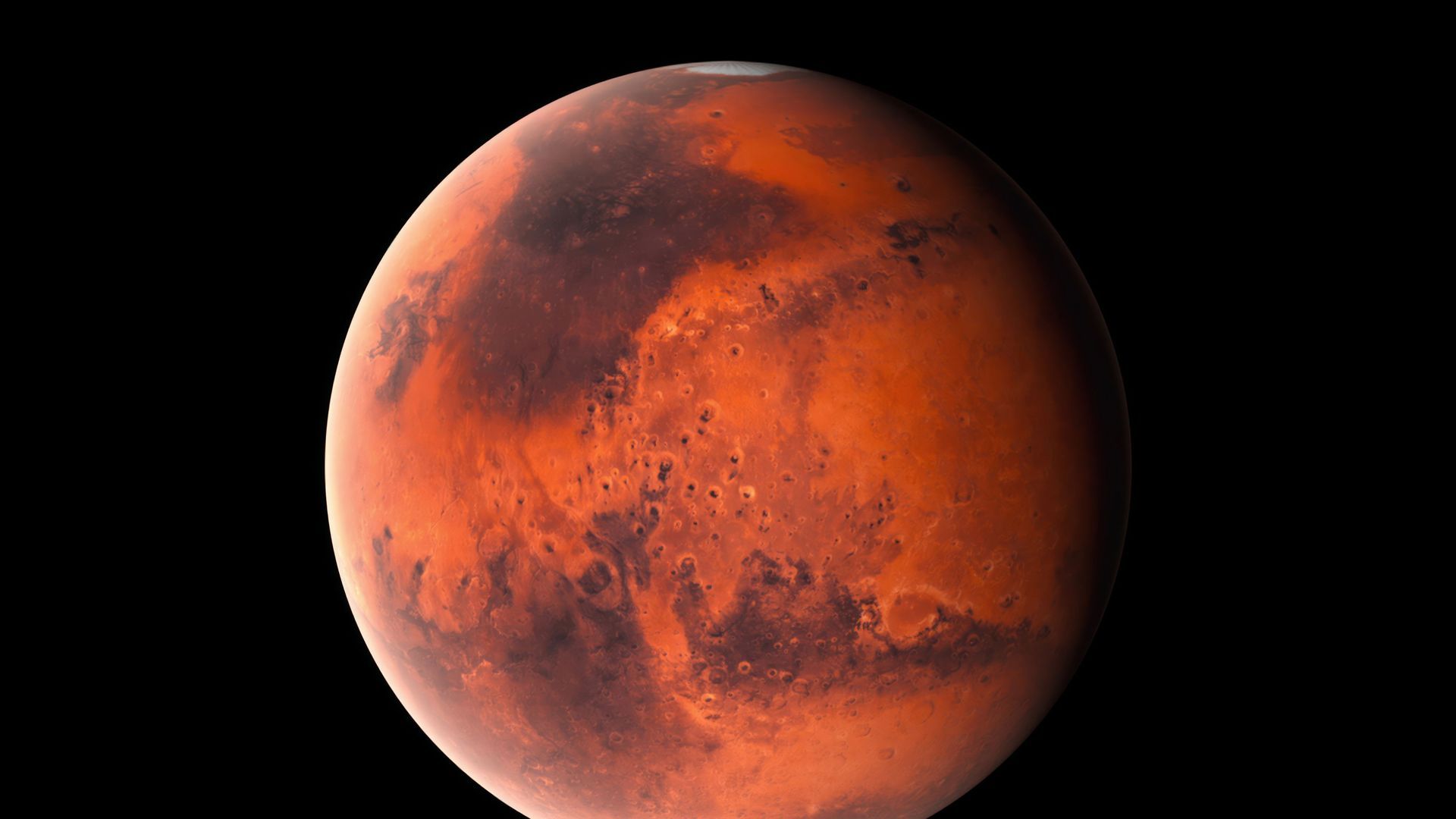
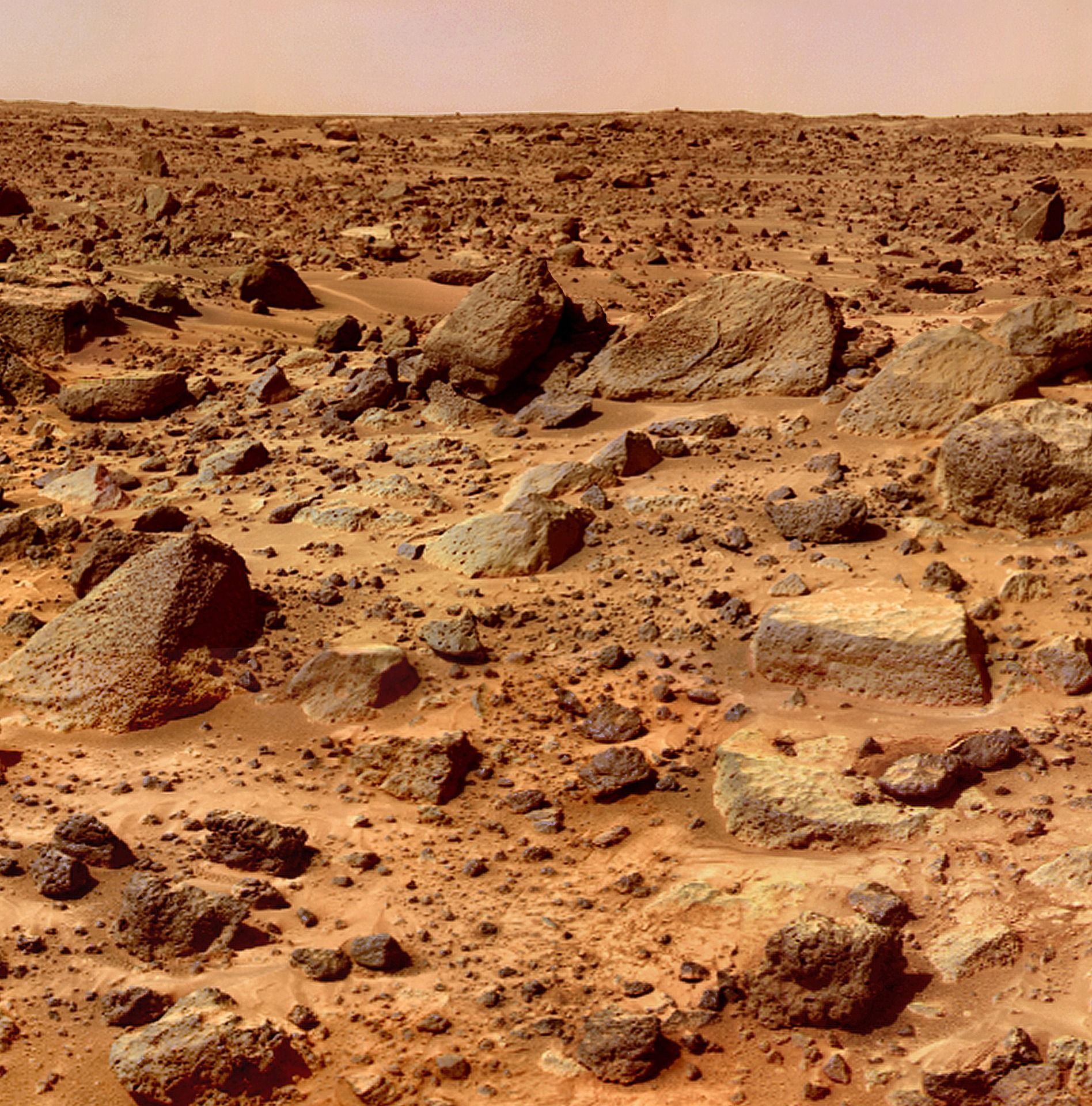
Picture of Mars.

But one Spanish scientist thinks he may have found a solution within Mars's many underground caverns. Daniel Viúdez-Moreiras calculated that UV radiation levels within these caves are likely to be significantly lower than surface-level radiation.


The upshot of all this is that future explorers can likely survive by sheltering in the caves. It's hardly the most glamorous way to live – but at least they'll, well, live.


The next step, according to Viúdez-Moreiras, is to send an unmanned space vehicle into the caves to confirm whether they're as cosy (and radiation-free) as they seem. We can't wait to hear the results.


How did the Martian caves form?


The caves were formed billions of years ago when there was regular volcanic activity on Mars. As lava flowed from volcanoes, the surface cooled and hardened, producing roofs that could be over 90 metres thick.


Underneath, channels of still-flowing lava created twisting underground tubes. Once the lava emptied out, it left a cave.


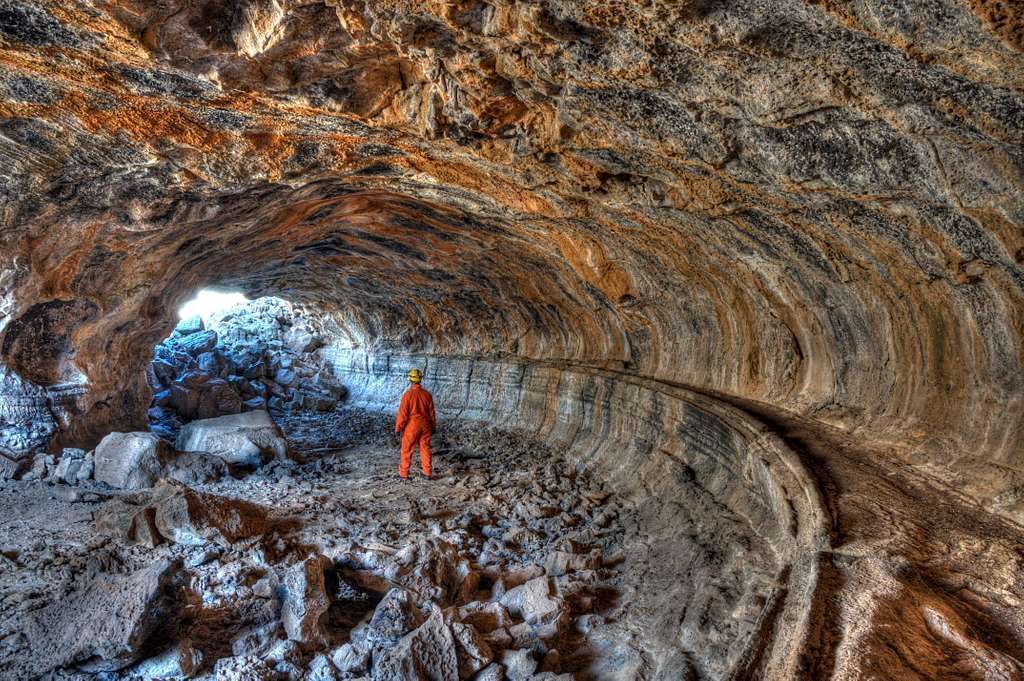
While this phenomenon can be found on Earth, these Martian caves would be much, much larger. We're talking  hundreds of metres across and kilometres long.


Picture of a huge lava tube.

This is thanks to the lower gravity on Mars. At just one-third of Earth's gravity, Martian gravity would allow lava to spread much more freely.


Now we know the facts, let's indulge in a little creative speculation…


The first voyage


Imagine you're a plucky astronaut, speeding through the solar system on a state-of-the-art spacecraft that's hurtling towards Mars.


After a long and gruelling nine-month trip, you finally spot the majestic red planet growing larger and closer through the spaceship porthole of your cabin. As your ship passes through the paper-thin atmosphere – only 0.7% as thick as Earth's – you'll need to quickly engage reverse thrusters before landing to avoid crashing straight into the surface.


You've already input your destination into the onboard computer. You're heading for the gigantic Tharsis bulge. This vast, spectacular region contains three enormous shield volcanoes: Arsia Mons, Pavonis Mons, and Ascraeus Mons.


It's also potentially home to more than 1,000 caves, all ripe for exploration.


Finding your new home


After a safe landing, the pod bay doors open with a snake-like hiss. You and your crewmates take a deep breath and carefully navigate the ramp towards the gleaming, scarlet surface.


As soon as your space boots hit the sandy floor, you notice, from the corner of your space helmet, massive dust storms swirling in the distance like terrible, blood-filled clouds. The temperature, currently at a pleasant 20°C, will soon drop to a freezing -100°C. You don't have much time.


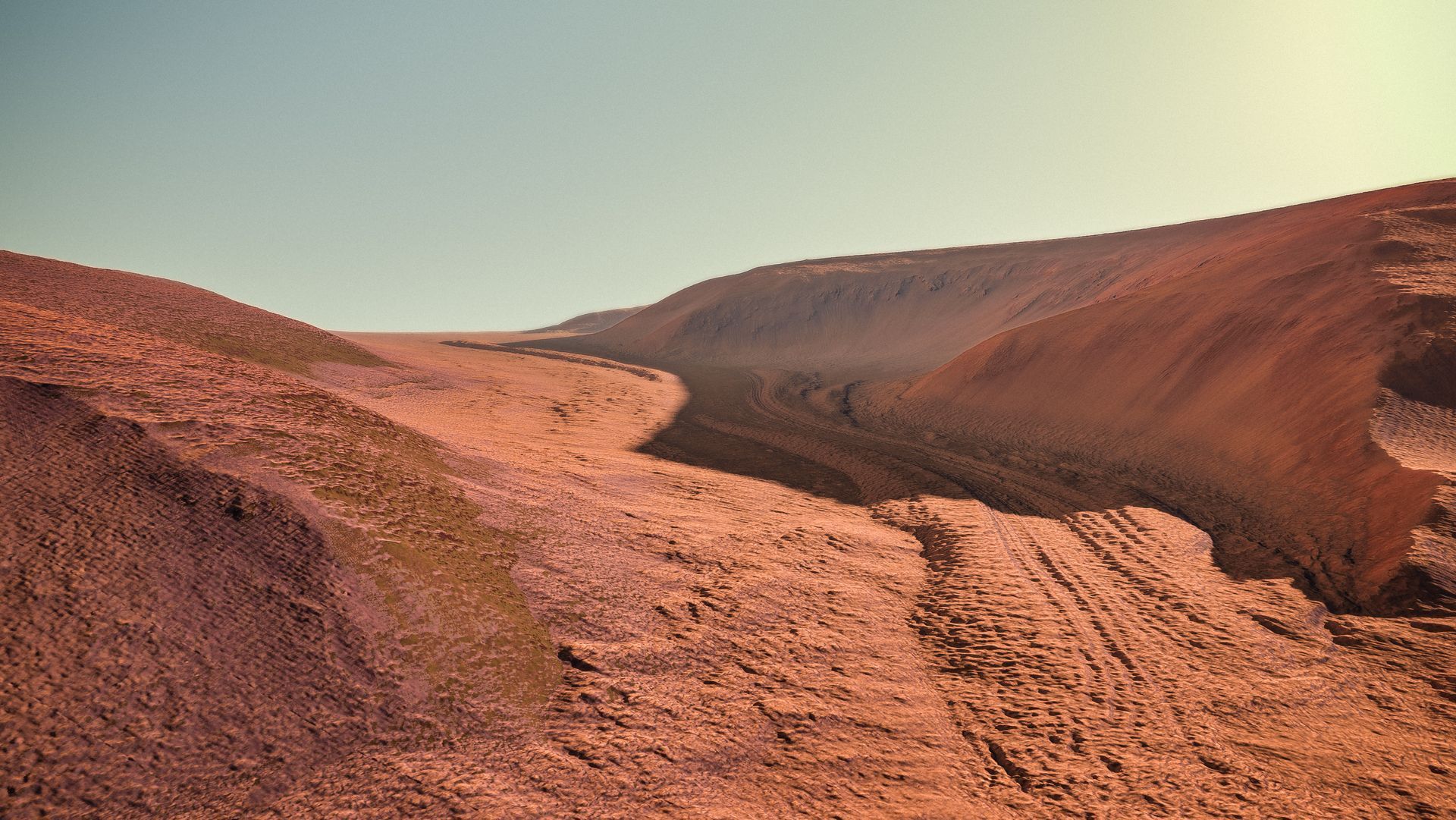
Accompanied by dutiful quadruped pack-mule robots carrying equipment and supplies, you climb onto the peak of a huge sand dune that dips down like a colossal eye socket. Directly below lies the dark mouth of a cavern.


Picture of Mars dunes

Using rappels and the jetpack attached to your spacesuit, you descend towards the cave opening. As soon as you reach it, you and the engineer activate a bleeping, whirring machine – this is your communications link back to Earth.


You travel further into the cave, and once inside, you and your crew deploy a pressurised tent. This will be your home base for the next few days.


Underground explorations


Over the next few months, you explore the caves. You travel kilometres at a time, mapping the interior and setting up camp as you go.


The temperature inside will remain cool and stable – and you'll be protected from the harsh environment outside. Thankfully, you won't need to worry about the rogue meteors that blast into the surface without warning, the deadly radiation or the ever-present dust that can clog up and damage your equipment.


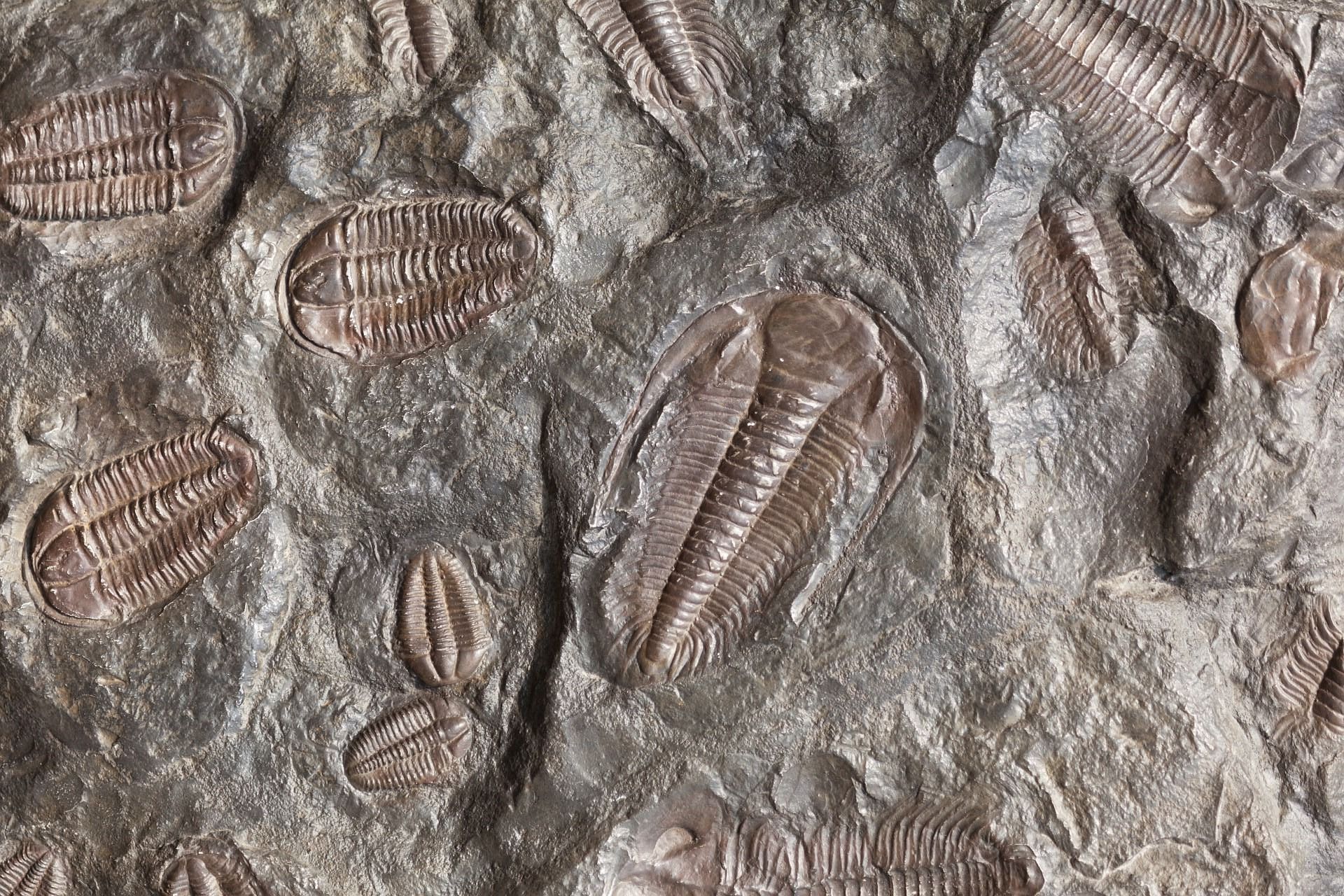
You take hundreds of samples of the rock inside and stay on the lookout for alien bacteria or other primitive, microbial forms of life. You might even discover the fossilised remains of ancient creatures.


Picture of fossils

As you explore further, you could discover liquid water deep underground – or previously unknown geothermal processes that provide you with a natural source of heat and energy.


Soon, other astronauts arrive, bringing with them more equipment, machinery and supplies. You help construct a huge airlock that covers the cave entrance, which – along with the non-porous rock inside – allows you to create a pressurised, artificial atmosphere throughout your underground home.


Home sweet home


Finally, you can take off your helmet outside the tent and breathe in the fresh air created by the NASA Moxie device, converting the poisonous air from primarily carbon dioxide into breathable oxygen.


You and others begin to build a colony inside, using hydroponics and natural waste to grow crops and become fully sustainable. The caves are now completely lit – and you have your own living quarters, complete with breathtaking views of Mars captured by cameras.


Soon, there are other buildings: meeting rooms, fully equipped hospitals, schools for children, a library and a wildlife sanctuary. There are even venues for entertainment (you've been brushing up on your guitar chords and have just joined the Mars house band), as well as beautiful shared gardens with flowers and greenery.


Occasionally you venture outside in high-tech vehicles to run scientific tests and visit other flourishing cave colonies. In the future, you may start the process of terraforming Mars, creating an atmosphere outside of the caves that's similar to our own on Earth.


Your mission has been successful, all thanks to the caves that protected you from the unforgiving Martian environment.


There's no need to visit Mars to find incredible caves. Stump Cross Caverns is a stunning cave system that's home to some fantastic natural rock formations.


Just like our future astronauts, you can traverse snaking passages full of columns, curtains, stalactites and stalagmites, and discover ancient mysteries hidden deep beneath the planet's surface.


It's the perfect family day out in Yorkshire– and you don't even need to pack your spacesuit. To get started, book your tickets online today.


Discover great restaurants and eateries near Stump Cross Caverns, from pubs to cafes – all perfect
By Simon Edward April 27, 2026
Discover great restaurants and eateries near Stump Cross Caverns, from pubs to cafes – all perfect for refuelling after exploring the Dales.
Discover Stone Age dietary and dental habits, early methods of cleaning teeth, and what cavemen used
By Simon Edward April 24, 2026
Discover Stone Age dietary and dental habits, early methods of cleaning teeth, and what cavemen used instead of toothpaste.
Discover the best apps for navigating the Yorkshire Dales, with maps, weather and safety tools
By Simon Edward April 20, 2026
Discover the best apps for navigating the Yorkshire Dales, with maps, weather and safety tools to help you explore with confidence.
Discover scenic wild swimming spots in the Yorkshire Dales, with essential safety tips
By Simon Edward April 17, 2026
Discover scenic wild swimming spots in the Yorkshire Dales, with essential safety tips to help you enjoy the water responsibly.
Discover the best rainy day activities in North Yorkshire, from museums to cosy cafes and caves
By Simon Edward April 13, 2026
Discover the best rainy day activities in North Yorkshire, from museums to cosy cafes and caves that are perfect for April weather.
Planning a birthday party for an inquisitive mind? Discover creative ideas
By Oliver Bowerman April 10, 2026
Planning a birthday party for an inquisitive mind? Discover creative ideas to make your child's special day educational and fun.
Get ahead with your weird and wonderful cave knowledge. Learn the amazing answers
By Oliver Bowerman April 6, 2026
Get ahead with your weird and wonderful cave knowledge. Learn the amazing answers to some of the most common questions kids ask about caves.
Discover beautiful wildflower meadows in the Yorkshire Dales this spring
By Simon Edward March 31, 2026
Discover beautiful wildflower meadows in the Yorkshire Dales this spring – from limestone valleys to hay fields near Stump Cross Caverns.
Discover how Yorkshire does Easter differently, from folk theatre and unique baking customs
By Oliver Bowerman March 30, 2026
Discover how Yorkshire does Easter differently, from folk theatre and unique baking customs to springtime sparkle beneath the ground.
Discover where you might find fossils in Yorkshire, and how to explore responsibly while protecting
By Simon Edward March 27, 2026
Discover where you might find fossils in Yorkshire, and how to explore responsibly while protecting the prehistoric heritage of the region.
More Posts