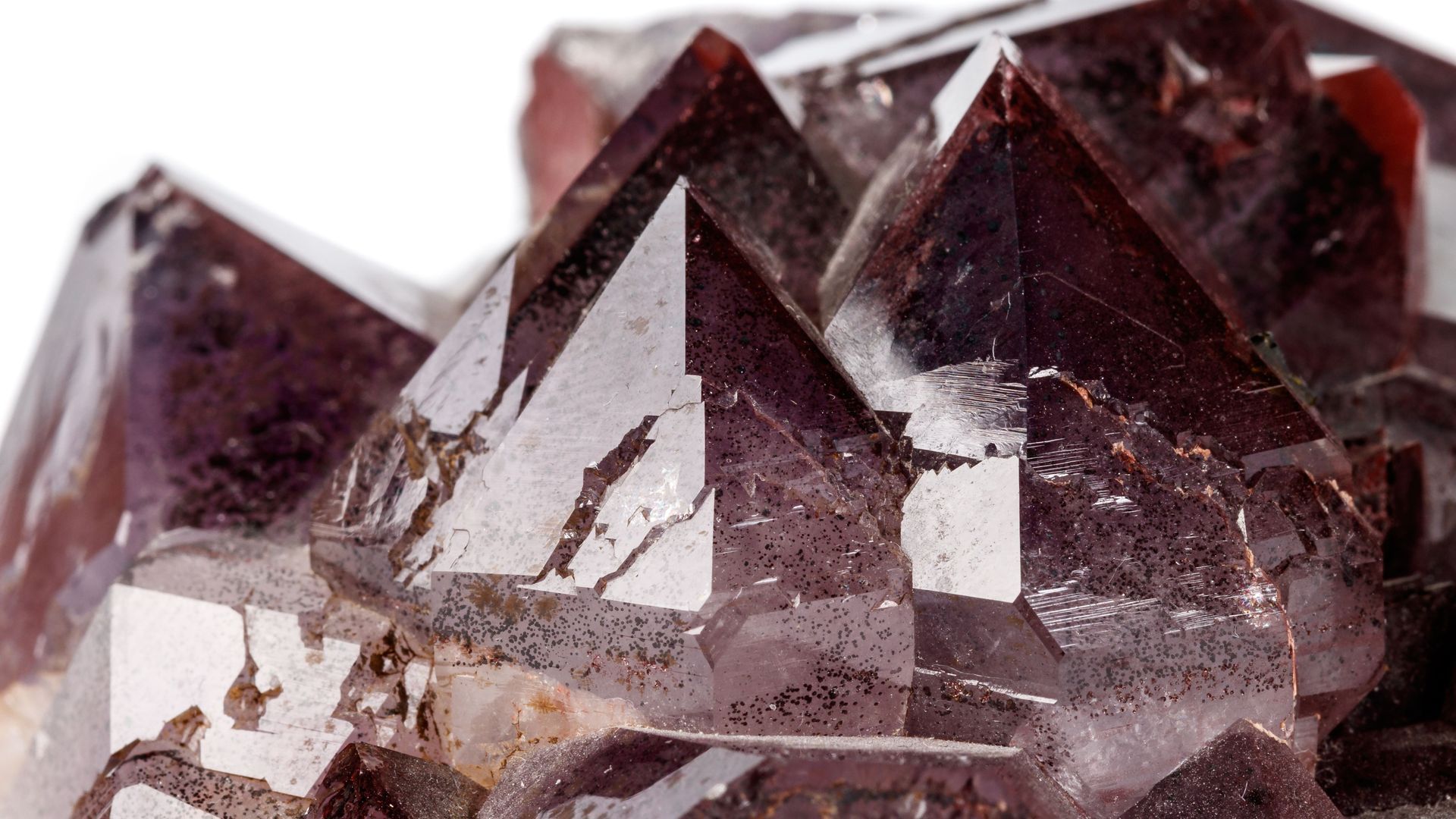
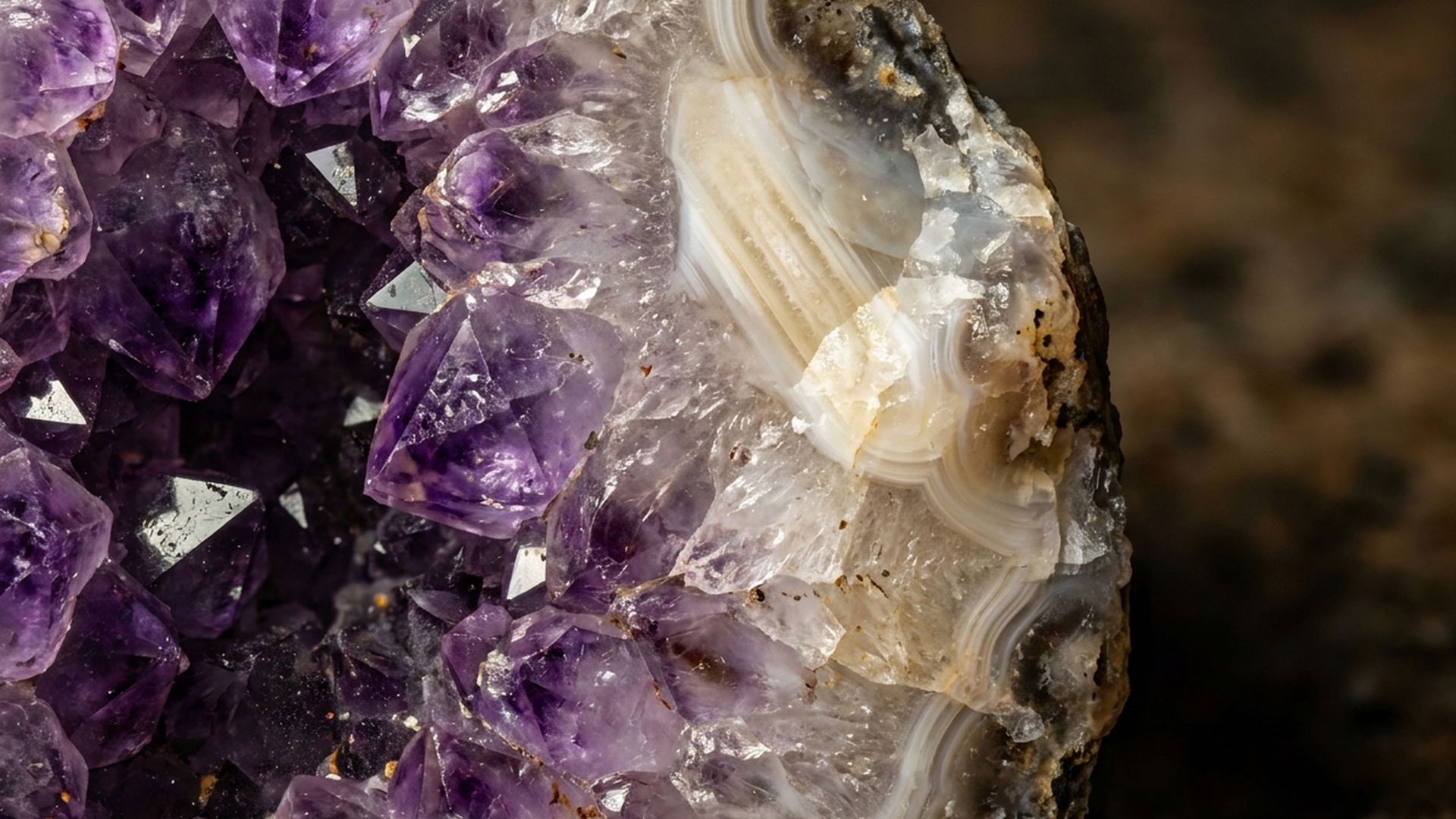
April may be the cruellest month, but it's also the most glittering. April's children have diamonds as their birthstone – a jewel that's come to symbolise eternal love and invincibility.
Singer-songwriter
Esperanza Spalding was right that "it takes more than pressure to change rock to diamond" – but unfortunately for the GCSE science students among her listeners, she chose not to expand on this.
As Esperanza surely knows, it takes intense heat as well as pressure for a diamond to be formed. Each one gets its start in life hundreds of kilometres under the earth's surface and only makes it above ground when hurled there by a volcanic eruption.
Contrary to
popular belief , South Africa isn't the only country that produces diamonds – it's not even the biggest producer. That honour goes to Russia, with South Africa coming in at number five behind Botswana, Canada and the Democratic Republic of the Congo.
Diamonds are famously hard as nails – well actually, so much harder than nails that the phrase "harder than nails" could do with some revision. Made of pure carbon, they score 10 out of 10 on the
Mohs scale of mineral hardness . (Fun fact: the graphite in our pencils, which is also made of pure carbon and can turn into diamonds in the right conditions, scores a lowly 1-2.)
Toughness is so integral to diamonds that it's right there in the name. "Diamond" derives from the Greek word ἀδάμας (adámas), which means "unbreakable" or "invincible" and which also gives us the word "adamant".
But are they indestructible? The simple answer is no. If your marriage goes south, you can smash, hammer or blow-torch your engagement ring into smithereens – but before you do, remember eBay.
So they're not indestructible – and despite what you may have heard, they're not even the hardest substance on earth. That gold trophy goes to
Q-carbon .
It may sound like a 90s rapper, but is in fact a type of carbon that's 60% harder than its diamond-like counterpart. For now, it's only produced nanodiamonds, which could be a nice wedding present if you really want to show you care.
Still, diamonds are tough cookies – and much sought after for their beauty. They come in all shapes and sizes, too. But which is the biggest?
The story of the Cullinan Diamond
While not quite as big as the
Ritz (in F. Scott Fitzgerald's phrase), the world's biggest diamond was a whopper at 3,106 carats, or 621.35 grams (that's about the weight of a standard-issue NBA
basketball .)
It was discovered by Frederick Wells, a surface manager at South Africa's Premier Diamond Mining Company in 1905. Sadly for Wells, his boss Thomas Cullinan got all the glory – and sadly for the people of South Africa, the stone was gifted to King Edward VII as a token of gratitude from the Transvaal government.
The diamond was cut into nine principal stones and 98 smaller ones. The 530-carat Cullinan I – the largest colourless cut diamond in the world – is set in the Sovereign's
Sceptre with Cross. You may have seen this stick at King Charles's coronation – it's been used in every one of these ceremonies since Charles II's.
Cullinan III and IV were gifted by Queen Mary to her granddaughter Elizabeth, and so they were nicknamed "Granny's Chips" – but unlike your nan's finest fries, they're worth somewhere in the region of
£50 million .
Diamonds in the arts
Diamonds have captivated artists for centuries. In Wilkie Collins's
The Moonstone(1868) – hailed by T.S. Eliot as "the first, the longest, and the best of modern English detective novels" – the plot centres on Rachel Verinder, who inherits a large Indian diamond on her eighteenth birthday.
The diamond is stolen, and Collins takes us on a multi-narrative voyage through the story of the theft. Unlike the real-life Cullinan diamond, the fictional moonstone ends up back where it belongs – not with Rachel, but set in the forehead of a religious idol in India.
A century later, the seventh James Bond film, Diamonds are Forever, hit cinemas. It follows the cold-blooded spy as he infiltrates a smuggling ring, disguised as a diamond smuggler.
As you'd expect, things escalate, and Bond discovers that his old nemesis Blofeld has constructed a laser satellite out of diamonds. He's already used it to destroy nukes in China, the USA and the USSR – but luckily for mankind, Bond gains control of Blofeld's mini-submarine and smashes it into the satellite base.
Another 24-carat classic is "
The Necklace " by Guy de Maupassant, a short story in which Mathilde Loisel borrows a diamond necklace for a ball. So far, so Cinderella.
However, the ball is sponsored by the Ministry of Education and Mathilde is going there with her low-paid white-collar husband to try to climb the social ladder.
Mathilde loses the necklace and the couple descend into poverty as they try to earn enough to replace the original. In a final ironic twist, the necklace is revealed to have been a fake. And all of this in four pages – a tale as tough, glittering and dense as a diamond, real or fake.
What's next?
So there you have it – a diamond digest for April. Next time you see someone with a diamond pendant, you never know – they might be an April baby.
We'll leave you with some weird and wonderful diamond facts – until next month when we'll be turning our jeweller's lamp on the emerald.
Diamond facts
- Only one out of every thousand weighs more than one carat.
- Many diamonds are
3.2 billion years old .
- Scientist Dan Frost successfully made diamonds out of
peanut butter .
- Carbon-rich exoplanet
55 Cancri e is nicknamed the "diamond planet" – however, it may be poisonous…
At Stump Cross Cavern, we're mad about stones. Fancy a
family day out in Yorkshire? Why not visit our ancient natural cave formation deep beneath the Dales? Book now.