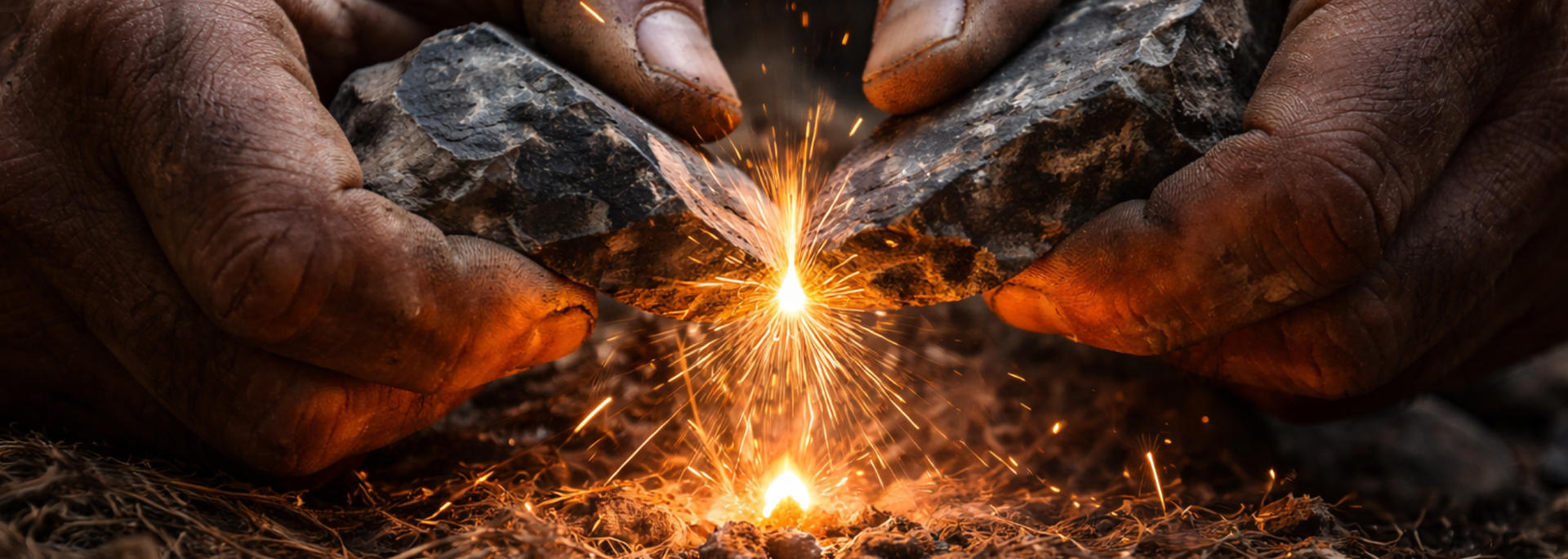
One of the earliest and most reliable methods involved stone on stone. By striking flint against iron-rich rocks such as pyrite or marcasite, Stone Age people could create sparks. These sparks were caught on tinder such as dry grass, which could be gently blown into a glowing ember before being fed with twigs and kindling.
This process took time, skill and a steady hand. It wasn't dramatic, and it certainly wasn't easy. Fire-making required practice, calm and a deep understanding of natural materials.
Another common method was fire by friction. This involved rubbing or drilling one piece of dry wood against another until heat built up enough to produce an ember. Techniques included the hand drill, bow drill and fire plough, all of which demanded strength, rhythm and perseverance.
Imagine the frustration of this task on a cold day, the bitter wind hampering your efforts and the damp numbing your hands. When that first thread of smoke appeared, it must have felt like magic.
Why fire mattered so much
Fire didn't just make life more comfortable for early humans – it fundamentally changed what it meant to be human. Cooking food made it easier to digest and killed off harmful bacteria, unlocking more nutrients and energy. This extra energy is believed to have played a role in the development of larger brains.
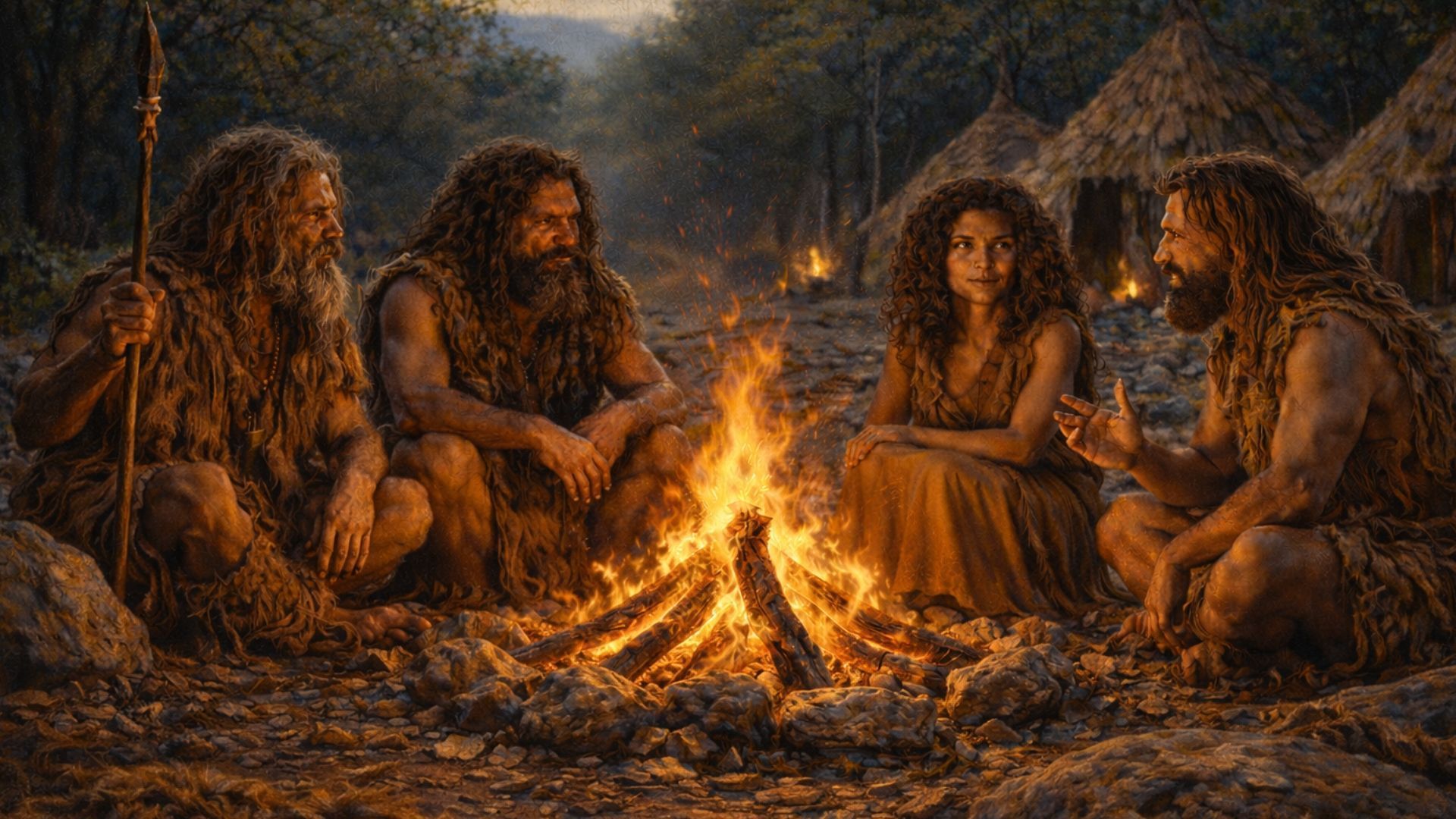
Fire also extended the day, allowing people to gather after dark to talk, repair tools and tell stories. Many archaeologists believe these fireside moments helped shape language, culture and community.
Fire offered protection, too. Predators were less likely to approach a camp lit by flames, and smoke helped keep insects at bay. In colder climates, fire meant a better chance of survival through winter.
It even reshaped landscapes. Controlled burns were used to clear vegetation, encourage new plant growth and improve hunting grounds. This early form of environmental management shows just how sophisticated Stone Age knowledge really was.
Fire, belief and ritual
Because fire was so vital, it naturally took on symbolic meaning.
Many prehistoric sites show evidence of carefully maintained hearths, sometimes placed deliberately within caves or shelters. Fire likely became associated with life, renewal and transformation – ideas that still echo through faiths and spiritual beliefs to this day.
Caves, in particular, probably held a special place in the Stone Age imagination. They offered shelter, mystery and a connection to the deep earth. Firelight dancing across cave walls would have brought carvings, shadows and paintings to life, turning stone spaces into places of meaning and ceremony.
Standing underground with a flame, surrounded by darkness, it's easy to understand why fire felt sacred.
What fire-making tells us about Stone Age people
We know that Stone Age humans weren't just primitive people fumbling in the dark. They were skilled observers of nature, engineers of their environment, and careful teachers.
Fire-making techniques were passed down, refined and adapted over thousands of years. Knowledge mattered, and sharing it could mean the difference between life and death.
Fire required co-operation, planning, and trust. Someone had to gather fuel. Someone had to tend the embers. Someone had to know what to do when the flame faltered. In many ways, fire helped forge the very first communities.
Fire, caves and deep reflections at Stump Cross Caverns
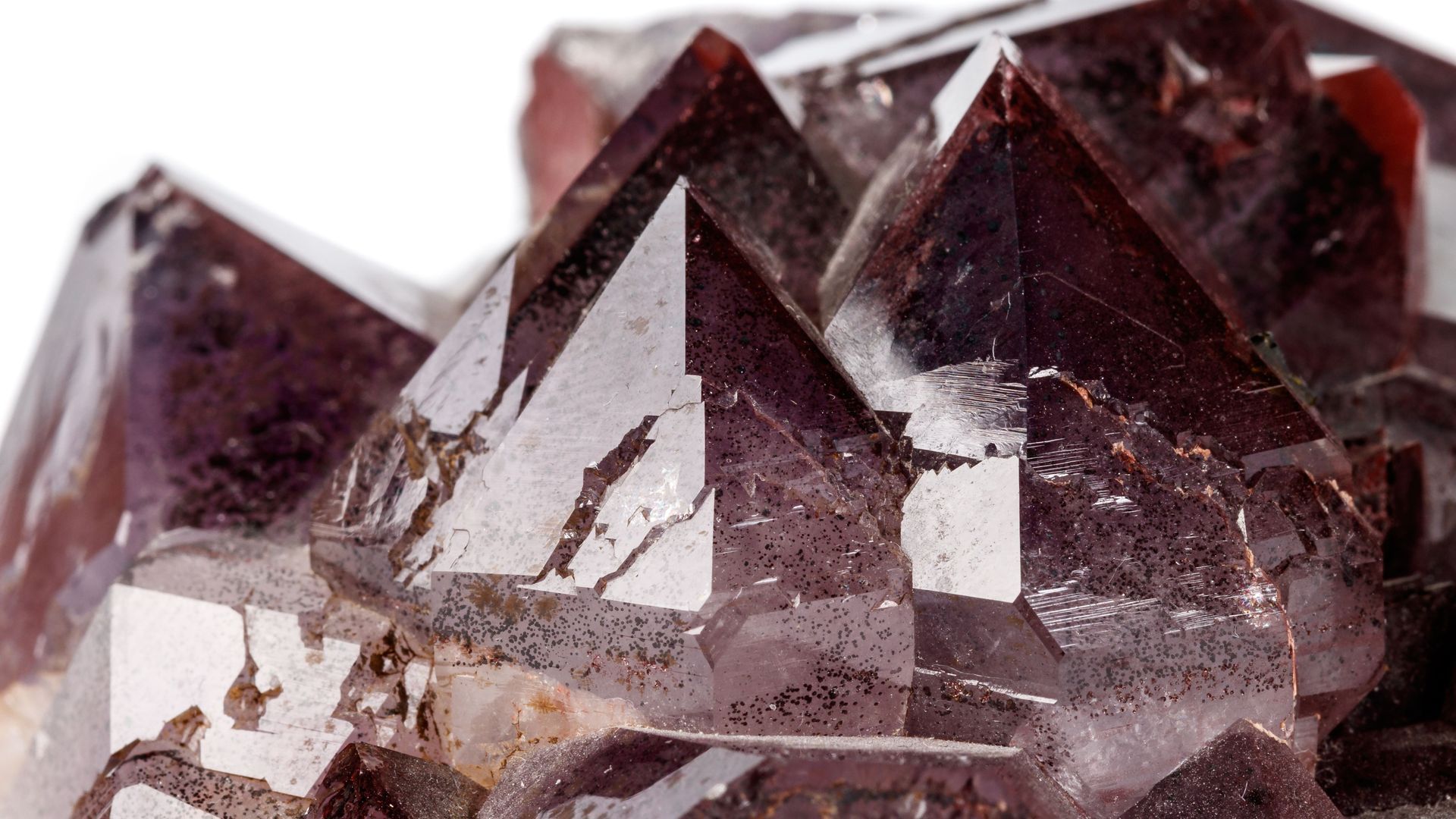
Here at Stump Cross Caverns, it's impossible not to feel connected to that ancient relationship between fire, stone and humanity. Caves like ours have sheltered people for millennia, from prehistoric explorers to our much more recent Victorian visitors. In the Stone Age, firelight would have revealed glittering minerals, rippling shadows and hidden depths, turning underground spaces into places of wonder and storytelling.
Today, modern lighting allows us to explore safely, but the sense of awe remains the same. The caverns still whisper of deep time, survival and human curiosity – and it's easy to imagine a small flame once glowing where we now stand. So, next time you light a candle, spare a thought for those early humans who first coaxed flames from wood and stone. They lit the path that led us here.
At Stump Cross Caverns, we love learning about the Stone Age and sharing our knowledge with new explorers. Want to join the fun? Try our Key Stage 2 activities to learn about
Stone Age animals or
what life in the Stone Age was like .