The history of cave art

Oliver Bowerman • December 29, 2025
BOOK TICKETS

People have been making art for millennia. Explore the history of cave art from Europe, Asia and Africa.


People have been making art for millennia. Explore the history of cave art from Europe, Asia and Africa.

Our prehistoric ancestors sometimes get a bad rep. Popular culture would have you believe they were a bunch of knuckle-dragging thugs, happy only when slaying a woolly mammoth or throwing rocks at each other.


Historians, however, have a better idea. Yes, our ancestors hunted with rudimentary tools. But archaeological evidence shows they were just as artistic as we are. The only real difference is the tools they used.


Musical instruments made from bone have been found across the world – and on the walls of caves, fascinating drawings have been uncovered.


These examples of ancient art span thousands of years and every continent but Antarctica. As you'd expect from such a spread, they're pretty diverse. Nevertheless, even a small amount of time spent looking at cave art reveals common trends.


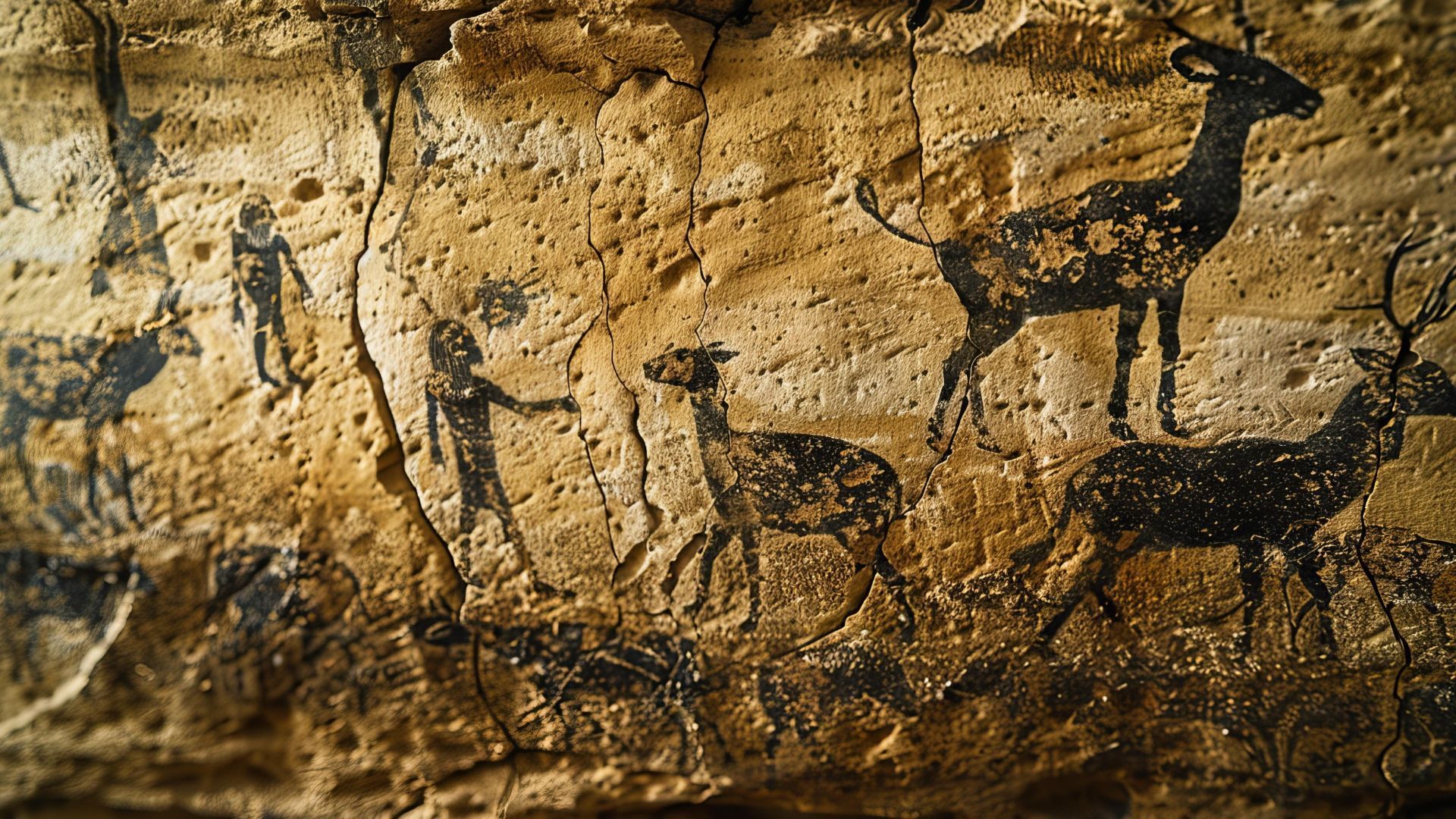
Many of these cave paintings depict animals – bison, horses, pigs and more – often in hunting scenes. Others show stencilled hands or geometric shapes.


Most of them have the same colour palette, too: red, black and white. This is because these colours were easily made using iron oxides, chalk and clay.


Yes, there are multi-coloured examples of cave art. But most consist of this core palette of earthy tones.

Want to find out more? Here's a whistle-stop tour of cave art – from around 100,000 years ago to 10,000 BCE.


Ancient art

The world's oldest known abstract drawing is in Blombos Cave, South Africa. It's a 73,000-year-old cross-hatched pattern, applied to a rock flake with a red ochre crayon.


The discovery of this drawing was a big deal – not just for art historians but also for cognitive scientists. It shows that what's known as "complex behaviour" goes back further than previously thought, as evidenced by the presence of beads in the cave as well as this abstract design.


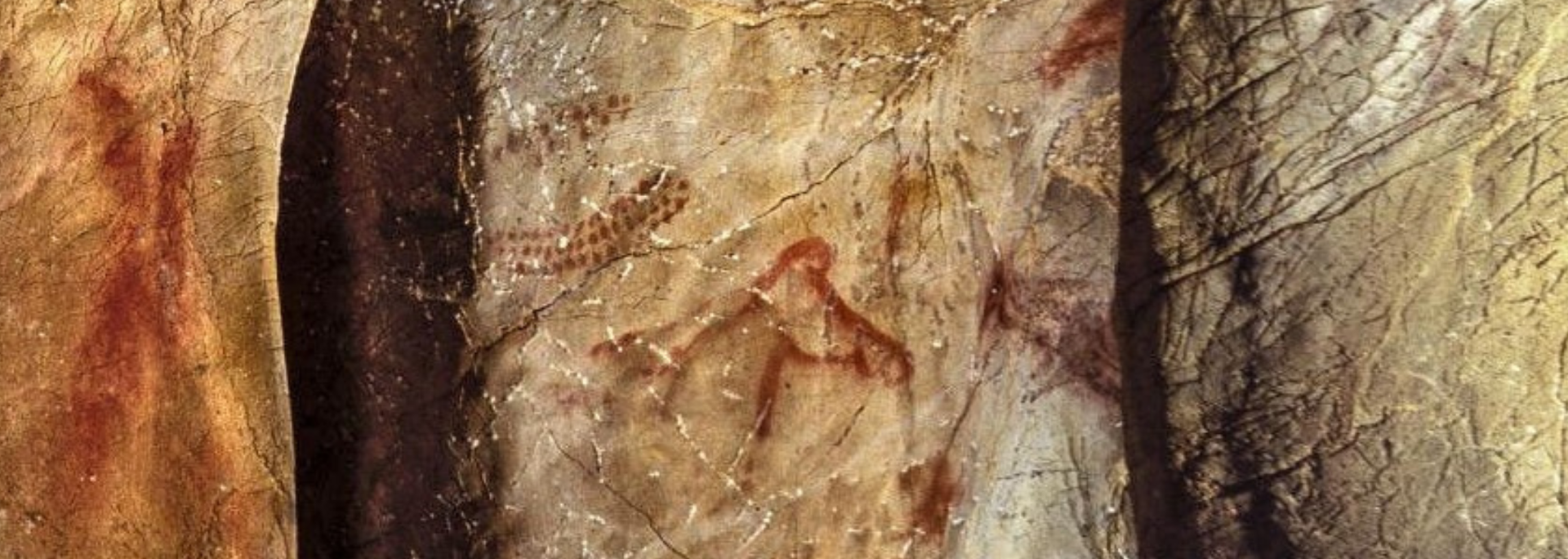
Other notable examples of non-figurative cave drawings were found in the Iberian Peninsula. These date from around 64,000 years ago and include red dots and lines.


Picture of cave art.

And what's especially notable about these examples is that they predate Homo sapiens. It seems that Neanderthals were just as keen on leaving their mark as we are. 


The Upper Palaeolithic explosion

These pre-Homo sapiens examples are fascinating but scarce. Cave art, as popularly understood, proliferated between around 45,000 years ago and 14,000 BCE.


Traditionally, the history of cave art has been thoroughly Eurocentric. But in recent years, science has given more weight to cave art from outside Europe.


Take the cave painting in the Leang Tedongnge cave on the island of Sulawesi, Indonesia. This isn't just the earliest evidence of human settlement in Indonesia. It's also the oldest known figurative art to date.


The drawing shows a wild pig painted in red ochre pigment. It's believed to have been drawn 45,500 years ago. Scientists believe the pig is part of a narrative scene – proof that our ancestors told stories.


"The people who made it," said Maxime Aubert, co-author of the scientific report, "were fully modern. They were just like us. They had all of the capacity and the tools to do any painting that they liked."


Twenty-first-century humans may have more ways of expressing themselves, but Aubert is right – drawings like these show how much we have in common with our prehistoric ancestors.


A treasure trove of well-preserved animal paintings, dating from around 30,000 BCE, was found in Chauvet Cave, France.

These drawings are a veritable menagerie, including cave lions, leopards, bears, cave hyenas and rhinos. These black drawings were rendered in charcoal made from Scots pine oil.


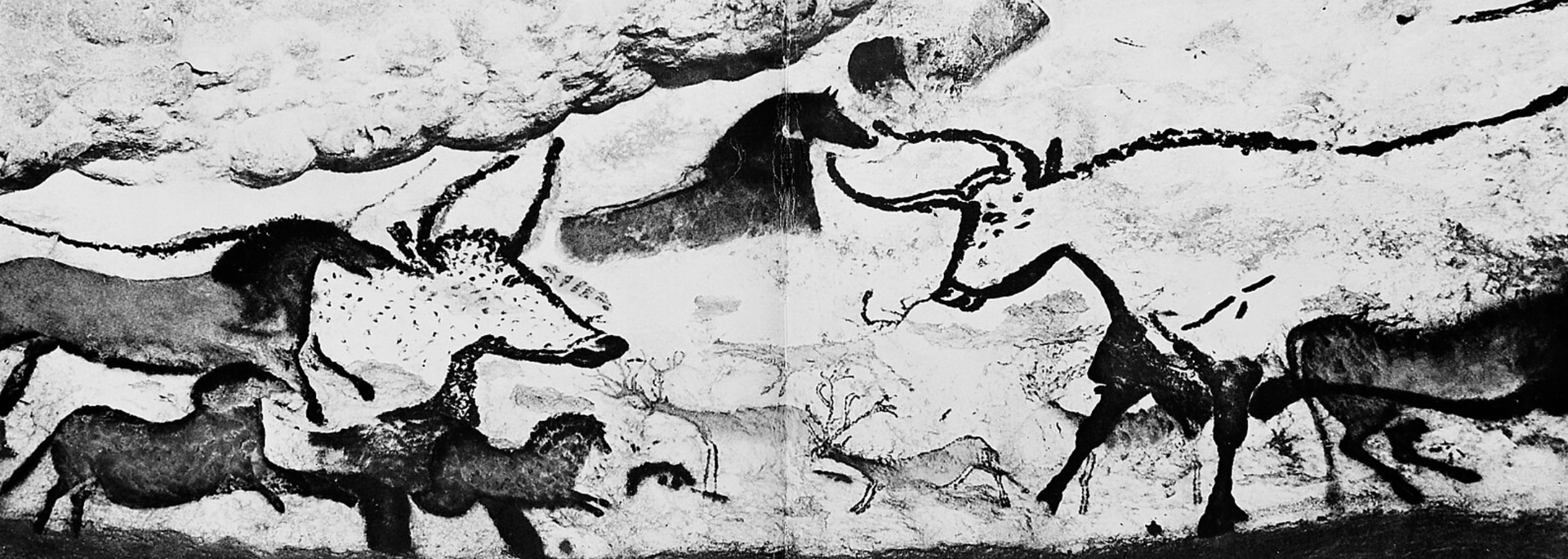
Similar drawings were found in Lascaux, France and Altamira, Spain. These date from between around 16,000 and 14,000 BCE.

The tale of Lascaux is a cautionary one. Discovered by accident (much like Stump Cross Caverns), they were open to the public and quickly became a popular attraction. But the paintings began to deteriorate on contact with outside air, and the caves had to be shut.

Picture of Chauvet Cave paintings.

The moral of the story is the importance of custodianship in the preservation of caves. A balance must be struck between giving the public what they want and protecting these ancient assets. It's a responsibility we take very seriously here at Stump Cross Caverns.


Later developments

Around 11,000 BCE, people in Les Combarelles, France, engraved more than 600 animals and symbols on the walls of a cave formed by the slow flowing of an underground river.


The cave drawings at Les Combarelles feature many horses. Some are depicted standing alone, some are depicted in herds and still others are depicted with other animals. These include cave bears, cave lions and mammoths.


But Les Combarelles is perhaps most famous for its drawings of reindeer. These are highly naturalistic portrayals. Some of the reindeer are shown drinking from the river. Art had come a long way since the abstract patterns in Blombos Cave and the Iberian Peninsula.


Then, around 10,000 BCE, the earliest examples of African rock art began to appear, especially in the Sahara Mountains.

These feature naturalistic drawings of buffalo, elephants, giraffes and other big beasts, alongside human figures. Part of the realism comes from the fact that the animals tower over the humans.


Conclusion

Cave art offers us a fascinating glimpse into our shared past, tens of thousands of years ago. But the search for cave art is far from over. Archaeologists are still exploring sites and employing state-of-the-art dating methods to deepen our knowledge of the Stone Age.


Recent discoveries have included the oldest known example of figurative art in Sulawesi, Indonesia – and, closer to here and now, 12,000-year-old engravings in Creswell Crags on the border between Nottinghamshire and Derbyshire.


What will be discovered next? Here at Stump Cross Caverns, we're passionate about prehistory – so whatever's discovered, we'll be sure to let you know.


Stump Cross Caverns is an ancient cave system buried deep beneath the Yorkshire Dales. Are you looking for an unforgettable family day out in Yorkshire? It's easy to book your tickets online.


Geodes are natural treasure chests filled with crystals. Discover 4 of the most amazing examples
By Simon Edward December 27, 2025
Geodes are natural treasure chests filled with crystals. Discover 4 of the most amazing examples ever found.
Explore the weird and wonderful world of living fossils – animals alive today that have survived
By Oliver Bowerman December 22, 2025
Explore the weird and wonderful world of living fossils – animals alive today that have survived since prehistoric times.
Embrace the frosty sparkle of the Yorkshire Dales at its most enchanting with these 5
By Simon Edward December 15, 2025
Embrace the frosty sparkle of the Yorkshire Dales at its most enchanting with these 5 beautiful winter walks.
Caves have been around for millennia. Yet humans still haven't uncovered them all.
By Simon Edward December 12, 2025
Caves have been around for millennia. Yet humans still haven't uncovered them all. Could there be more near Stump Cross Caverns here in Yorkshire?
Sites of Special Scientific Interest are natural areas with special legal protection. Learn more
By Simon Edward December 8, 2025
Sites of Special Scientific Interest are natural areas with special legal protection. Learn more about them – and how our caves became an SSSI.
A miracle in a cave and the origin of tinsel… Discover the magical folk tale of the Christmas Spider
By Oliver Bowerman December 5, 2025
A miracle in a cave and the origin of tinsel… Discover the magical folk tale of the Christmas Spider.
Meet Santa in the most magical grottos, discover the best festive days out
By Oliver Bowerman December 1, 2025
Meet Santa in the most magical grottos, discover the best festive days out and make some Christmas memories across Yorkshire.
Discover the first reviews of Stump Cross Caverns back in the Victorian era
By Simon Edward November 28, 2025
Discover the first reviews of Stump Cross Caverns back in the Victorian era, featuring glowing endorsements and some dramatic adventures.
Go back in time and discover what Stone Age people drank, from river water to wild brews
By Simon Edward November 28, 2025
Go back in time and discover what Stone Age people drank, from river water to wild brews and herbal teas.
Learn about Yorkshire's most memorable Christmas traditions, ranging from sword dances to sea dips.
By Oliver Bowerman November 21, 2025
Learn about Yorkshire's most memorable Christmas traditions, ranging from sword dances to sea dips.
More Posts