How Stump Cross Caverns has contributed to science

Simon Edward • February 28, 2026
BOOK TICKETS

Here at Stump Cross Caverns, we're proud that our caves have contributed to the sum of scientific knowledge. Here are 4 fascinating examples.


Here at Stump Cross Caverns, we're proud that our caves have contributed to the sum of scientific knowledge. Here are 4 fascinating examples.

One of the great things about looking after the caves here at Stump Cross Caverns is that they point in so many directions.

Their prehistoric origins lead us to think about our Stone Age past, while their location in a Dark Sky Reserve leads us to collaborate with local stargazers.


Meanwhile, scientists have studied the caves to learn about everything from cave formations to plant life, from prehistoric animals to the last Ice Age.


Here are four examples of how the caves at Stump Cross have contributed to science, starting with a study of the caves and karsts of the Yorkshire Dales.


1. How limestone caves were formed

"Caves from Greenhow Hill to Cracoe", chapter by Harry Long in Caves and Karsts of the Yorkshire Dales

In this chapter from a major cave science book, Harry Long describes 17 areas within the Yorkshire Dales. His writing focuses particularly on cave systems in the karst (limestone) landscapes.


He explains how the landscape between Greenhow Hill and Cracoe was shaped by limestone, faults in the Earth and water. And, of course, the most inevitable influence of all: the passing of time.


This landscape, which includes Stump Cross Caverns, lies along the "Craven Fault Zone". Here, rocks have been bent and broken over time, exposing thick ribs of limestone.


Over hundreds of thousands of years, the limestone has dissolved in rainwater. This has led to the creation of caves, sinkholes, underground rivers and deep gorges. This is even more remarkable when you consider that the limestone is much thicker than in other parts of Yorkshire.


Harry Long gives Stump Cross Caverns (along with Mongo Gill) the accolade of "most important cave system" in the area. He describes how the higher passages are old and dry, formed when the caves flooded long ago, and how the lower level carries streams.


Finally, he describes the stalactites and flowstone that are over 220,000 years old, as well as the fossil bones that have been found in the caves. This is proof that the climate of the Yorkshire Dales was once much, much colder.

2. When the Ice Age ended in Yorkshire

"Glaciation and deglaciation of the Stump Cross area, Yorkshire Dales, northern England, determined by terrestrial cosmogenic nuclide (10Be) dating" by Wilson and Rodes.


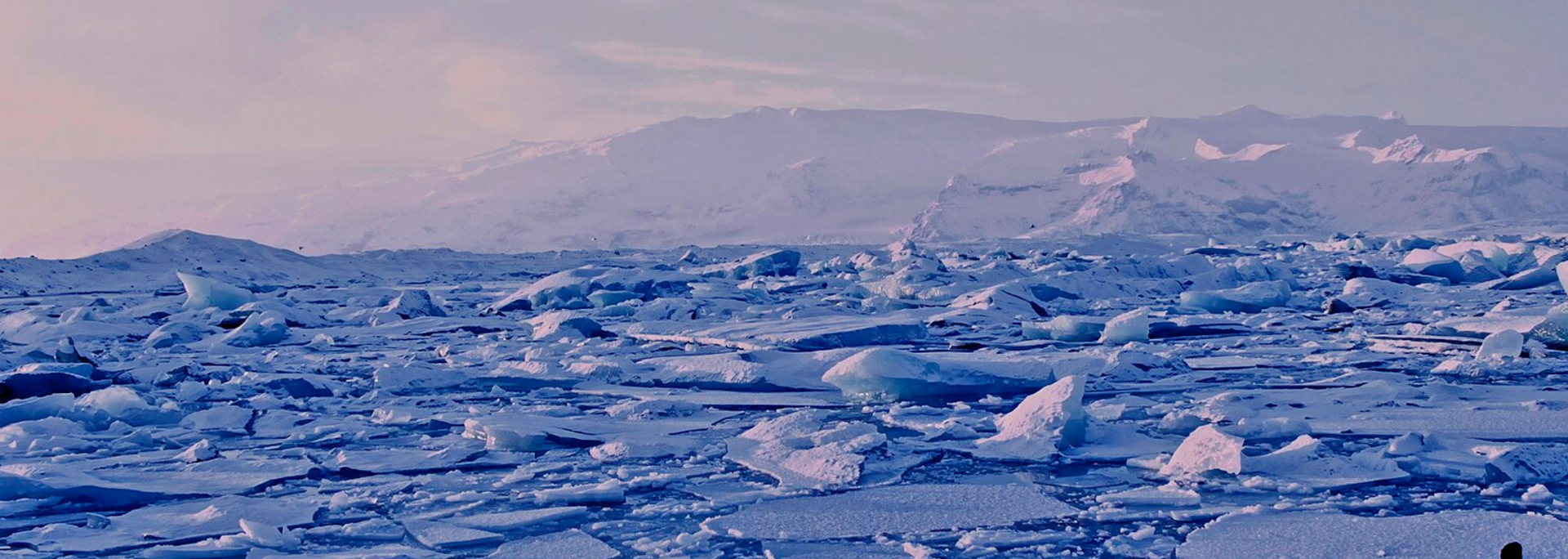
Picture of melting ice.

In this study, Wilson and Rodes look at scientific evidence to answer the question: was the area around Stump Cross Caverns covered in ice during the last Ice Age? And if so, when did it melt?


They used a method called "cosmogenic nuclide dating". This measures how long rocks have been exposed to cosmic rays and helps date large boulders and bedrock.


Through this method, the researchers established that glaciers moved against these rocks during the Late Devensian Ice Age.


Two boulders in the Stump Cross cave system show signs of prehistoric glacial movement somewhere between 18,000 and 21,000 years ago. The most reliable finding shows that the ice completely disappeared some 18,500 years ago.


Wilson and Rodes checked these findings against evidence from other sites in the area and from cave deposits in Stump Cross itself. They conclude that the area as a whole thawed out between 16,000 and 18,000 years ago. 


3. Identifying prehistoric animals

"Cave palaeontology", chapter by Terry O'Connor and Tom Lord in Caves and Karst of the Yorkshire Dales

Palaeontology is the study of the history of life on Earth, mostly through the fossil record. In this paper, O'Connor and Lord look at how caves in the Yorkshire Dales – including Stump Cross Caverns – preserve fossils.


They find that fossils are mostly left by animals that either used the caves for shelter or fell into them. When they died, their bones were buried under water and sediment, eventually becoming fossils.


Fossils found in the area include large mammals like hyenas, bears, lions, elephants and hippos, as well as smaller animals and plant remains.


No fossil record is complete and, in the case of the caves, this is partly because of flooding and blockages. However, scientists such as O'Connor and Lord use the existing fossils to reconstruct the prehistoric ecosystem. The results suggest a rich and varied selection of animals and plants.


The research also shows how climate change influenced these ecosystems. As the world got colder, warm-climate animals disappeared and were replaced by cold-climate animals like reindeer, bison, wolves and wolverines.


Here at Stump Cross Caverns, remains of reindeer, bison and wolverines have been found. Most recently, we found a wolverine jaw while digging out a new cavern at Stump Cross. Finds like these are fascinating relics of the last Ice Age.
4. How stalagmites form

"Non-linearities in drip water hydrology: an example from Stump Cross Caverns, Yorkshire" by Andy Baker and Chris Brunsdon


Published in the Journal of Hydrology, this article reports the results of a 14-year analysis of drip rates in Stump Cross Caverns.

The scientists sought to learn whether the water dripping into the caves did so in a linear (steady and consistent) or non-linear fashion.


They concluded that "at our drip sites there is a non-linear input (weather) and non-linearities within the karst system leading to non-linear dripping".


This could help us understand more about the speed at which stalagmites grow and the shapes they take. It could also help us understand the historical rate of rainfall in karst areas.


What is the future of cave science?

Cave science is developing all the time. In recent years, caves have given us everything from the earliest examples of rock art to evidence of the droughts that led to the decline of the Mayan civilisation.


What's next? We're likely to see more 3D mapping of cave systems and a deeper understanding of the role that microbes play in cave formation. Meanwhile, dating systems for rocks, speleothems and other cave-related phenomena continue to grow in sophistication and accuracy.


Whatever happens, we'll be sure to let you know! In the meantime, why not inspire the next generation of cave explorers with our educational resources for kids?


Stump Cross Caverns is an ancient cave system in the Yorkshire Dales. Fancy going on an underground adventure? It's easy to book your tickets online.


There are around 3,000 deserted villages in the UK. Explore 5 incredible examples in Yorkshire
By Simon Edward February 27, 2026
There are around 3,000 deserted villages in the UK. Explore 5 incredible examples in Yorkshire and nearby.
What skills and tools would you need to survive as a Stone Age person? Take a trip
By Simon Edward February 23, 2026
What skills and tools would you need to survive as a Stone Age person? Take a trip in our time machine and find out…
Diggers working to excavate C Chamber at Stump Cross Caverns have discovered the fossilised jawbone
By Simon Edward February 20, 2026
Diggers working to excavate C Chamber at Stump Cross Caverns have discovered the fossilised jawbone of a wolverine. Let's take a closer look.
Caves contain all sorts of secrets – but not all of them are pleasant. Explore this car graveyard
By Simon Edward February 16, 2026
Caves contain all sorts of secrets – but not all of them are pleasant. Explore this car graveyard in North Wales, and the lessons we can learn from it.
Did you know that some caves have their own ecosystems? Explore 5 incredible-but-true examples
By Simon Edward February 13, 2026
Did you know that some caves have their own ecosystems? Explore 5 incredible-but-true examples in our guide.
Discover the most unforgettable family-friendly days out around Harrogate – from castles and gardens
By Simon Edward February 9, 2026
Discover the most unforgettable family-friendly days out around Harrogate – from castles and gardens to underground caves.
Are you looking for some Valentine's Day inspiration? Explore 10 varied options in North Yorkshire.
By Oliver Bowerman February 6, 2026
Are you looking for some Valentine's Day inspiration? Explore 10 varied options in North Yorkshire.
Are you looking for evocative poetry about caves? Discover 5 classic examples in our Burns Night
By Simon Edward January 30, 2026
Are you looking for evocative poetry about caves? Discover 5 classic examples in our Burns Night guide.
From cliff-edge climbs to guided underground adventures… Discover exhilarating experiences
By Simon Edward January 26, 2026
From cliff-edge climbs to guided underground adventures… Discover exhilarating experiences across the Yorkshire Dales for all abilities.
Travel back 300 million years to discover coral seas, shifting continents
By Oliver Bowerman January 24, 2026
Travel back 300 million years to discover coral seas, shifting continents and the ancient origins of caves.
More Posts