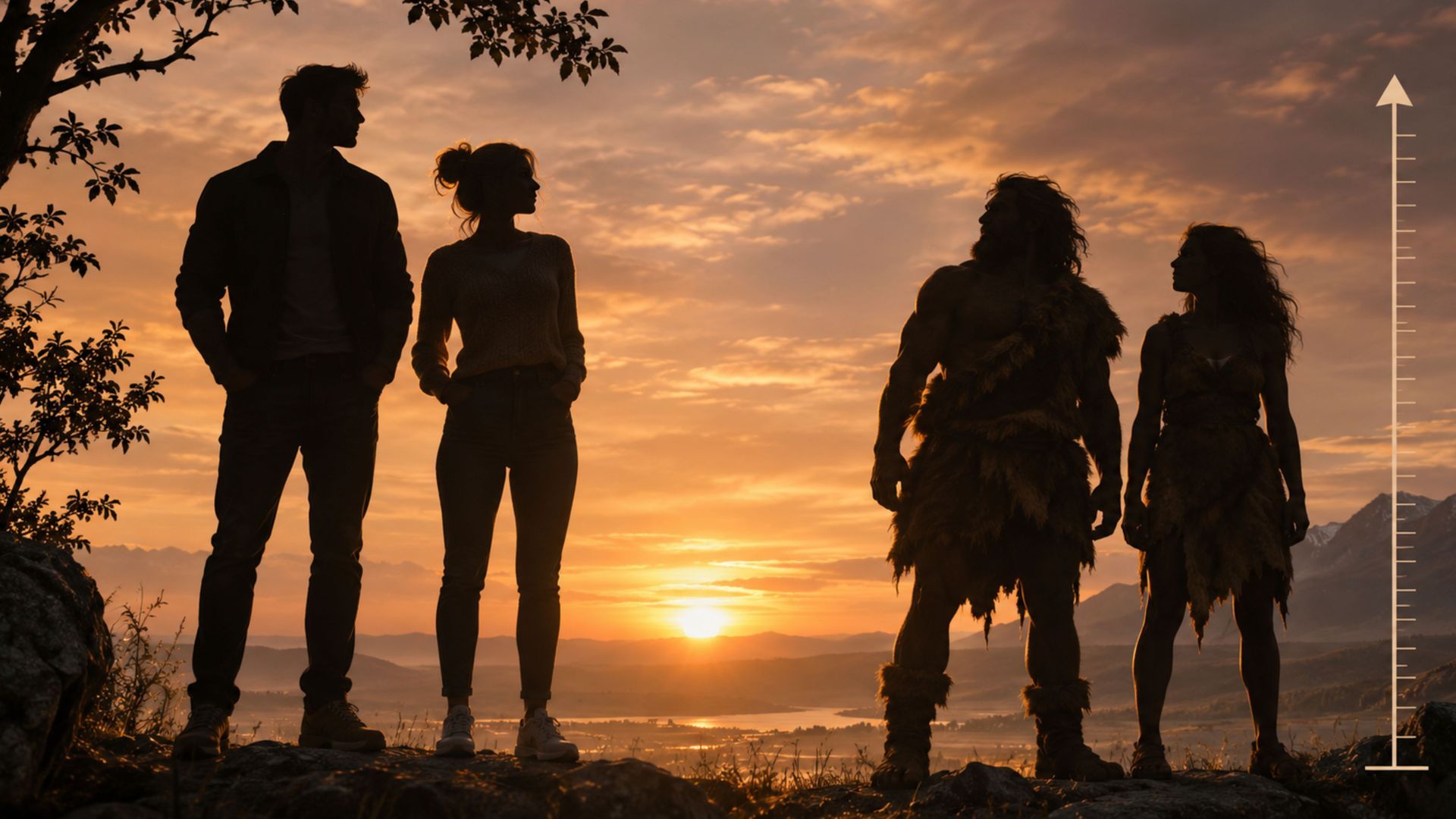
How tall were cavemen and cavewomen?

Oliver Pyper • 23 November 2026

Close your eyes and picture a Stone Age person. How tall do they look? Find out how close you are.


Close your eyes and picture a Stone Age person. How tall do they look? Find out how close you are.

Picture a caveman or cavewoman. Chances are, you'll see someone short and stocky with long hair, animal-skin clothing and primitive tools.


But how short (or tall) were prehistoric humans, really? Were they shorter than people today or could they have stood eye to eye with us?


The answer depends on which prehistoric humans we're talking about. Our ancient relatives lived across different continents, in different climates and over millions of years.


Some were relatively short. Others were surprisingly tall. By studying fossilised bones and ancient skeletons, scientists can estimate their height and learn more about how our ancestors lived.


How tall were cavemen?

There wasn't one standard height for cavemen and cavewomen. That's because we use the word "caveman" to refer to different prehistoric people from all over the world, not just a single species.


Early members of our human family were often shorter than modern humans, although some later species reached heights close to our own. Height depended on factors including genetics, diet, environment and the particular human species.


For example, Homo habilis, an early human species that lived around 2.4 to 1.4 million years ago, was relatively small. Some estimates suggest individuals were around three feet tall.


By contrast, Homo erectus, which lived from approximately 1.9 million years ago, could reach heights of around five to six feet. These figures are estimates, as fossil evidence is incomplete and individuals varied in size.


Modern humans, Homo sapiens, eventually developed heights similar to those of people living today.

How tall were Neanderthals?

When people say "cavemen", they often mean Neanderthals or early modern humans who lived during the Stone Age.


Neanderthals lived across parts of Europe and western Asia until around 40,000 years ago. They were typically shorter and more heavily built than modern humans, with broad chests, strong limbs and powerful muscles.


Adult male Neanderthals are often estimated to have averaged around five feet, three inches to five feet, five inches. Adult females, meanwhile, averaged approximately four feet, nine inches to five feet, two inches.


Their compact, muscular bodies may have helped them conserve heat in the cold of Ice Age Europe. Their sturdy skeletons and muscles also suited physically demanding lives that involved hunting, gathering food and travelling across challenging landscapes.


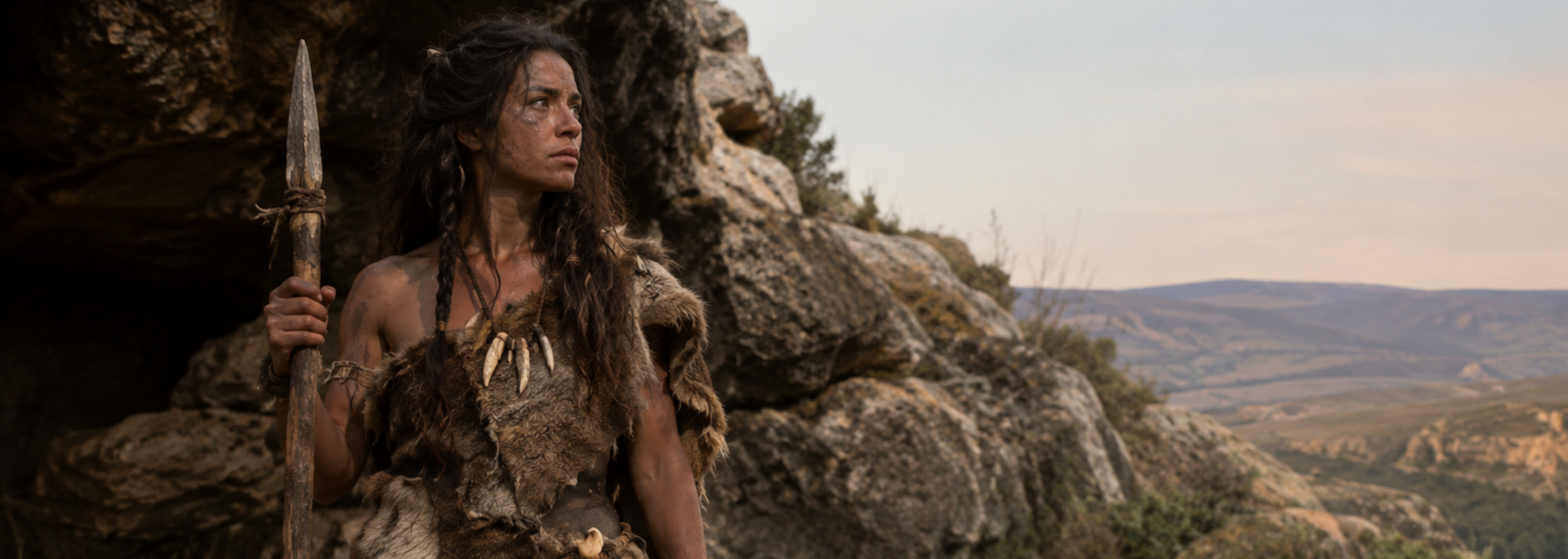
How tall were cavewomen?

Picture of a cavewoman.

Prehistoric women were generally shorter than men on average – just as men are taller than women on average today.

However, cavewomen weren't all the same height. Their stature varied depending on their ancestry, diet, health and the period in which they lived.


Neanderthal women may have averaged around four feet, nine inches to five feet, two inches. Early modern human women could fall within a similar range, although some prehistoric people were taller.


Scientists estimate height by measuring long bones, especially the thighbone (femur). Because these bones make up a substantial part of a person's leg, their length can provide useful clues about overall height.


Researchers use mathematical formulas developed from human skeletons to estimate height from these measurements. The results are approximate, and estimating height becomes harder when only a few bones survive.


Were cavemen shorter than people today?

Not necessarily. Although some prehistoric human species were shorter than modern humans, our ancestors weren't all tiny.


Height has changed throughout human history, and modern people differ considerably around the world. Nutrition, childhood health, genetics and living conditions all influence how tall people grow.


Some prehistoric hunter-gatherers were tall and physically robust. Others were shorter, particularly when they lived in harsh environments or survived with little food.


And prehistoric people didn't necessarily keep getting taller and taller. In some early farming communities, for instance, the average height decreased compared with earlier hunter-gatherers.


That might be because farming sometimes brought less varied diets and more demanding living conditions.


But farming wasn't the only factor involved. Height changed differently between populations and over time.


It's also important to remember that people living thousands of years ago weren't necessarily less intelligent or less capable than modern humans. Their bodies adapted to their environments, just as ours do.


Why were Neanderthals so stocky?


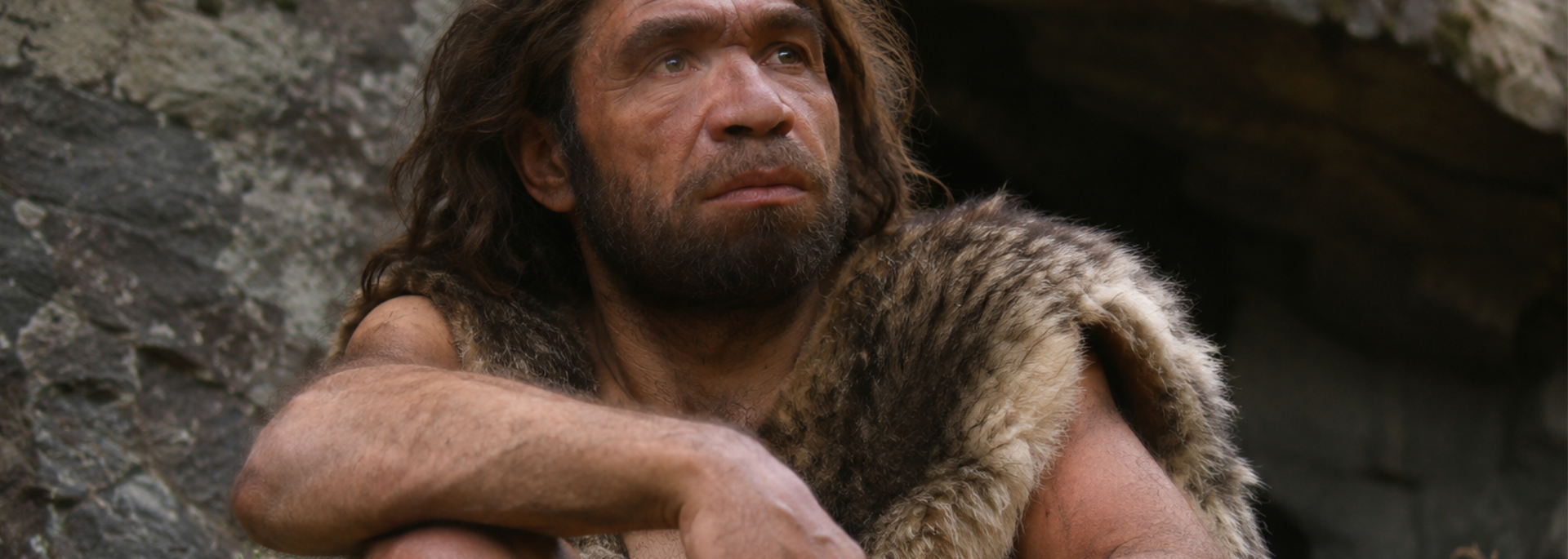
Picture of the estimated look of a neanderthal.

Neanderthals had several physical characteristics that made them look different from modern humans. Their bodies were usually broad, with  short lower arms and lower legs compared to their overall body size.


This body shape is thought to have helped reduce heat loss in cold climates. A compact body has less surface area, which can make it easier to retain warmth.


Neanderthals also had strong bones, suggesting they were physically powerful. However, their stocky appearance doesn't mean they were exceptionally short. Their body shape was just as important as their height.


Their physical adaptations helped them survive in challenging Ice Age environments, where finding food, keeping warm and moving across difficult terrain were essential to survival.


How do scientists know how tall ancient humans were?

Scientists use fossilised skeletons and comparisons with modern human anatomy to estimate prehistoric height.


The femur is particularly useful, although researchers can also study the shinbone, arm bones and other measurements. When a more complete skeleton is available, estimates are often more reliable.


Researchers must also account for differences between species, because the proportions of Neanderthals and other ancient humans weren't always identical to those of modern people.


Fossils rarely provide a perfect picture of an entire population. A single skeleton represents one individual, not everyone who lived at that time. That's why scientists compare different skeletons to come up with broad estimates, not exact measurements.


Get hands-on with prehistory at Stump Cross Caverns

Fossils are one of the best ways we have to piece together the distant past. And here at Stump Cross Caverns, prehistoric discoveries are part of our story, too.


Our caves have preserved evidence from the Ice Age, and ongoing excavation work continues to reveal clues about the ancient world hidden beneath the Yorkshire Dales.


Fancy becoming a fossil hunter yourself? Our fossil dig activity lets kids and families search for real ancient fossils and learn how palaeontologists uncover the past.


Best of all, you can take your finds home afterwards!


Book your fossil dig at Stump Cross Caverns and start your own prehistoric investigation.


Share this article

Recent Posts

Got your hands on an amethyst geode but not sure if it's real, treated or an imitation?
by Simon Edward • 20 November 2026
Got your hands on an amethyst geode but not sure if it's real, treated or an imitation? Learn how to tell the difference.
Caves and caverns: same difference? Learn the difference between caves and caverns
by Simon Edward • 16 November 2026
Caves and caverns: same difference? Learn the difference between caves and caverns in our simple geology guide.
Are you looking for a Christmas lights switch-on in Yorkshire? Explore 6 of the best
by Oliver Pyper • 13 November 2026
Are you looking for a Christmas lights switch-on in Yorkshire? Explore 6 of the best in our local guide.
Looking for a Christmas market to visit in the Yorkshire Dales? Explore the most magical markets
by Oliver Pyper • 9 November 2026
Looking for a Christmas market to visit in the Yorkshire Dales? Explore the most magical markets that 2026 has to offer.
Giant dragonflies, monster mayflies and enormous cockroaches… Meet some of the biggest
by Jeric Silva • 6 November 2026
Giant dragonflies, monster mayflies and enormous cockroaches… Meet some of the biggest prehistoric insects ever to crawl across Earth.
Lechuguilla Cave lay almost completely hidden for millions of years.
by Simon Edward • 1 November 2026
Lechuguilla Cave lay almost completely hidden for millions of years. Discover how cavers finally broke into its extraordinary crystal-filled depths.
What are cave lions and when did they go extinct?
by Simon Edward • 1 November 2026
What are cave lions and when did they go extinct? Learn all about this fascinating prehistoric animal.
Geodes are a wonder of nature, and they contain all manner of gorgeous crystals.
by Simon Edward • 30 October 2026
Geodes are a wonder of nature, and they contain all manner of gorgeous crystals. Learn what kinds of crystals you can find hidden inside.
There are loads of family Christmas events in Yorkshire in 2026. Make room in your diary
by Oliver Pyper • 21 October 2026
There are loads of family Christmas events in Yorkshire in 2026. Make room in your diary for these festive attractions.
Show More