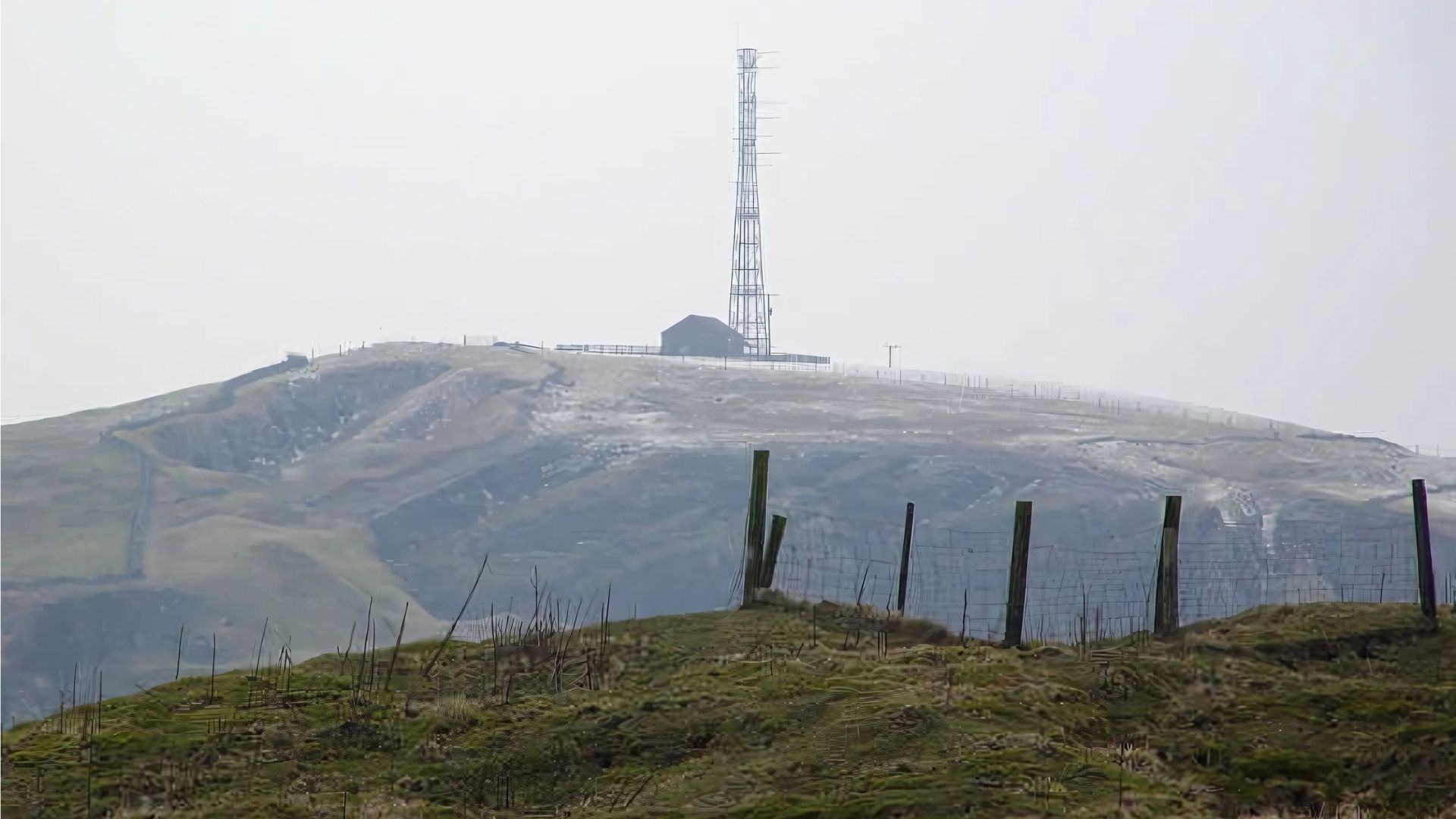
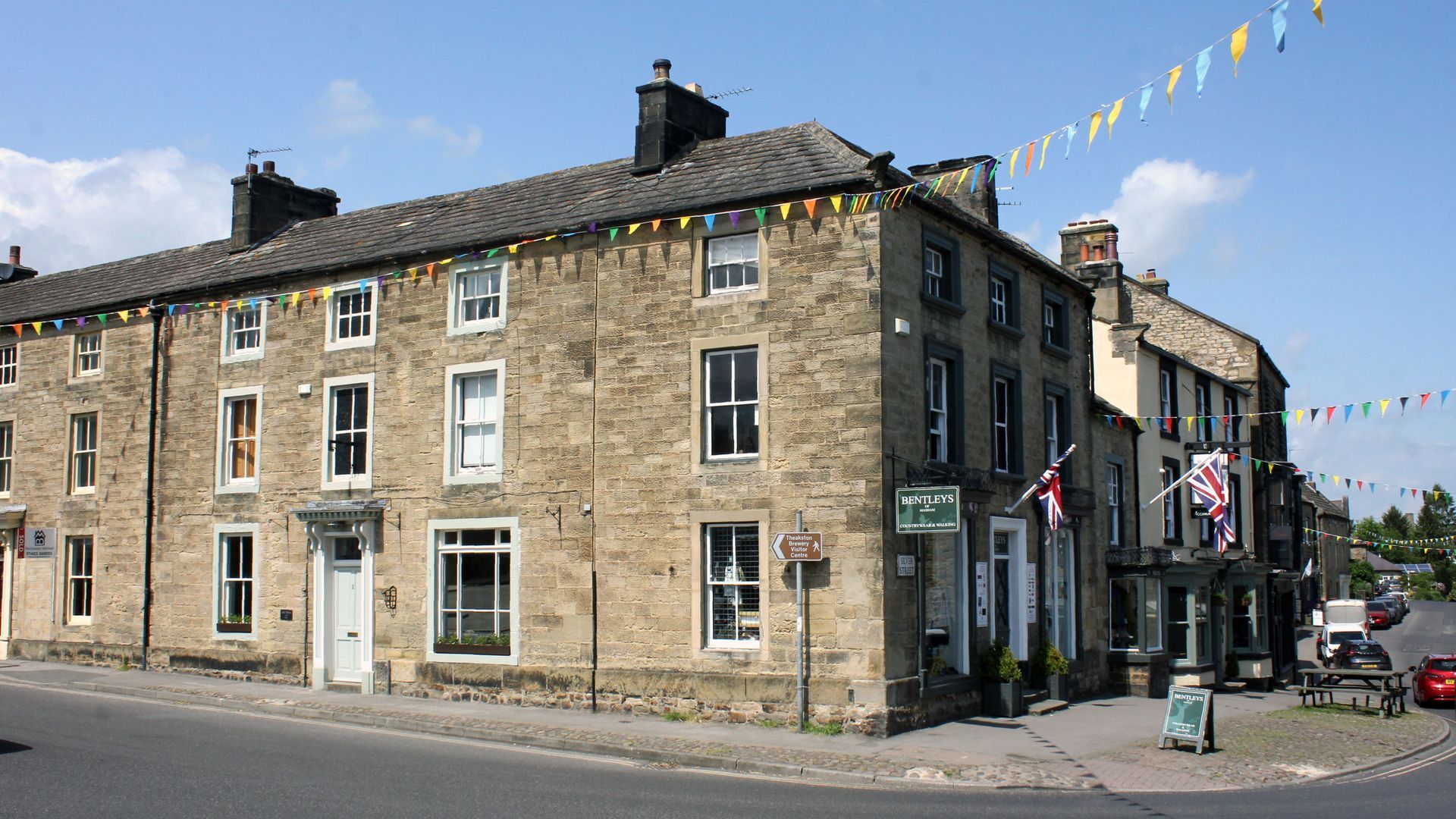
High up in the North Yorkshire Dales, on the road between Grassington and Pateley Bridge, is the village of Greenhow Hill.
The landscape is bleakly beautiful – all windswept moorland, heather and bracken. At 1,300 feet above sea level, it's one of the highest villages in England.
Because of its altitude, it's several degrees colder than nearby Pateley Bridge – and the weather can be extreme.
For several centuries, it was a hive of industry. Most of the villagers were involved in lead mining – and it's thanks to them that we know Stump Cross Caverns exists at all.
When the lead industry declined, many people left to look for work elsewhere. Cottages were left empty – and they now sit alongside newer houses. But some people stayed, hoping for a spike in the price of lead.
In his 1891 book Life's Handicap , Rudyard Kipling – whose grandfather was Greenhow's Methodist minister – described the village like this:
"Moors an' moors an' moors, wi' never a tree for shelter, an' gray houses wi' flagstone rooves, and pewits cryin', an' a windhover goin' to and fro just like these kites. And cold! A wind that cuts you like a knife. You could tell Green-how Hill folk by the red-apple colour o' their cheeks an' nose tips, and their blue eyes, driven into pin-points by the wind.
Miners mostly, burrowin' for lead i' th' hillsides, followin' the trail of th' ore vein same as a field-rat. It was the roughest minin' I ever seen."
When you look into the history of Greenhow, the weather is a recurring theme. The "wind that cuts you like a knife" was a daily reality for its inhabitants.
Greenhow wasn't always a lead mining village. It was founded at the very end of the 16th century. But lead mining in the area had been going on since Roman times.
Let's take a look at its early history…
From the Romans to the Victorians
In Roman times, Ancient Britons in today's Yorkshire were forced into slavery by the invading force and were put to work as lead miners. The lead they extracted was used to make pipes and seal roofs.
There's some evidence of Saxon and Viking life in and around Greenhow. The name itself derives from the Old Norse for "Green's hill" and nearby Coldstones comes from "Kaldestaines".
In medieval times, Cistercian monks were given "mineral rights" over the area – and they didn't always see eye-to-eye about who the resources belonged to. Disputes over ownership were a common theme over the next few centuries.
At this time, the lead was often used locally. But it was also shipped to Northern France, where it was used in the construction and repair of abbeys.
What we know as Greenhow today was developed by Sir Stephen Proctor, who obtained mineral rights in 1597. He built the village and the first smelt mill.
Over the next three centuries, Greenhow Hill was a thriving mining industry. Its activities were only interrupted by the depression of 1829 to 1833. During this time, food poverty soared and many miners left to look for work elsewhere.
Lead mining
Most of the villagers worked as miners, with some also working part-time as farmers. Mining ran through the community like a vein of lead.
The industry's decline began in the 1870s. There were two main reasons for this. First, most of the lead that was easily reached had been extracted. And second, the lead miners were being undercut by cheap imports.
Because of this, more and more Greenhow residents turned to farming as a means of subsistence – and the mines closed, one after the other.
By 1895, this old way of life was practically gone.
Greenhow in the 20th century
Before public transport, Greenhow was an isolated community. It didn't have mains water or electricity until the 1950s – and during harsh winters the village was cut off.
To combat the cold, the villagers dug peat in spring for use in winter fires. It was a hard way of life.
In terms of social life, there are records of a local brass band and a football team. There were three pubs and entertainment including drives and dances.
Twenty-eight men from Greenhow fought in the First World War and six died. One woman, Margaret Newbould, was awarded the Royal Red Cross for her work as a nurse.
The discovery of Stump Cross Caverns
In January 1860, two miners from Greenhow were prospecting for lead on the road to Grassington. They thought they found a lead seam and started to dig.
They didn't find what they were looking for – but they did stumble on a natural limestone passageway that formed part of an underground network of tunnels and caverns.
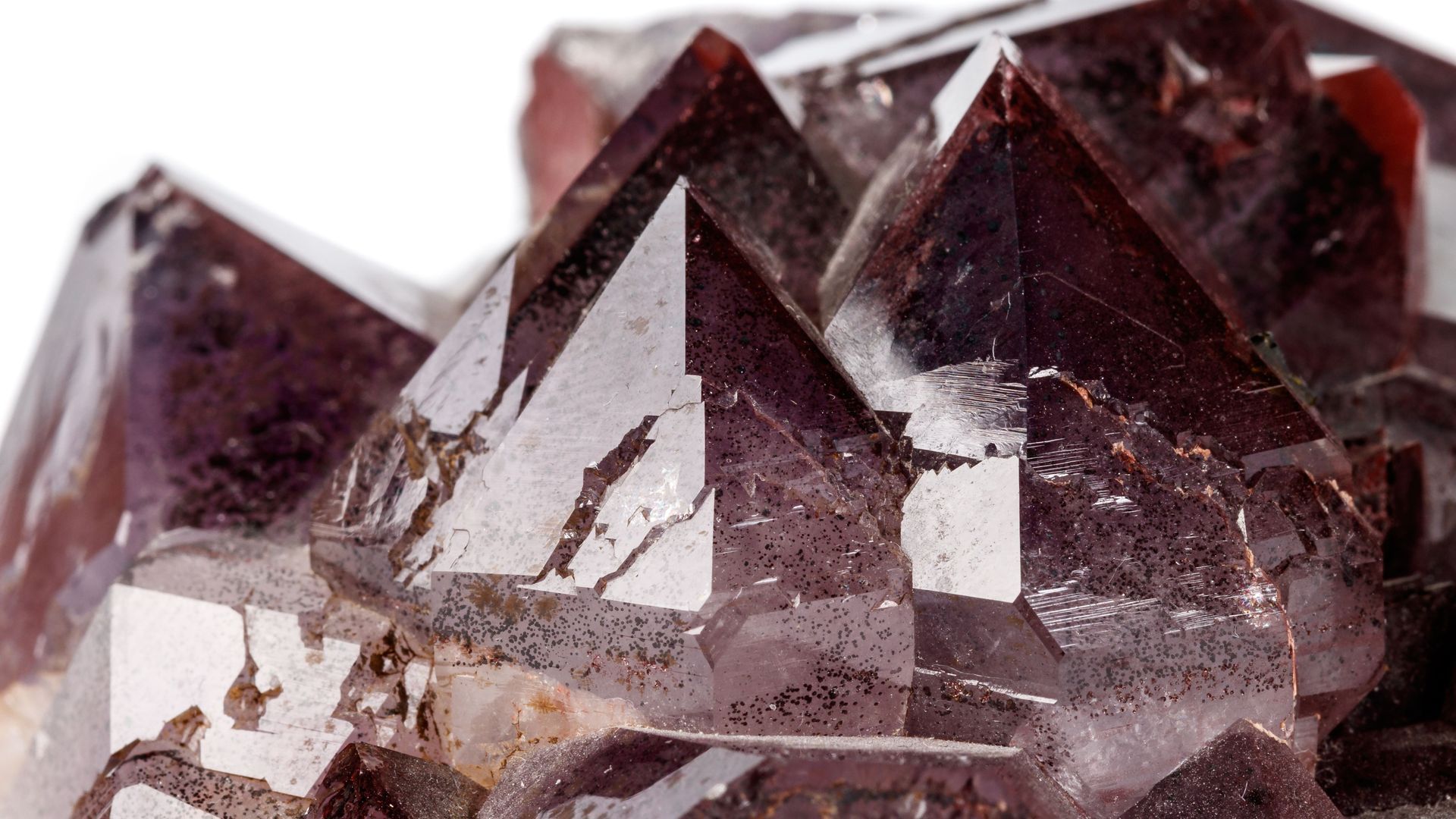
The glimmering stalagmites and stalactites of Stump Cross Caverns may be beautiful – but to the miners, they were primarily a way to make money.
Usually, lead miners would take any cave decorations and sell them as ornaments – but the Newboulds saw a business opportunity.
They negotiated a lease with local landowner Thomas Yorke and the caves soon became a tourist attraction.
Back then, the caves were hard to get into. Steps weren't installed until 1863 – a health and safety nightmare!
It's not just the entrance that's changed. Since the Newboulds' discovery, more tunnels and chambers have been uncovered, along with prehistoric remains and some beautiful formations.
Visitors have been enjoying cave tours pretty much since day one – but today it's also the site of many experiences and events. These range from fossil digs and panning for gems to an onsite cinema and chill-out room.
The history of Stump Cross is inseparable from that of Greenhow Hill. It's amazing to think that the caverns as we know them today would never exist if it weren't for a chance discovery in 1860.
Want to learn more about the local lore of the Yorkshire Dales? Discover our fascinating cave history, which stretches back 300 million years – long before humans or dinosaurs roamed the Earth.
Or why not pay us a visit and explore our ancient cave system for yourself? It's easy to book tickets online.