Do snakes live in caves? 6 slithery cave-dwelling creatures
Ever found yourself wondering, "Do snakes live in caves?" A few do, yes! Learn more about these slithery troglophiles.

Snakes look just the type to live in caves, don't they? It goes nicely with their whole vibe: cold, spooky, dark…
So, you might be surprised to learn that only a handful of snakes call caves their home. Let's meet them.
The cave residents
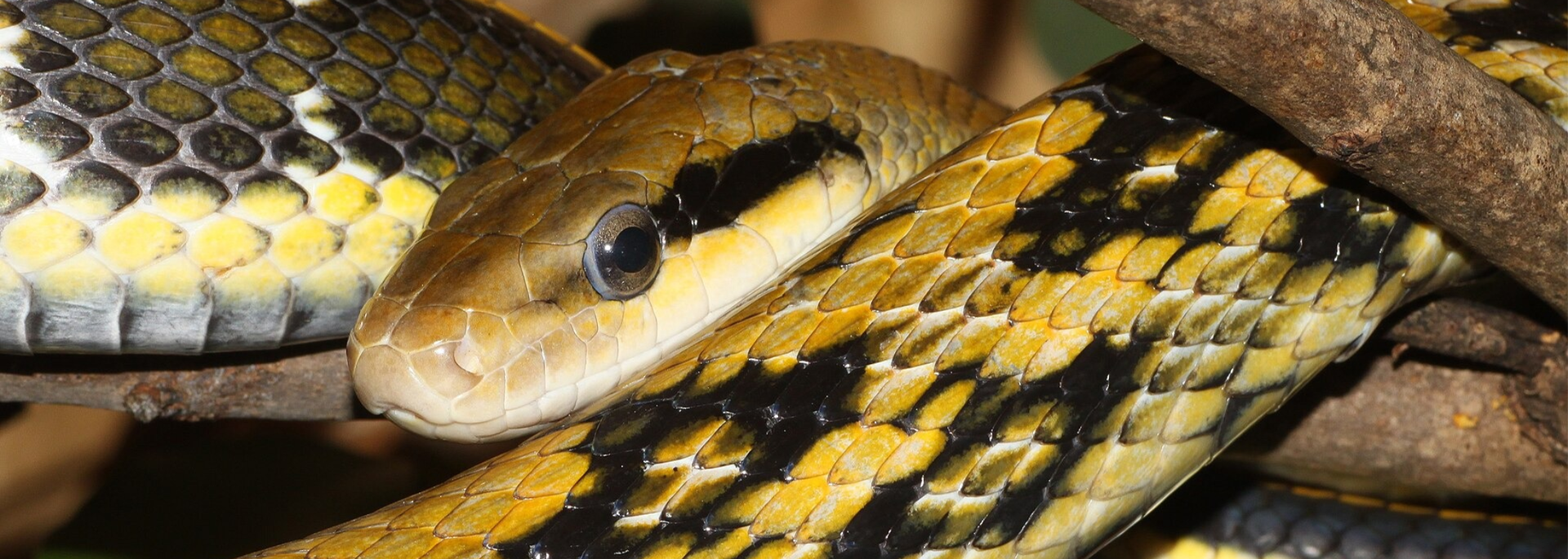
1. Ridley's beauty snake/cave-dwelling rat snake
Scientific name:
Orthriophis taeniura ridleyi
Length:
1.4 to 2 meters
Colour:
pale yellow/cream/beige that fades into dark grey/black by the tail
Home:
Thailand and Malaysia
With their ombre colouring and dark "eyeliner", these sss-tunning snakes are among the prettiest cave dwellers around.
They live in deep limestone caves, blending in with the pale lime walls and low light. You'll usually find them inside the caves or hanging around near the entrance.
Ridley's beauty snakes are cathemeral. That means they're active at irregular intervals, night and day (it helps keep their prey on their toes).
Although the name "rat snake" may suggest otherwise, these snakes love eating cave-dwelling birds and bats the most. They do snack on rats and other rodents when the opportunity presents itself, though.
They're skilled climbers, too. They can scale cave walls and catch bats in midair or pluck them straight off the walls.
2. Yellow-red rat snake
Scientific name:
Pseudelaphe flavirufa
Length:
1.2 to 1.5 metres
Colour:
yellow/pale brown with striking red blotches lined in black
Home:
Mexico and Central America, including Nicaragua, Honduras, Belize and Guatemala
Here's another beautiful snake with distinctive red markings.
Yellow-red rat snakes spend most of their time outside of caves. Like regular snakes, they slither up trees and down to the forest floor, hunting birds, lizards, rodents and frogs.
A cave to them is an occasional hangout spot – somewhere they can escape the midday heat or catch some cave prey they've been craving. Except for one gang of crazy constrictors, that is…
A group of yellow-red rat snakes lives inside Kantemó Cave (AKA "The Cave of the Hanging Snakes") in the Yucatan Peninsula of Mexico. These snakes slither into the cracks of this limestone cave and wait until night to start their hunt.
See, millions of bats also call this cave home. When they wake up and swarm out, the snakes dangle themselves from the ceiling. They can't see very well in the darkness, so they writhe around in the air in hopes of catching a bat in mid-flight.
3. Cambodian turquoise pit viper
Scientific name: Trimeresurus sp.
Length:
50 to 80cm (but the jury is still out as they've only just been discovered)
Colour:
glowing turquoise blue and gold
Home:
Barrambang province, Western Cambodia
If you wanted to hide far away from human eyes, a cave would be a pretty good option. And that's exactly the option chosen by the spectacular Cambodian Turquoise Pit Viper.
Scientists have only just discovered this species. The Cambodian Ministry of Environment found it during a biodiversity survey conducted between November 2023 and July 2025.
They were exploring 64 ancient caves on isolated karsts (limestone hills). These karsts act as "biological islands" because they're so isolated from anything else – except the farmland that surrounds them. This has created unique ecosystems with species you can't find anywhere else on Earth.
The Cambodian turquoise pit viper has magnificent turquoise-and-gold skin. It's so bright and glowing that it makes the snake look like a toy.
Scientists think these snakes evolved this colour to blend perfectly into the moss-covered limestone rock faces of their homes. Their bright colour also should come as a warning sign for their venomous bite – don't let those big eyes and that cute face fool you!
Don't worry too much, though. They're not going to try and eat you. They prefer cave-dwelling bats, birds, small rodents, geckos, lizards and frogs.
The cave visitors
4. Grabowski's beauty snake
Scientific name: Orthriophis taeniurus grabowskyi
Length:
1.5 to 2.2 metres
Colour:
slate grey or grey-brown with black patterns
Home:
Borneo and Sumatra
Now, this snake loves a cave as much as any other, but it doesn't spend all its time in darkness. It likes to get out there into forest lowlands and even climb big hills to explore and catch small forest rodents.
It can climb cave walls and catch bats and birds, much like the cave-dwellers we've met already. However, it prefers dining al fresco. It treats caves as a nice shelter, not a permanent home.
5. Black-banded sea krait
Scientific name: Laticauda semifasciata
Length:
up to 1.7 metres
Colour:
from white to light/bluish grey with black horizontal bands
Home:
warm tropical waters of the western Pacific Ocean, including the Philippines, Indonesia, Taiwan, Japan and China
These pretty little water babies don't live in caves, but they rely on them for survival.
They spend most of their lives hunting eels in coral reefs. But once they're full up, their instinct drives them ashore to sheltered places like sea caves. Here, they can digest their food, shed their skin, lay their eggs and rest.
6. Puerto Rican boa
Scientific name: Chilabothrus inornatus
Length:
1.8 to 2.7 metres
Colour:
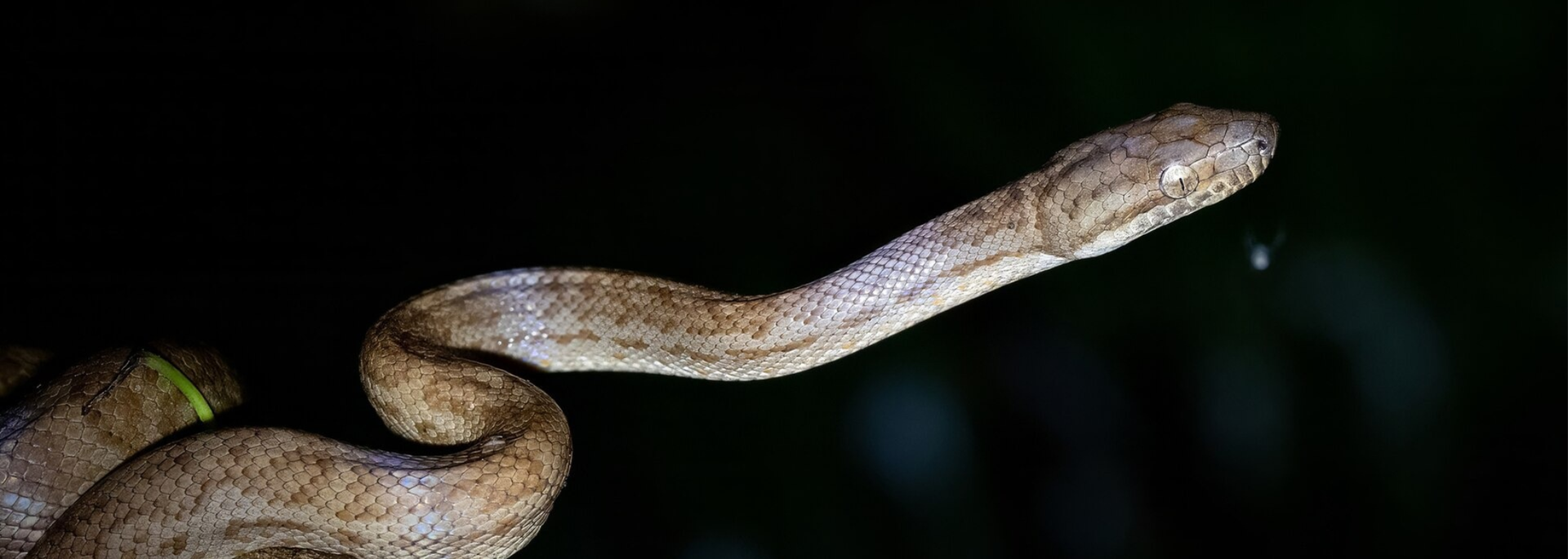
from tan to dark brown; can have a reddish tint when younger
Home: Puerto Rico
Locals call it the culebrón, meaning "big snake". Culebrón is also commonly used to describe a long-winded soap opera or telenovela, as the plot twists back and forth like a massive snake.
And if this scaly so-and-so was in a telenovela, they'd probably be the mysterious and brooding outsider you wouldn't want to mess with.
They don't live in caves full-time, preferring to use them as hunting stations. They usually slither over to a cave entrance in the late afternoon or early evening. Around dusk, they hang down from the ceiling and get ready to snap up some bats as they fly out of the cave to hunt.
Once they've had their fill, they head back to the forest canopy.
Stump Cross Caverns: no snakes, but plenty of fun

Here at Stump Cross Caverns in the Yorkshire Dales, we don't have cave snakes. That might be good news or bad news, depending on your tolerance for slithery things.
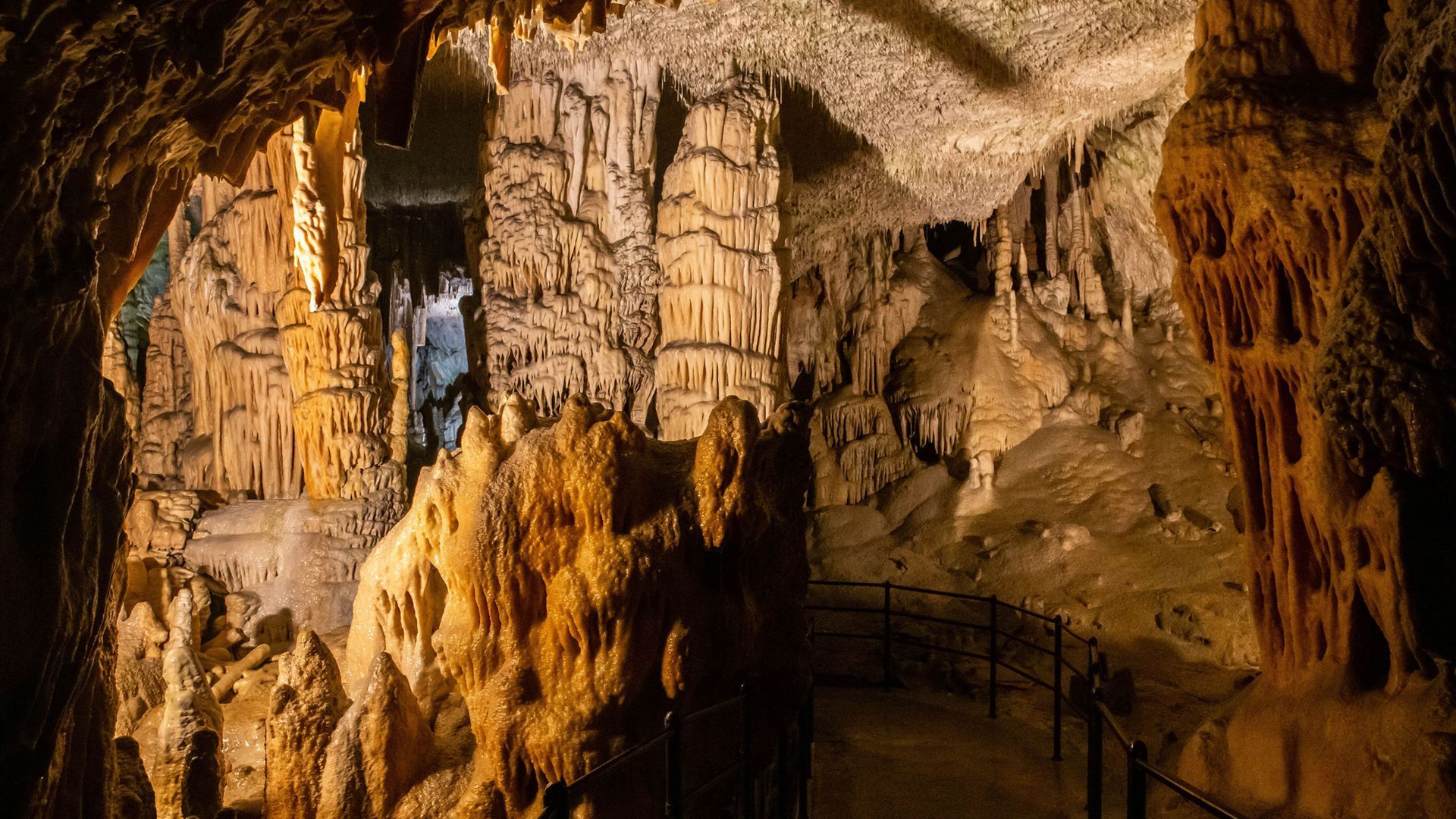
What we do have are plenty of fun things to see and do. There's our amazing underground cave system, of course, which you can explore on foot with nothing more than a hard hat (which we provide). Upstairs, meanwhile, there are fossil treasure hunts, geode-cracking sessions, a cosy cafe and lots more.
Looking for unforgettable Yorkshire Dales attractions (with no snakes in sight)? It's easy to book your tickets for Stump Cross Caverns online.