



Parents' guide: head-start learning tips for new Key Stage 2 pupils

Simon Edward • 24 August 2026

Is your little learner moving into Key Stage 2? Explore ideas and resources to give them a head start at home.


Is your little learner moving into Key Stage 2? Explore ideas and resources to give them a head start at home.

Across most of the UK, the school summer holidays end in early September.


While kids might grumble, it's an exciting time. Millions of youngsters are joining a new school year – and for many, that means a fresh curriculum, too.


In the UK, Key Stage 1 caters to the five-to-seven age range (Years 1 and 2) and focuses on core reading, writing and numeracy skills. Key Stage 2 starts in Year 3, and represents a big leap forward. Gone are simple sums and learning to read – instead, it's all about times tables and "reading to learn".


That's a mighty step up. What can you, as a parent, do to help your child settle in and get to grips with these new, unfamiliar subjects?


We're here to help. At Stump Cross Caverns, we're passionate about supporting children's learning both inside and outside of the classroom. That's why we built our own Key Stage 2 activities hub.


In this guide, we recommend resources to keep your little learner engaged in Key Stage 2 subjects at home.


It's not about recreating the classroom in your living room. It's about practising useful skills, building confidence and – hopefully – having fun at the same time.


Maths


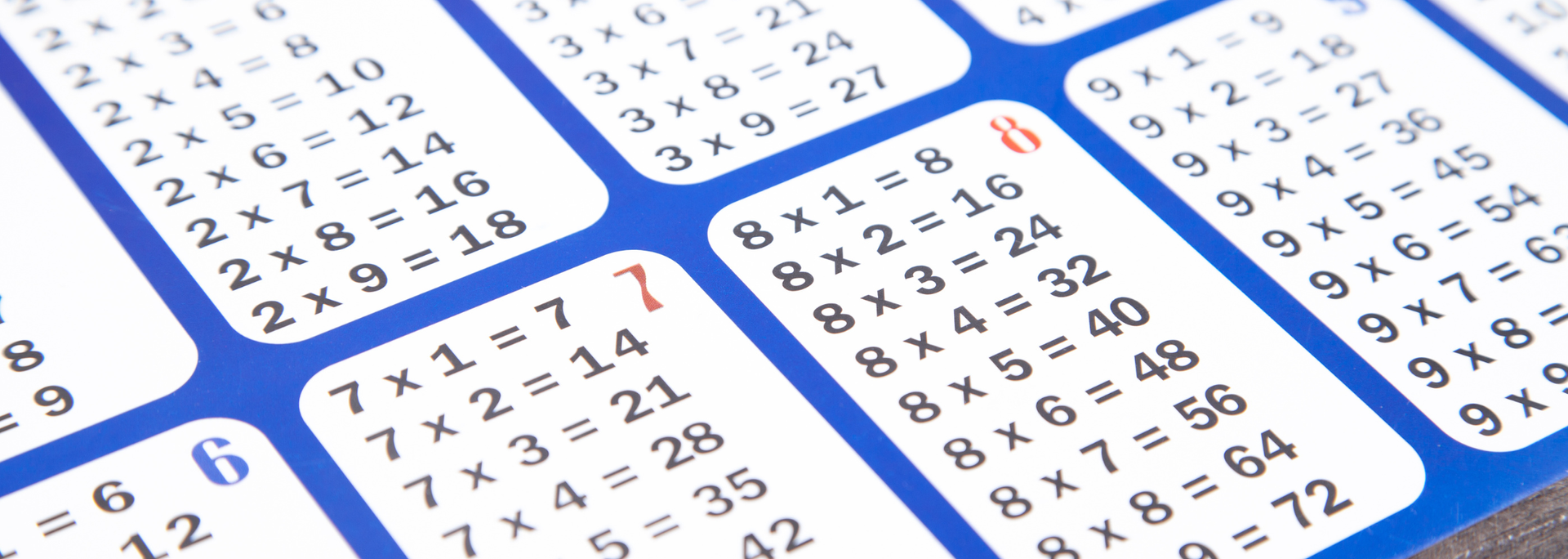
Picture of times tables.

Maths gets more complicated in Key Stage 2. As they move into Year 3, pupils start learning about:


  • Counting in multiples of four, eight, 50 and 100
  • Ordering and comparing numbers up to 1,000
  • Reading and writing numbers up to 1,000
  • How to solve sums and practical problems using these ideas

For some pupils, this complexity can come as a bit of a shock. But a few home-based activities (not "homework" – this should be fun) can help the ideas sink in.

Like any learning, it's all about practice.


Ideas for home maths activities

  • 🧑‍🍳 Use cooking to practise measuring: ask your child to weigh ingredients, halve or double a recipe or work out how much of each ingredient is needed.
  • 🎲 Play number-based games: card games, dice games and board games can all help children practise counting, adding and problem-solving.
  • 🕵 Go on a times table hunt: pick a number and challenge your child to find things that come in groups of that number.

Recommended resource

  • NRICH Maths at Home: a bumper collection of maths learning resources, including online games, pencil-and-paper activities and printable worksheets.

English


Picture of child and parent reading.

As pupils move into Key Stage 2, the core shift in literacy is from "learning to read" to "reading to learn". That means:


  • Reading age-appropriate books accurately and at a speed that lets them focus on understanding the whole text, not just individual words
  • Writing down ideas with accuracy and good punctuation
  • Spelling common words correctly
  • Catch-up programmes for pupils who are still learning core reading skills

You can help your child get ahead by fostering an interest in reading and writing. In the age of online video, being book-smart can be a real advantage!


Ideas for home English activities

  • 📚 Create a home book club: read together and talk about it. Ask your child "What might happen next?" or why a character behaved in a certain way.
  • 🦸 Dream up a story together: show them how to structure a story with a beginning, middle and end. Or take turns adding one sentence at a time and see where the story ends up.
  • 📔 Write a holiday diary: encourage them to write a few sentences about a day out, something funny that happened or somewhere they visited.

Recommended resource

  • Oxford Owl for Home: a resource hub with plenty of age-appropriate literacy resources for parents and kids.

Science


Picture of a science model.

In lower Key Stage 2 (Years 3 and 4), the science curriculum introduces the concept of "working scientifically".


That doesn't mean conducting complex lab tests and running experiments. Working scientifically primes children to use the scientific method by thinking about the world around them and how it all fits together. That includes asking questions like:


  • How do things change over time?
  • How and why are certain things grouped together?
  • Why did an action I observed happen, and what might change if I do things differently?

Key focus areas include plants, animals, rocks, light and forces (including magnets).

Let's look at some ideas and resources to help you encourage scientific thinking and spark engagement with these key topics.

Ideas for home science activities

  • 🧑‍🔬 Ask a question and investigate it: which materials float? What makes ice melt fastest? Come up with your own experiments and help them draw logical conclusions.
  • 🌱 Grow something: keep a diary of how a plant changes and talk about what it needs to survive.
  • 👀 Try active looking: make a deliberate effort to notice the world around you. Collect fallen leaves, examine rocks or use a magnifying glass to explore natural objects in more detail.

Recommended resources

Stump Cross Caverns online activities

  • How does light work?: an interactive journey into the world of light – with a fun quiz at the end!
  • How rocks are formed: a Key Stage 2-aligned lesson that teaches all about the different types of rock and how they formed. Can you beat the rocky word search?

Other resources

History


Picture depicting history.

In Key Stage 1, teaching history was mostly about fostering a basic awareness of the past. For Key Stage 2, the focus moves to concrete historical periods, including:

  • The Stone Age and Iron Age
  • The Roman Empire in Britain
  • The Anglo-Saxons
  • The Vikings

That's good news for parents, because those historical periods are ripe with opportunities for storytelling and engagement. Here are a few ideas to help spark their imaginations and bring the past to life.


Ideas for home history activities

  • ⏳ Make a prehistoric timeline: draw a long line and add the Stone Age, Bronze Age and Iron Age. They'll be amazed to see just how far back each period was.
  • 🏘️ Design a Roman town: sketch a map featuring Roman roads, homes, baths, temples and other buildings. Talk about what feels familiar about Roman life and what's changed.
  • 🚗 Go on a day trip: here at Stump Cross Caverns in Yorkshire, we run regular kid-friendly workshops on topics like fossils and the Stone Age.

Recommended resources

Stump Cross Caverns online activities

  • The Stone Age: a time-travelling adventure back to Stone-Age Britain. Learn about life in the Palaeolithic, Mesolithic and Neolithic ages.
  • Stone Age animals: discover the fascinating beasts that once roamed this land. This lesson supports both history and science learning at Key Stage 2.

Other resources

Stump Cross Caverns is an ancient cave attraction in the Yorkshire Dales National Park. Why not pay us a visit and spark their little imaginations? We offer regular history and science workshops for kids, as well as an online learning hub full of fun, educational activities built for Key Stage 2.


Share this article

Recent Posts

Welcome to Grassington – a market town nestled in the beating green heart of the Yorkshire Dales.
by Simon Edward 21 August 2026
Welcome to Grassington – a market town nestled in the beating green heart of the Yorkshire Dales.
Fingal's Cave is one of the treasures of the natural world. But how was it formed?
by Simon Edward 14 August 2026
Fingal's Cave is one of the treasures of the natural world. But how was it formed? Let's go back in time…
Do you have a geode that needs valuing? Find out how to put a price on your discovery in our guide.
by Simon Edward 10 August 2026
Do you have a geode that needs valuing? Find out how to put a price on your discovery in our guide.
Did cavepeople live up to their reputation as big, strong brutes?
by Simon Edward 7 August 2026
Did cavepeople live up to their reputation as big, strong brutes? Put it this way: they'd probably beat you in an arm-wrestling match…
The Yorkshire Dales is best explored on foot – and, some say, best explored in summer. Discover 4
by Simon Edward 31 July 2026
The Yorkshire Dales is best explored on foot – and, some say, best explored in summer. Discover 4 walks that promise the best of the season.
Yorkshire is full of family fun with an educational flavour. Avoid the roar of theme park rides
by Simon Edward 24 July 2026
Yorkshire is full of family fun with an educational flavour. Avoid the roar of theme park rides with these 8 hand-picked local attractions.
Are you planning a self-catering holiday in the Yorkshire Dales? Learn handy local tips in our guide
by Simon Edward 20 July 2026
Are you planning a self-catering holiday in the Yorkshire Dales? Learn handy local tips in our guide.
Yorkshire is a fossil hotspot – and Stump Cross Caverns is no exception. Explore
by Oliver Pyper 17 July 2026
Yorkshire is a fossil hotspot – and Stump Cross Caverns is no exception. Explore some of our recent and not-so-recent fossil finds.
Some caves are cooler than others. A few are downright frosty. Join us as we tour
by Simon Edward 13 July 2026
Some caves are cooler than others. A few are downright frosty. Join us as we tour some of the world's coldest ice caves.
Show More