Geodes are natural treasure chests filled with crystals. Discover 4 of the most amazing examples ever found.

From the outside, a geode isn't much to look at. It most closely resembles what it is – a rock. A plain rock at that – not an object you'd pick up unless you suspected something special might lie inside.
Geodes, you see, contain stunning crystal formations within their unassuming shells. Like the limestone caves here at Stump Cross Caverns, these crystals formed over thousands of years, if not millions. And like the caves, they're remnants of prehistory that can be explored right here, right now.
Beautiful geodes can be bought for a few quid – and here at Stump Cross, we crack them open for you, too. However, researchers and geode hunters have discovered much larger examples than these.
Here, then, are four of the best – from Uruguay to China, from the USA to Spain. We hope you enjoy this whistle-stop tour of these sparkly natural treasures.
1. Crystal Cave (Ohio, USA)
We begin with a record-breaker – a geode so big it's been recognised as the largest in the world by Guinness World Records.
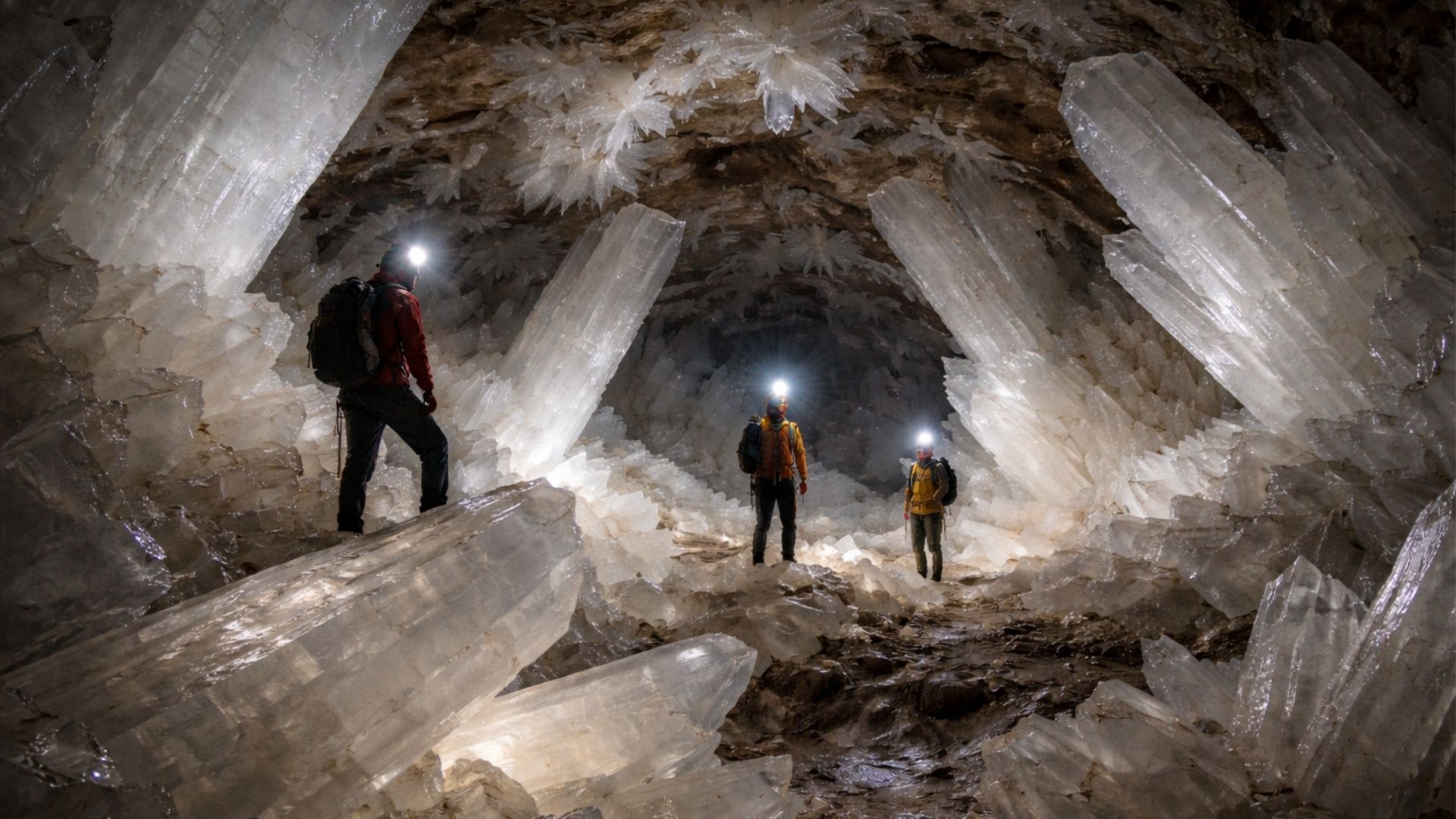
The Crystal Cave at Put-In-Bay, Ohio, is a single geode made from celestite. The cavity is 35 feet across and 10 feet high – big enough to hold a party of six. The crystals themselves are up to 18 inches across and weigh up to 136 kilograms.
Crystal Cave has an odd origin story. Like Stump Cross Caverns some 20-odd years before, it was discovered by accident. But whereas Stump was discovered by lead miners, Crystal Cave was found by the owners of a winery.
They were digging a well some 40 feet beneath the winery when they chanced upon an extraordinary sight. Before the owner turned the cave into a tourist attraction, however, the celestite was mined and used in the manufacture of fireworks.
2. Pulpí Geode (Spain)
Ohio's Crystal Cave may have made its way into Guinness World Records. But for sheer awe-inspiring beauty, it has a competitor in Spain's Pulpí Geode.
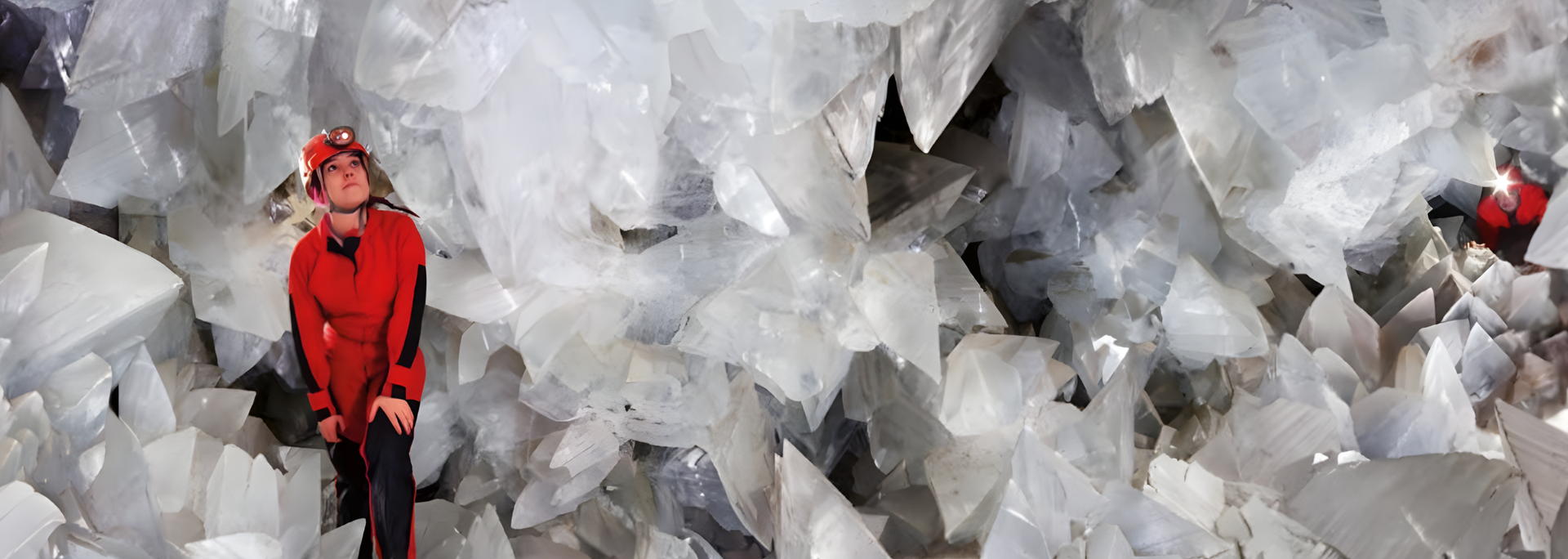
Located in an abandoned silver mine in Spain's Almería Province, the Pulpí Geode is eight metres wide, two metres high and two metres deep. Yes, you read that right – this is a geode you can step inside and look around.
The cave is filled with giant gypsum crystals up to two metres long. Scientists believe they were formed when the hot fluids from volcanic activity began to cool.
The rocks were formed when dinosaurs roamed the Earth some 250 million years ago. Scientists are unsure exactly when the crystals were formed, but believe it to have been less than two million years ago.

"It's indescribable," says geologist Mila Carretero, "because it gives a sense of how small we are. Look at what nature has given us."
That's a sentiment echoed by the thousands of tourists who have taken the guided tour.
3. Uruguayan amethyst geodes
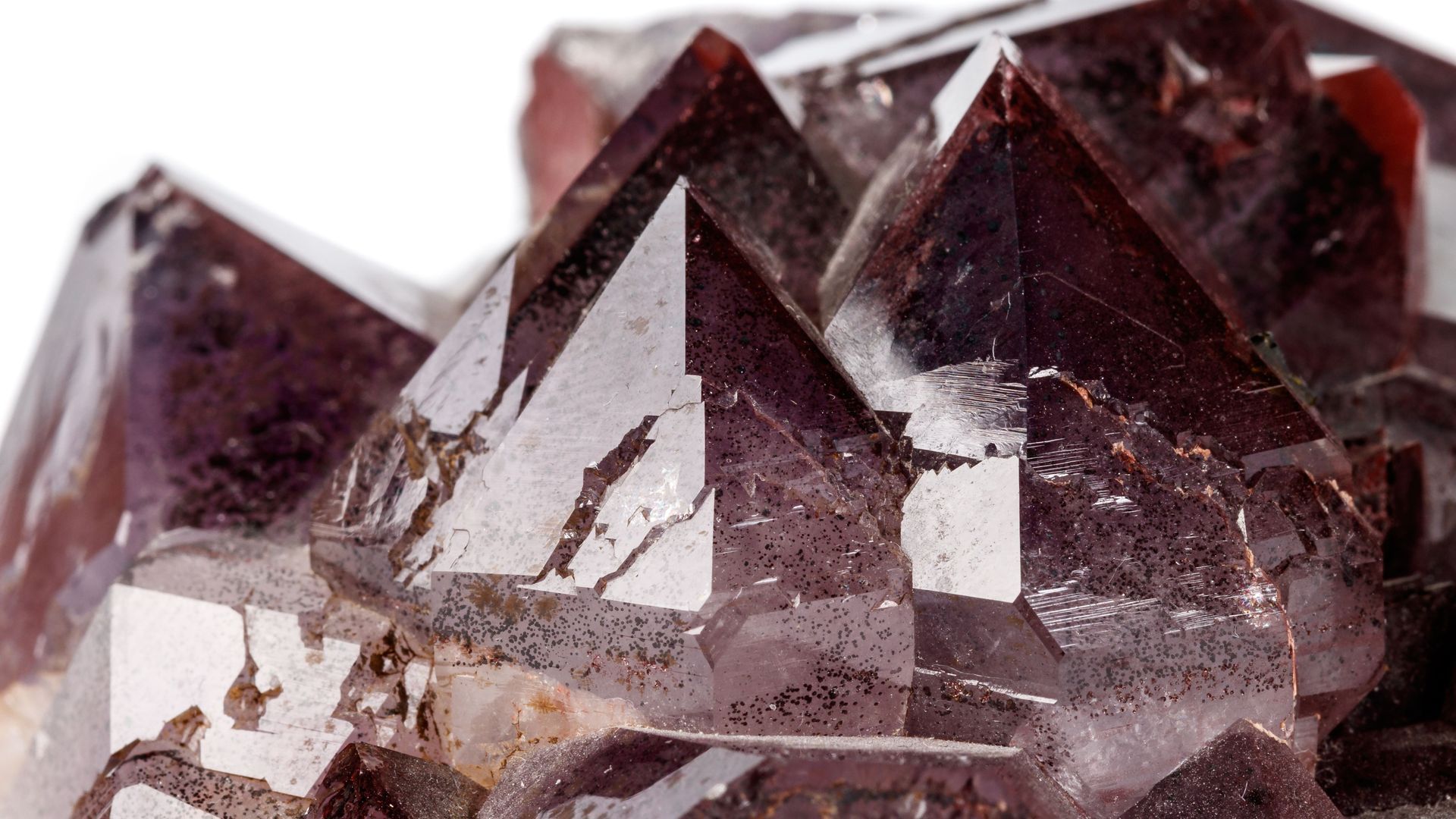
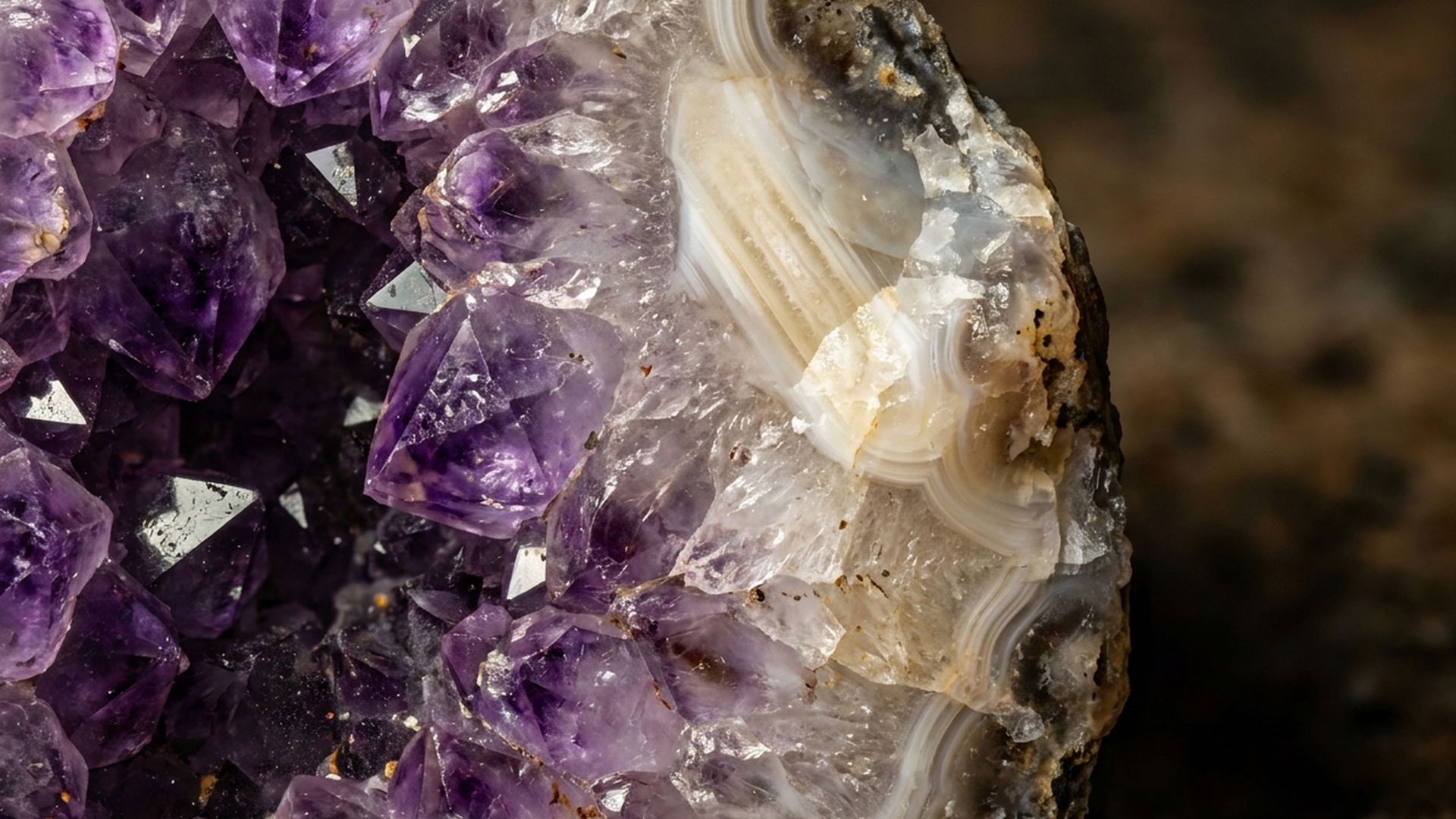
Geodes contain many different crystals. But perhaps the most famous is amethyst with its deep violet hue.
Amethyst has been mined in the Los Catalanes District of northern Uruguay for more than 150 years. Miners have uncovered remarkable geodes – so remarkable they've been classed as "one of the top 100 geological heritage sites in the world".
The most obviously remarkable thing about these deposits is their size. Some are more than five feet high – that's about the same height as the average Uruguayan woman.
But their origins are remarkable, too. These deposits date from around 134 million years ago, when the supercontinent known as Gondwana began to break into pieces. Researchers found that the geodes formed at unexpectedly low temperatures – somewhere between 15°C and 60°C (59°F and 140°F).
4. The Shandong Tianyu Museum Geode (Linyi City, China)
Some geodes are well-travelled. The world's largest amethyst geode was discovered in Uruguay and is now on show in the Shandong Tianyu Museum of Natural History in China.
It attracts visitors for a reason. This stunning, record-breaking specimen weighs more than 13 tonnes and is roughly three metres long, 1.8 metres wide and 2.2 metres high.
The geode has a dark, crystal-flecked interior and is big enough for a person to sit in. This record-breaker is just one of the many amazing minerals and fossils on show in the Shandong Tianyu Museum, which welcomes around 1.6 million visitors a year.
How are geodes formed?
Geodes have been around longer than humans. They form over thousands to millions of years when a hollow cavity in a rock is filled with mineral-rich groundwater. The cavity may have been made by a gas bubble in volcanic rock or organic matter decaying in sedimentary rock.
The groundwater deposits minerals in the gap and evaporates. This causes minerals like silica and calcite to be deposited inside. Over thousands of years, these turn into crystals.
Geodes are found all over the world, with especially rich deposits in Brazil, Uruguay, Mexico and the USA. Despite their ancient provenance, geodes are still being found and sold to this day. Why not pick one up here at Stump Cross Caverns in the Yorkshire Dales?
Geode James's Geode Shack

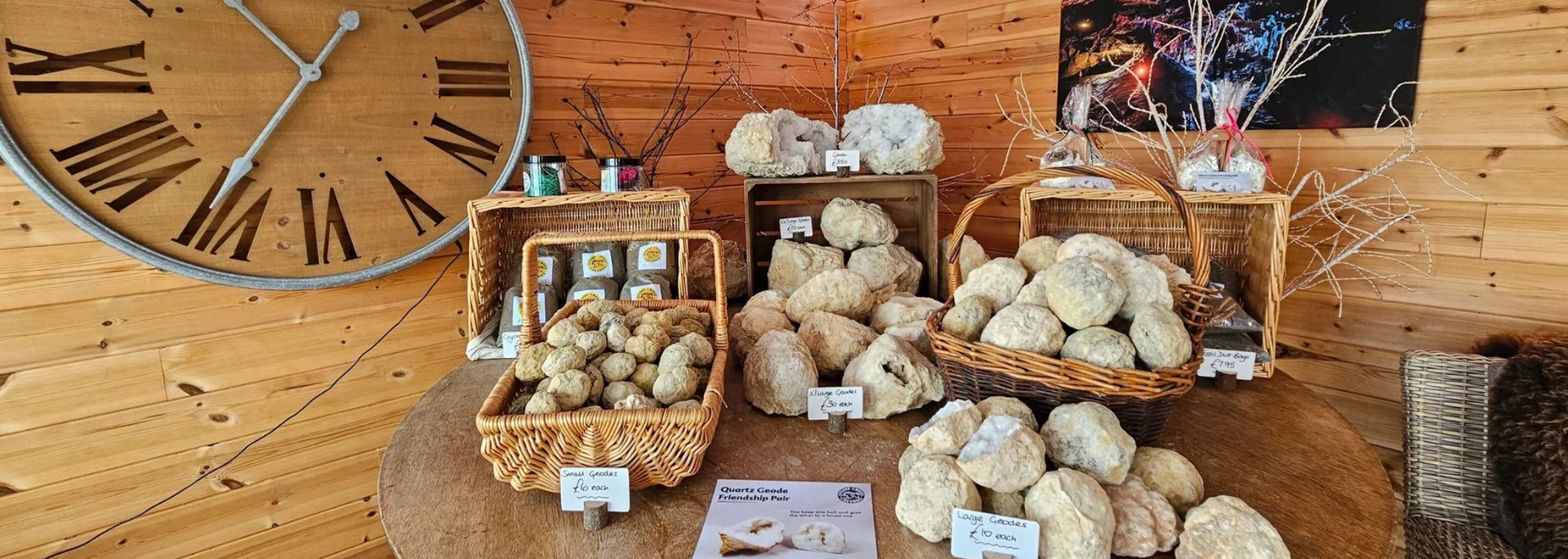
Here at Stump Cross Caverns, we love all things geological. That's why we've opened Geode James's Geode Shack – a place where crystal-lovers of all ages can pick a geode and have it cracked open in front of their very eyes.
Every day, the geode shack is a place where rocks reveal their crystal treasures – and luckily for you, you get to take the crystals home.
It's incredible to think that the geode you take home with you is millions of years old, and that you'll be the first person in history to see what's inside. It's this sense of wonder and excitement that thrills our visitors again and again.
So, if you want an unforgettable experience right here in the Yorkshire Dales, reserve a spot for geode cracking at Geode James's Geode Shack today. It's quick and easy to book online.