How strong were cavemen and cavewomen?

Simon Edward • 7 August 2026

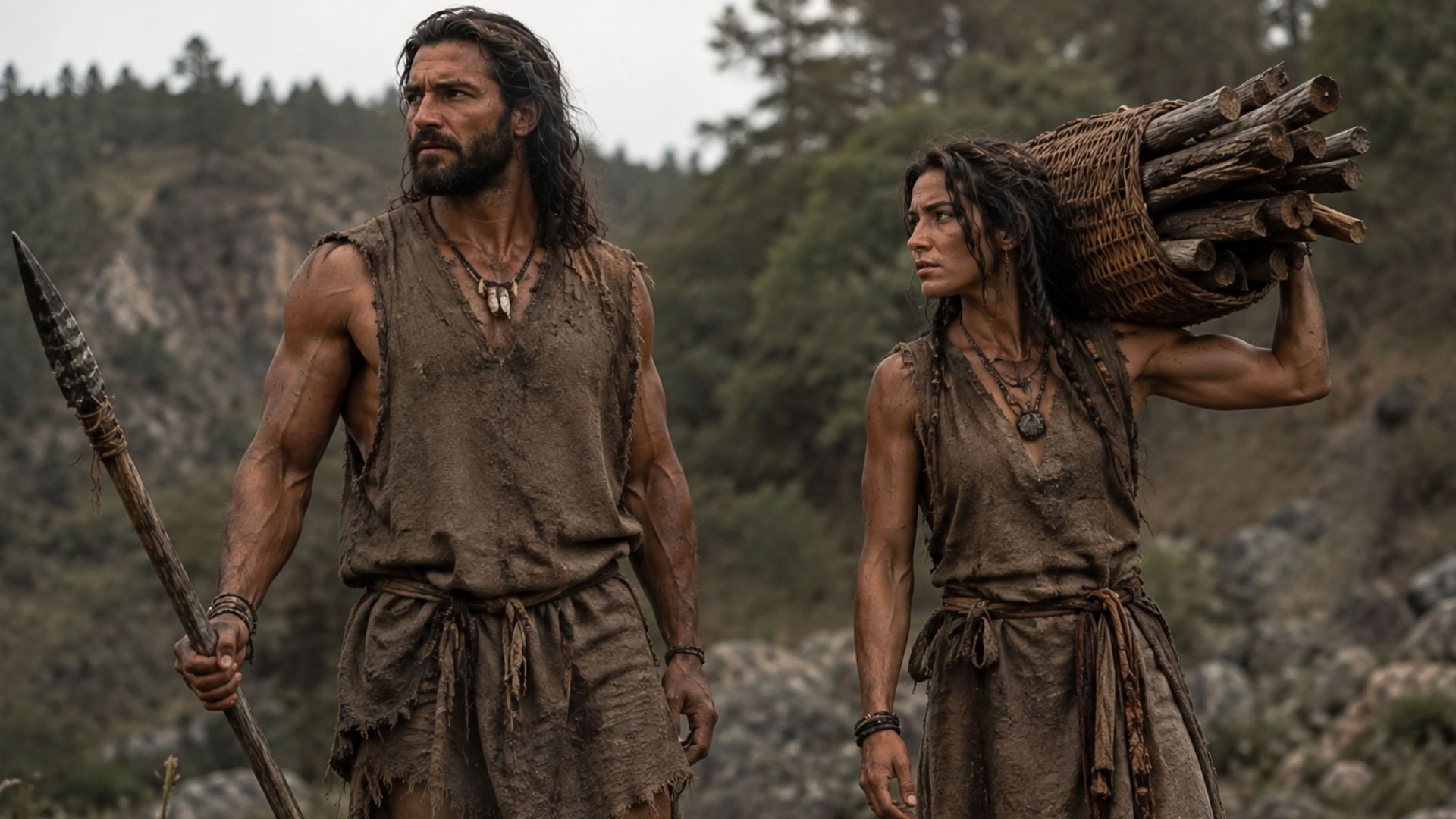
Did cavepeople live up to their reputation as big, strong brutes? Put it this way: they'd probably beat you in an arm-wrestling match…


Did cavepeople live up to their reputation as big, strong brutes? Put it this way: they'd probably beat you in an arm-wrestling match…

Call someone a "Neanderthal" or "caveman", and you're probably suggesting two things. First, this person has more elbows than brain cells. And secondly, they're big, brutish, lumbering and loud.


Historical evidence has long suggested that the first comparison is unfair. Prehistoric hunter-gatherers had the brains to make clothes and shelter with their limited resources. They could organise nomadic trading networks. They could paint on cave walls. They could even make music.


So much for brains – how about their brawn? Does the stereotype of a club-wielding thug in animal print bear any relation to the truth?


The truth, as so often, is a mixed picture. Prehistoric hunter-gatherers were stronger than the average 20th- or 21st-century human. But that's not to say they resembled modern-day bodybuilders.


Instead, their bodies were built for endurance – the endurance of daily manual labour and the endurance of travelling long distances without wheels or motors.


So, how strong were they? Let's explore some of the conclusions researchers have drawn.


Upper-body strength

For prehistoric people, the world was their gym. They likely carried out physically demanding tasks every day – things like throwing spears, chopping wood, digging holes and carrying water.


The result, research suggests, was robust upper-body strength, especially in the arms and shoulders.


And this strength wasn't limited to men, as you might expect. Studies of early skeletons suggest that women had arms as strong as – or even stronger than – today's top-level female athletes.


Want to enter the next Olympics? It might be time to adopt the hunter-gatherer lifestyle (and get ready for hours of gruelling daily manual labour).


Lower-body strength

The phrase "hunter-gatherer" suggests a life of action. Sure, they would sit around the fire, seek shade under a tree or lie down and catch the sun's rays. But a lot of their time was spent, well, hunting and gathering.


This involved walking long, long distances. Researchers have suggested that it was common for a hunter-gatherer to walk between six and 12 miles a day. That's somewhere between 12,000 and 24,000 steps. Impressive!


And they weren't empty-handed, either. Their nomadic status meant they often carried heavy loads, including tools, weapons, food, water skins and bedding.


So, it's no surprise that researchers believe they had plenty of lower-body strength – their legs, hips and feet adapted for endurance.


Were there differences in strength between men and women?

Both men and women were highly physically capable – after all, they had to be. Archaeological evidence shows women, as well as men, had remarkably strong upper limbs.


There's evidence to suggest women carried out domestic tasks while the men hunted and dragged carcasses home. However, there's also evidence to suggest that women actively participated in the hunt.


This is partly because, for a long time, archaeologists assumed many skeletons were male. This led to some mistaken assumptions about the gender divide among prehistoric tribes.


We don't know for sure, of course. But skeletons of cavewomen have been found with hunting weapons – and experts have made deductions by comparing prehistoric people with modern-day or recent foraging cultures.


Whatever the precise labour divide, it seems clear that it's not so cut-and-dry as "man the hunter, woman the gatherer". In the Stone Age, both men and women were physically strong.

How does the strength of cavemen and cavewomen compare to modern people?

Picture of a couple at the gym.

It seems likely that an average, healthy prehistoric adult would outperform the average modern person in classic cavepeople activities. By that, we mean things like carrying heavy loads, long hikes, climbing and digging.

But what if you pitted a prehistoric man or woman against a weightlifter, marathon runner or professional climber? In these match-ups, the modern-day person would likely get the trophy.


Why? Because these activities require specialist strength training that wouldn't have been available to our ancestors.


What were their bodies like?

The strength of cavemen and cavewomen was reflected in their bodies.


Picture physical strength today, and you probably see someone with bulging muscles. It seems likely, however, that our prehistoric ancestors were strong but not muscly.


Instead, they had dense, strong bones, powerful connective tissues and lean physiques with low levels of body fat.


Their joints were similar to ours in structure but were much stronger and thicker thanks to their demanding physical lifestyles.


All this means prehistoric hunter-gatherers were probably among the fittest of populations ever seen on Earth. They were fit because they had to endure – not for explosive physical feats like you might do in the gym.


Their heads were different from ours, although this doesn't reflect their superior strength. They had bigger brow ridges, longer and flatter noses and protruding jaws.

How do we know?

At this point, you might be wondering how we know how strong cavemen and cavewomen were. The answer, as so often in archaeology, is a mixture of methods and a mixture of observation and deduction.


Scientists have studied fossilised bones using CT scans and analysed muscle attachment scars. By comparing bone density and thickness to modern humans, they've built up a picture of the daily strength of prehistoric people.


Scientists have also carried out "replication tests". If this phrase makes you think of a Stone Age Frankenstein, think again. It's tools, not people, that are replicated for study.

For instance, scientists will get modern athletes to throw replica spears to see how much physical force is required. Done enough times, this informs our understanding of the general strength of Stone Age people.


Science is, of course, a work in progress and future findings may change the way we think about the strength of cavemen and cavewomen. If we hear of any shifts in our understanding, we'll be sure to let you know.


Stump Cross Caverns is an underground cave attraction in the Yorkshire Dales. Know a little learner who loves the Stone Age? Try our online Key Stage 2 activities.


Share this article

Recent Posts

The Yorkshire Dales is best explored on foot – and, some say, best explored in summer. Discover 4
by Simon Edward 31 July 2026
The Yorkshire Dales is best explored on foot – and, some say, best explored in summer. Discover 4 walks that promise the best of the season.
Yorkshire is full of family fun with an educational flavour. Avoid the roar of theme park rides
by Simon Edward 24 July 2026
Yorkshire is full of family fun with an educational flavour. Avoid the roar of theme park rides with these 8 hand-picked local attractions.
Are you planning a self-catering holiday in the Yorkshire Dales? Learn handy local tips in our guide
by Simon Edward 20 July 2026
Are you planning a self-catering holiday in the Yorkshire Dales? Learn handy local tips in our guide.
Yorkshire is a fossil hotspot – and Stump Cross Caverns is no exception. Explore
by Oliver Pyper 17 July 2026
Yorkshire is a fossil hotspot – and Stump Cross Caverns is no exception. Explore some of our recent and not-so-recent fossil finds.
Some caves are cooler than others. A few are downright frosty. Join us as we tour
by Simon Edward 13 July 2026
Some caves are cooler than others. A few are downright frosty. Join us as we tour some of the world's coldest ice caves.
Are you interested in exploring Yorkshire's lead mining history? Here are 7 places you can visit
by Simon Edward 10 July 2026
Are you interested in exploring Yorkshire's lead mining history? Here are 7 places you can visit
Looking for family-friendly activities in Yorkshire for the 2026 summer holiday? Explore 10
by Simon Edward 6 July 2026
Looking for family-friendly activities in Yorkshire for the 2026 summer holiday? Explore 10 fun options in our guide.
Stone Age people had to live with heat just like we do. So, how did they keep cool?
by Simon Edward 3 July 2026
Stone Age people had to live with heat just like we do. So, how did they keep cool? Explore six prehistoric methods.
Decipher facts from fiction in the world of Minecraft caves and discover the real wonders
by Simon Edward 27 June 2026
Decipher facts from fiction in the world of Minecraft caves and discover the real wonders of the biome beneath your feet.
Show More