How much are geodes worth? Valuing your discovery
Do you have a geode that needs valuing? Find out how to put a price on your discovery in our guide.

Do you have a geode that needs valuing? Perhaps you chanced upon one on the beach, at the car boot or in a shop.
Perhaps one has been passed down to you. Wherever it came from, where do you start to find out how much it's worth?
Well, the value of a geode depends on several factors. Opened or unopened, its price will likely depend on its size and any exterior damage.
Once cracked open, the contents of the geode are the key indicator of its value. When it comes to a geode's crystal contents, the more beautiful – and the rarer – the better.
Your best bet is to get the geode appraised. This could be at a mineral shop or natural history museum or through a specialist antique appraiser.
You could also get your geode appraised on an online forum, or do it yourself by comparing your specimen to online listings.
A rough guide to geode values
The value of your geode will depend on a range of factors. The most important are:
- The size of the geode
- The quality of its crystals
- Its rarity as a specimen
- Whether the geode has been cut or polished
As a rough guide, a common unopened geode will be valued somewhere between £2 and £15.
Once opened, prices range from £10 for a small quartz geode to £500 or more for a rare geode with high-quality amethyst, agate or an unusual mineral specimen.
And where price is concerned, bigger is better. Large display geodes can fetch more than £1,000.
What can increase the value of a geode?
Four main factors can increase the value of a geode. All relate to the overall quality of the specimen.
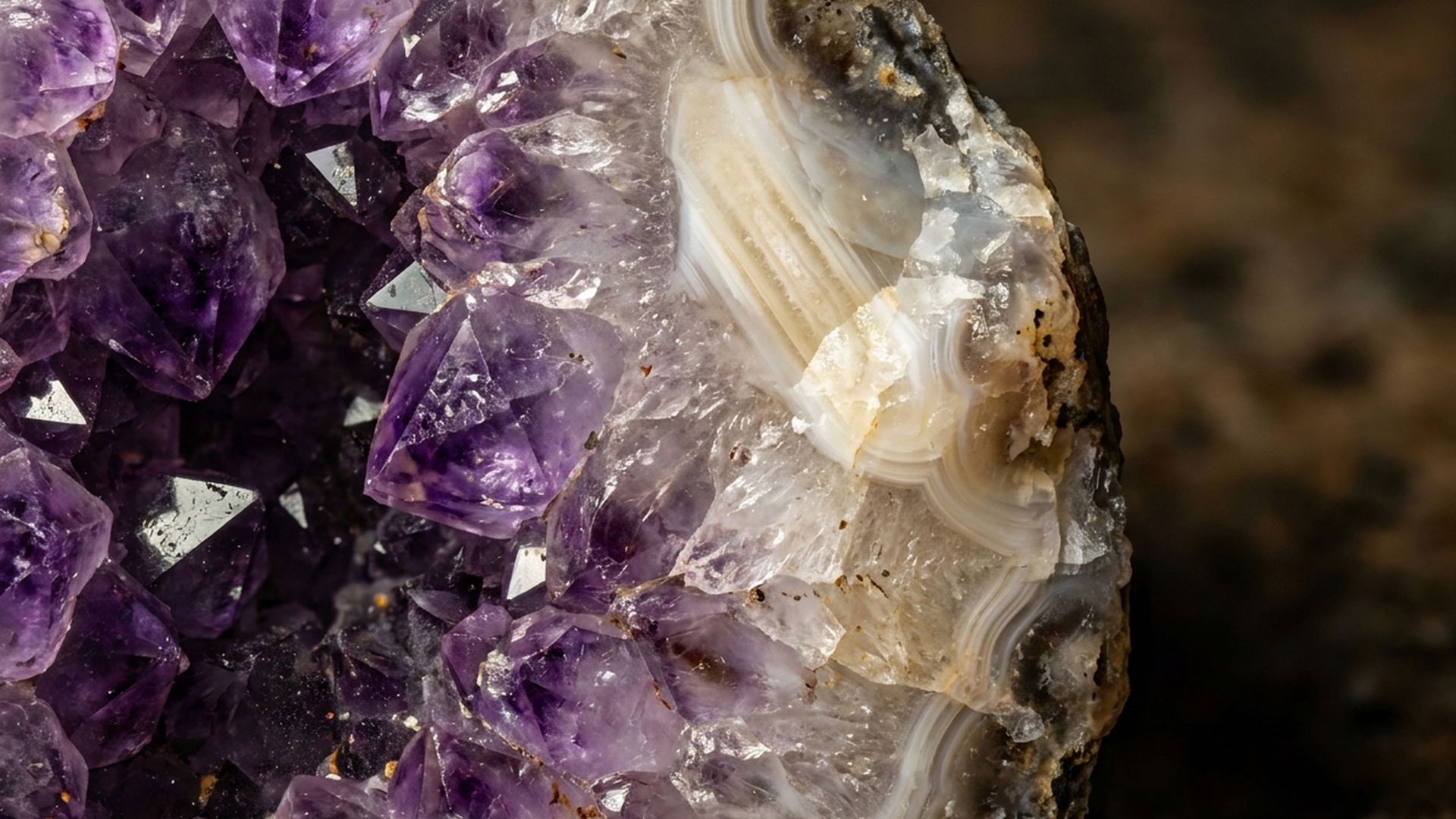
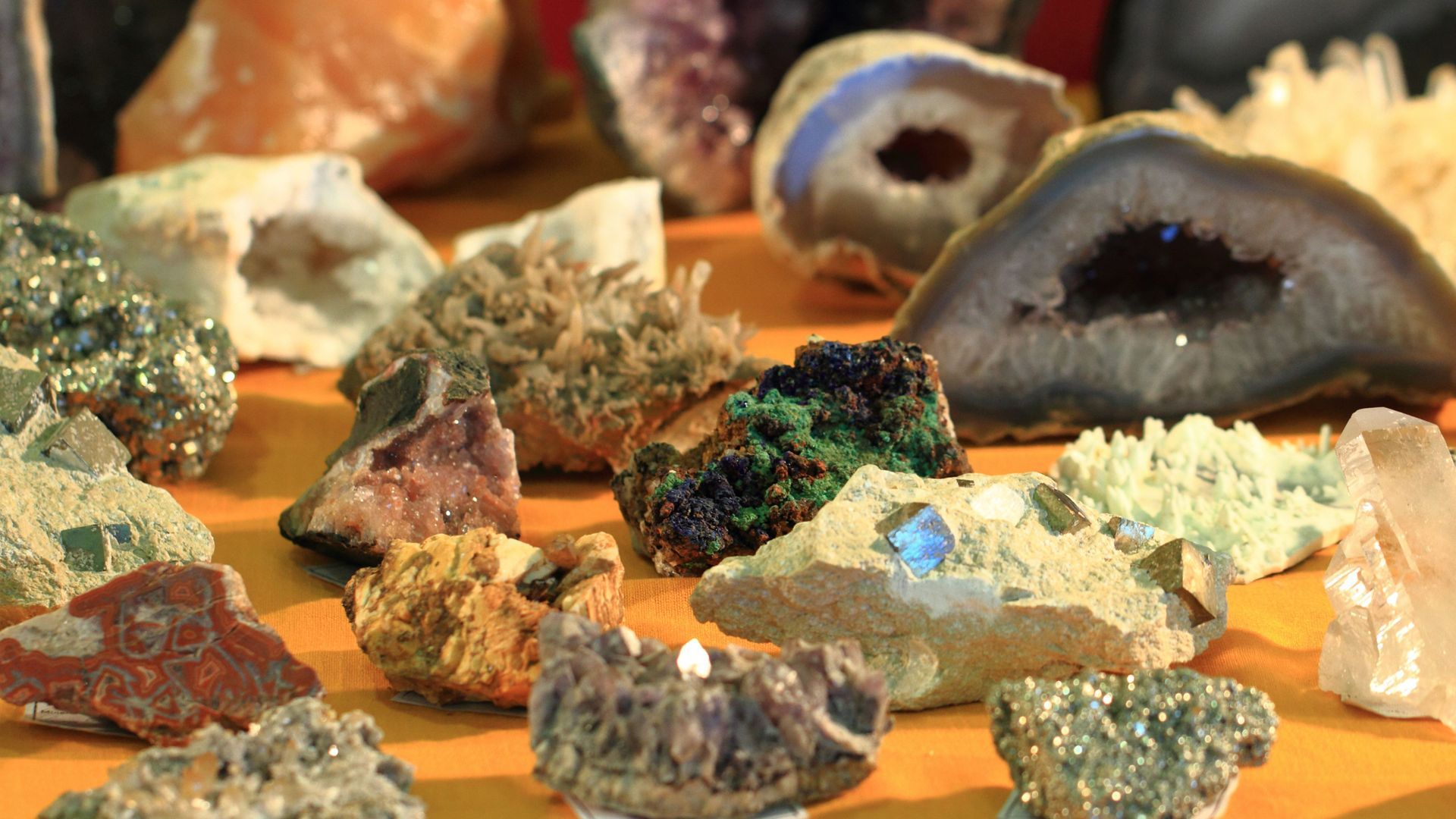
Deep purple amethysts and vibrantly coloured crystals are much in demand. The more breathtaking, the more money you can get.
The same goes for the quality of the crystals. If they're large, well-formed and pristine, your geode will fetch more than one containing small or damaged crystals.
Symmetry and shape are important, too. Collectors will prize well-formed, attractive geodes – although unusually shaped geodes can also fetch high prices, especially those sold as large display pieces.
Finally, where it was found can make a difference. The most valuable geodes tend to come from South America (especially Brazil and Uruguay), as well as Mexico, Morocco and parts of the United States.
Establishing where a geode came from isn't easy. It will usually involve scientific analysis or paper trails that document its trading history.
How to value your geode

When you come to value your geode, you've got options. But before you take it to a specialist or post it online, there are a few steps you can take.
First, you should identify any crystals in an open specimen. Secondly, you should take its dimensions (height and width). And finally, you should look for any chipped edges, broken crystals or evidence of repairs.
You can value your geode yourself by comparing your specimen with recent online sales. On eBay, for instance, you can search completed listings. You'll need to look for geodes of a similar size, mineral type and quality.
Alternatively – and more reliably – you can seek an expert opinion.
This could be at a local rock and mineral club, at a gem and mineral show or through a reputable mineral dealer.
Other avenues include local gem and mineral shops, the mineralogist at a natural history museum or an independent gem and crystal specialist.
Finally, you can post photos on an online gem collector forum. Members will be able to give you an unofficial appraisal.
What is a geode?
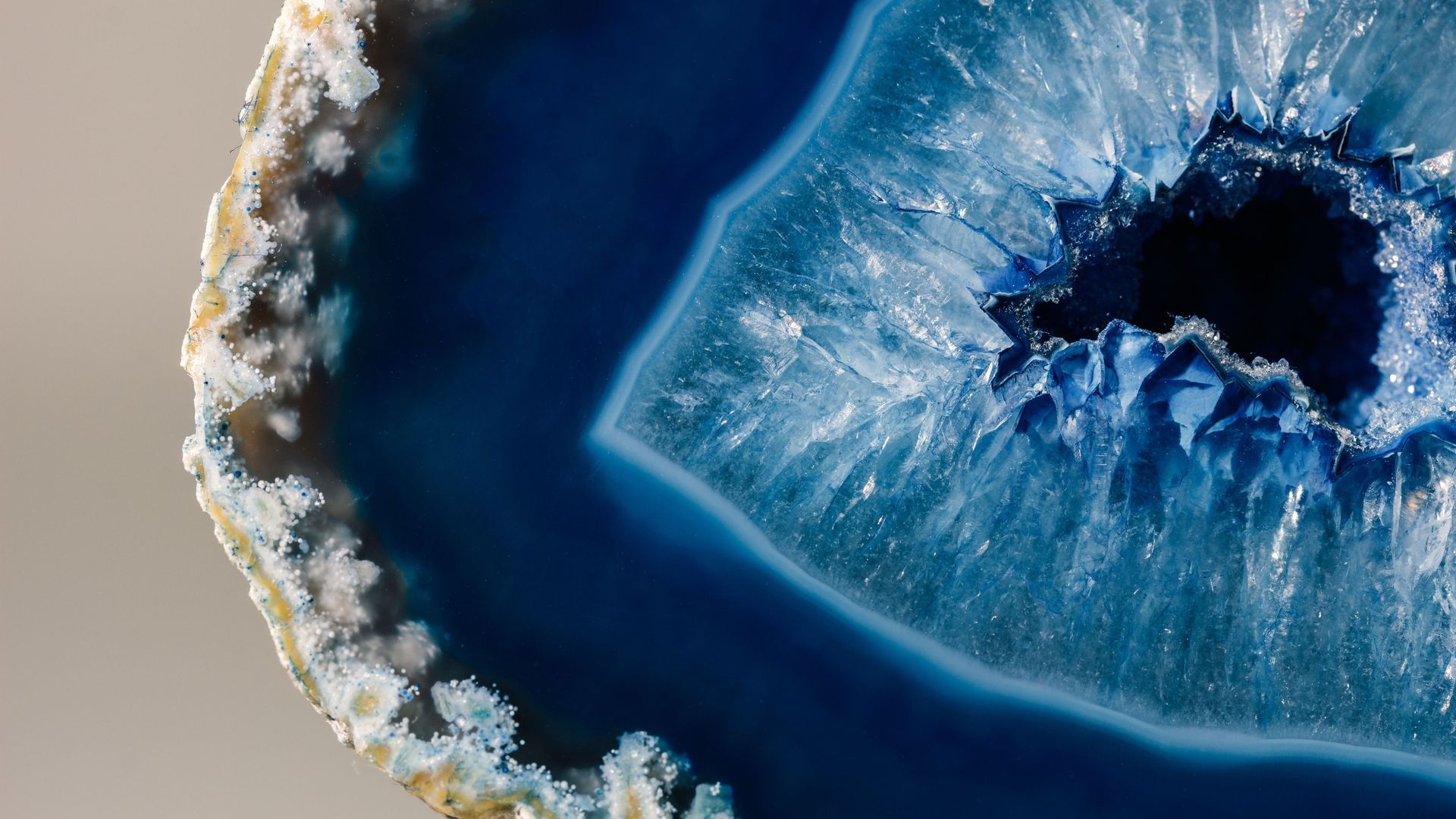
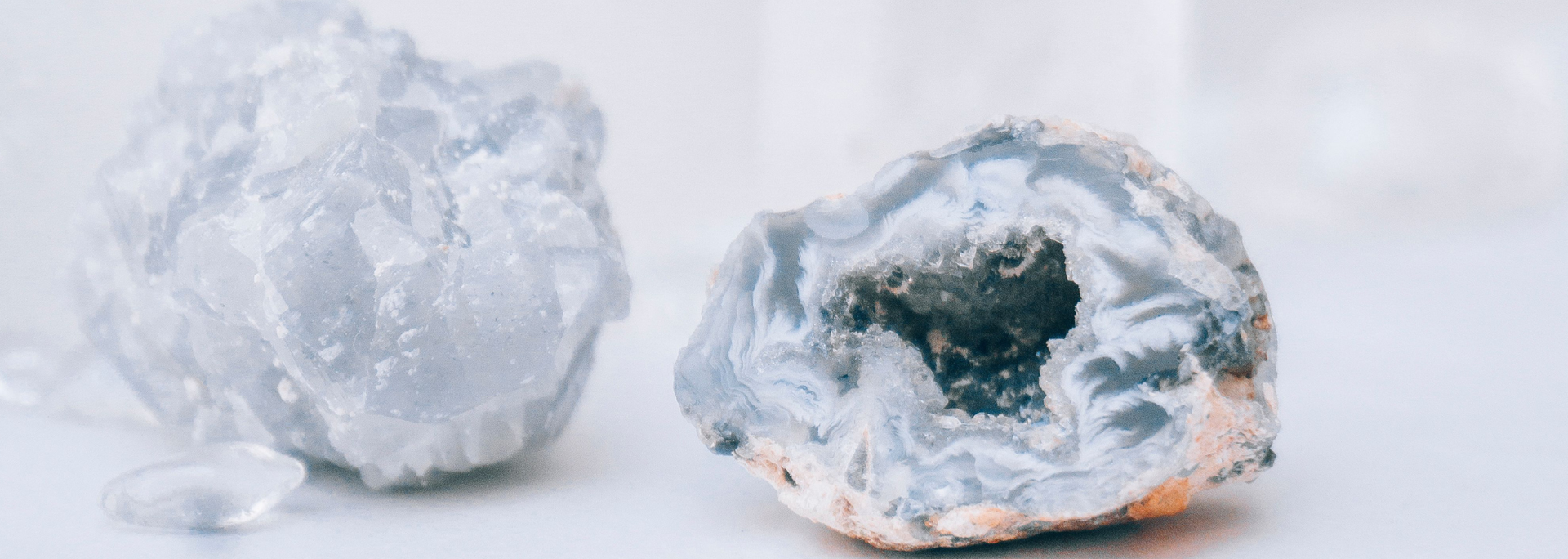
A geode is a kind of hollow rock. Inside, its cavity is lined with sparkling crystals or minerals of different kinds. Common minerals include quartz, amethyst, agate and calcite.
The word comes from the ancient Greek geoides, meaning "earth-like". And indeed, the outside of a geode is about as earth-like as you can get.
Typically plain, ordinary and rough-looking, geodes are the definition of a book that can't be judged by its cover.
So, how are they formed? As so often in geology, the answer is water plus time.
Geodes begin with a volcanic rock gas bubble or a cavity in sedimentary rock. Water rich in minerals seeps through the shell into the cavity.
This process can take millions of years. The water slowly, slowly leaves deposits that eventually turn into crystals.
This means that when you crack open a geode, you're the first person to see it for hundreds of thousands of years. It's an experience we offer for all the family right here at Stump Cross Caverns in the Yorkshire Dales.
About Geode James's Geode Shack

Every year, thousands of people come from across the world to visit our limestone chambers and passageways. But there's more to Stump Cross than just the caves.
Take Geode James's Geode Shack – a place where people come to see a geode cracked for the first time in hundreds of thousands of years.
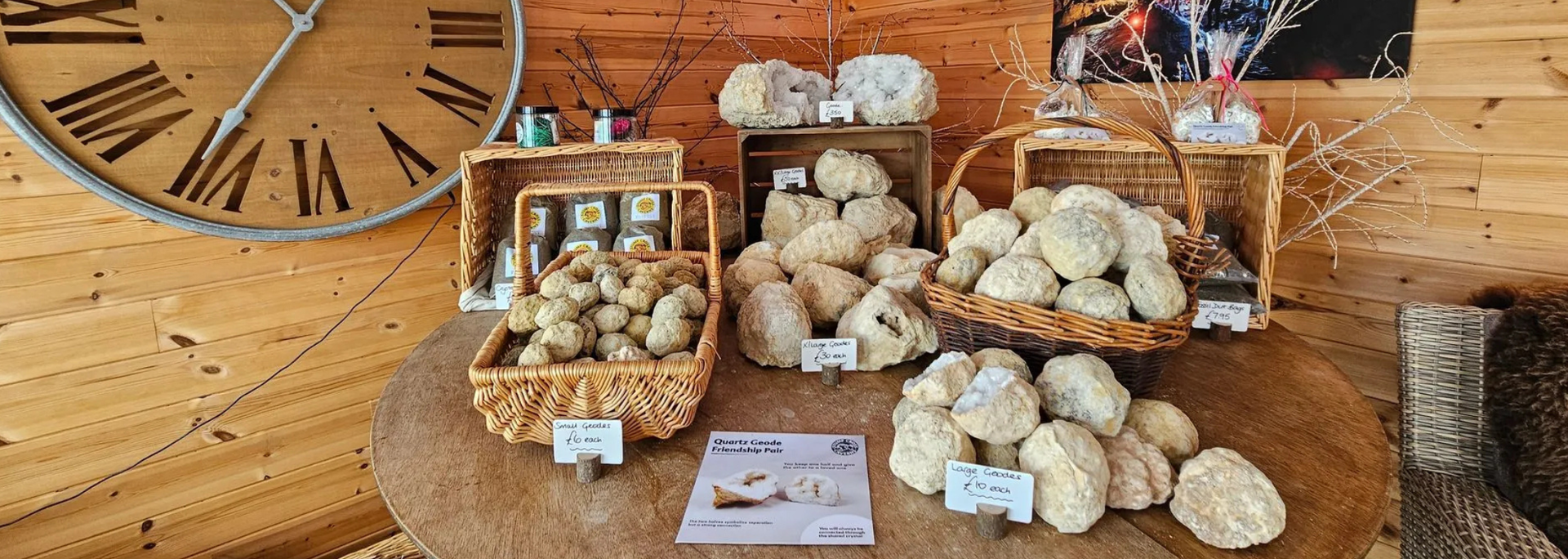
The process is simple. You choose an unopened white quartz geode to buy from a range of sizes. A member of our team will crack this for you, making you the first person in human history to see its crystal contents.
You can book in advance or buy on the day. Whichever option you choose, we guarantee you a moment of wonder that you won't find in many other places.
With the geode opened, you can take it home to keep. But before you head home, why not enjoy a refreshment in our cafe or take a tour of the gift shop?
In any case, you can expect a warm Yorkshire welcome.
Ready to try your hand at geode cracking? Book ahead for Geode James's Geode Shack today.